

Canadian filmmakers could really clean up in the shorts races at the Oscars this year. While defending champion Ben Proudfoot seems poised to win the short doc prize with Kris Bowers for The Last Repair Shop , the winner from the Oscar-nominated Live Action Shorts could be Invincible by Quebecois director Vincent René-Lortie and producer Samuel Caron. Invincible deserves the prize. It’s a bracing and distinctive work that pays tribute to René-Lortie’s friend, Marc-André, and a life cut short. The film offers a loving tribute, but also one that is frank, sobering, and unapologetically real.
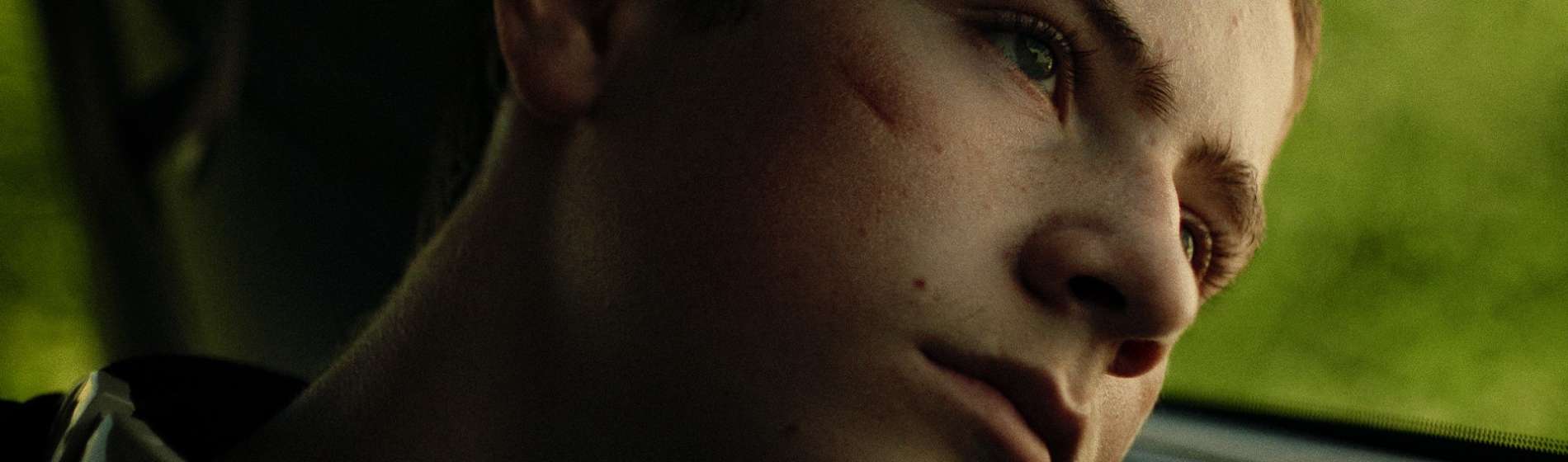
Newcomer Léokim Beaumier-Lépine gives an extraordinary performance as Marc, a fourteen-year-old wild child. As he returns to juvenile detention following the respite of weekend privileges, one feels the rambunctious energy percolating. He can’t be contained. The taste of freedom makes the return to structure, order, and confinement doubly suffocating. René-Lortie hugs the frame tightly to Marc and captures his story through an Academy ratio image. One can feel the world closing in on Marc as he longs to be free.
Despite some friends and caring adult mentors, especially Luc (Ralph Prosper), Marc can’t take it. Invincible observes as the young man cracks and bursts from the constraints he feels are holding him back, but with a fatalist impulse whose impact will be felt long after his story’s over. René-Lortie offers a probing character study that explores the effects of mental health and depression, the failures of a system, but also a personable, relatable, and deeply empathetic anti-hero. Despite Marc’s volatile behaviour and mood swings, one truly senses his hunger to be free.
The film doesn’t look at the final days of Marc’s life with romantic glasses. Rather, it’s raw and true—a moving plea to save further youths from being lost.
The Competition
Invincible works as the most contained and complete film. The other Oscar-nominated Live Action Shorts feel inhibited by the short form. Or gimmicky or manipulative.
Take, for example, Knight of Fortune. It presents an ideal window for a bathroom break. It’s not particularly funny with its take on two men at a morgue, readying to view their respective wives. The film offers a one-note joke and confuses awkwardness for comedy. It’s an odd duck.
Grief, meanwhile, fuels a tour-de-force performance by David Oyelowo as a father reeling from grief in The After . The actor commands the film and carries nearly every frame. But the drama acts as an exercise in shock value as the father enjoys a walk and some ice cream with his daughter—only to see their merriment cut short when an armed assailant stabs the little girl multiple times and throws her off the top floor of a parking garage. The girl’s mother jumps after her, plunging to her death and leaving him reeling.
Oyelowo gives a great performance as the father navigates joy, shock, horror, grief, and release while processing these loses. The film is awfully slight otherwise, though: a character-driven work with a few secondary characters who pop up in the father’s Uber. It’s a memorable performance in an otherwise forgettable film.
Alternatively, viewers might wish they could forget Red, White, and Blue . (Not to be confused with the [much better] royal rom-com.) The film is quite topical, but the delivery is, at best, amateurish by comparison to the other nominees. Brittany Snow does her darndest to sell this mawkish story about a mother-daughter road trip over state lines. The big twist, moreover, serves as a cheap emotional ploy. It’s a very important subject, which one can’t reveal without giving away the reveal, so one wishes the delivery gave the moral of the story greater impact.
The Frontrunner
If there’s a film to beat, though, it’s likely the one by eight-time nominee Wes Anderson . His The Wonderful Story of Henry Sugar adapts Roald Dahl’s short story of the same name. The film enjoys a lark with Anderson’s signature self-reflexive take on the joy of storytelling.
Ralph Fiennes dabs on some Eau de Panache and plays Dahl, who reads a story about Henry Sugar (Benedict Cumberbatch), who reads a story about Dr. Chatterjee (Dev Patel), who tells a story about Imdad Khan (Ben Kingsley), who tells a story about his unique gift. It’s a droll bit of storytelling with the ensemble delivering their accounts with script cues that echo Dahl’s prose.
Impressive production design by Anderson regular Adam Stockhausen creates Henry Sugar ’s world, and many worlds-within-the-world. The design takes a cue from storybook aesthetics with a twist of theatre. Each set looks like a well-dressed proscenium stage.
The Wonderful Story of Henry Sugar also looks ludicrously expensive. It’s clear that Netflix threw down money here . While every category inevitably pits films by studios with deep pockets against independent works, nowhere among the Oscar nominations does the gap seem as prominent as it does in the Live Action field. It’s hard to compare a well-bankrolled work like Henry Sugar against Red, White, and Blue ’s anemic debut. But that’s also the art and business of making movies, which Anderson knows.
However, the lavish design and committed performances eventually lose their power. All the direct address monologues become monotonous. The film is a feat of actors talking at the audience Film is an act of showing, whereas storytelling is an act of, well”¦telling. Henry Sugar forgets this distinction. Anderson’s emphasis on Dahl’s text, versus Dahl’s imaginative inspiration, leaves the film lacking. Maybe let’s chalk this up to a deferred win .
The Oscar-nominated Live Action Shorts open in theatres beginning Feb. 16, including at TIFF Lightbox .
The After and Henry Sugar are on Netflix . Invincible is on Vimeo .