


The word “documentary” was reportedly coined by Scottish filmmaker John Grierson in his review of a Robert Flaherty film in the 1920s, although its use entered the wider public vernacular during the 1940s, when the numerous films that brought the Second World War to movie theatres also inspired the Academy to create a category honouring them. Cameras had turned their lenses on real life long before fiction features were even created, and while the documentaries of the war years set boundaries for what actually defined a feature-length film as an entry in that genre, the definition was already and would remain fluid. Even the Academy agreed, giving a Documentary Feature Oscar to as dramatically created a film as I Was a Communist for the FBI in 1951, a very entertaining bit of Red Scare paranoia that is scripted and performed down to its every last moment.
By the sixties, artists were building on the early works of pioneers to create films that challenged people’s notions of the form, and ground was broken that would change cinema forever. Peter Watkins won an Oscar for what was not yet called a “mockumentary” about nuclear war, and William Greaves’ Symbiopsychotaxiplasm: Take One made the making of a film the subject of the film itself. Two voices established themselves as pioneers who would lay down standards for many to follow in the years to come: The Maysles Brothers observed without judgment even when putting themselves into their movies, while Frederick Wiseman, a one-man revolution in observational cinema, kept himself completely out of his movies, avoided narration and gave very little more than the scenes he filmed and somehow managed to convey his thoughts and opinions through camera angles and editing.
The 1960s was an exciting decade for the genre, and these are my ten favourites from that time.
10. Portrait of Jason
Shirley Clarke, 1967
Clarke and her partner Carl Lee hole up in their Chelsea Hotel penthouse with Jason Holliday and interview him about his incident-rich life, his difficult childhood, the various people he worked for as a domestic, and the characters he has met while plying his trade as a sex worker. At the time of its release, the film’s shocking content was Holliday’s frank sexual dialogue, he isn’t shy at all about the seamier side of his life, while more recent criticism, which has seen the film revisited after having been thought lost for many years, focuses on the problematic set up of a well-to-do white woman provoking a less privileged Black man for the purposes of exploiting his story. At times, Holliday’s covering his insecurity with incessant laughter gets grating, but as a direct glimpse into this complicated person’s life and the times that influenced it, there it is essential viewing.
9. Monterey Pop
D. A. Pennebaker, 1968
Producer Lou Adler and members of the Mamas and the Papas decided to put on a concert festival in Monterey (home of the popular jazz festival) that ended up igniting the careers of Janis Joplin, Jimi Hendrix, and The Who while also kicking off the Summer of Love. Pennebaker includes a fair cross-section of the various acts that performed, and while it’s not the epic that is Woodstock, it has a modest charm that somehow makes it so much richer to experience.
8. A Time for Burning
Barbara Connell, Bill Jersey, 1967
A Lutheran pastor in Omaha, Nebraska urges his white parishioners to get to know their Black neighbours, but meets with a great deal of resistance to the simple proposition of putting Civil Rights beliefs into practice. Cinema vérité cameras capture a series of fascinating, heated discussions in a program that was originally shot for television but was rejected for being too controversial.
7. The Eleanor Roosevelt Story
Richard Kaplan, 1965
Straightforward but inspiring biography on the American First Lady that seeks to go beyond the usual Power Behind the Throne narrative, presenting the story of a woman who held to her principles even when it was least convenient to her. This film avoids all the theorizing about Roosevelt’s marriage and personal life that would come in the decades to follow, but the narration by poet/politician Archibald Macleish is exquisitely written and the collage of photos and footage are brilliantly assembled.
6. Chronicle of a Summer (Chronique d’un été)
Jean Rouch and Edgar Morin, 1961
Director Rouch and sociologist Morin made this documentary as a record of Parisian lives in 1960, and what they came up with resulted in one of the most influential films of the French New Wave. It opens with strangers randomly asked on the streets about their emotional well-being, then zeroes in on a handful of people whose testimonials spread out over a number of months to give a glimpse at life in the big city. A highly charismatic combination of both the timelessness of human concerns and a time capsule of European city life of the time, it’s edited and paced to an exactness that leaves a feeling of not wasting a single moment.
5. Black Fox: The Rise and fall of Adolf Hitler
Louis Clyde Stoumen, 1962
This documentary about the progression of Adolf Hitler from failed art student to the most notorious villain of the modern era still packs a punch, using a folk tale by Goethe to mirror the German dictator’s career. Marlene Dietrich brilliantly narrates a combination of biography and political commentary, charting the corrupt character at the heart of Hitler’s policies (the child who didn’t want to study but blamed the perverse intellectualism of his teachers for his failure in school) that led to his leading a country to genocide and a global war. It’s a fascinating summation of the era as well as a reminder about the importance of responsibility and not just backward-looking blame.
4. The War Game
Peter Watkins, 1966
It’s hard to know if the Academy put this movie in the non-fiction category knowingly, awarding it the prize for Best Documentary Feature despite the fact the whole thing is staged. Convincingly staged, that is, and so vivid in its presentation of a hypothetical nuclear war that the BBC removed it from its programming before it was scheduled to air in October 1965, keeping it off screens until it instead premiered on the big screen in London the following April. Still Watkins’ most celebrated and rewarded film, it rivals Battle of Algiers for hyper-realism, convincingly presenting an attack on Britain as an offshoot of China’s invasion of South Vietnam, which necessitates the public’s evacuating the city and plunged into survival mode.
3. Salesman
David Maysles, Charlotte Zwerin, Albert Maysles, 1969
Four travelling salesman go door-to-door across America to push ornate Bibles on people who don’t have the money to pay for them, one of them excelling at his work until he realizes that the job is working against his soul. The Maysles, as non-judgmental about their subjects as documentary filmmakers can be, display how inextricably linked capitalist success is with manipulating people to work against their own sense of self-preservation, using religious devotion as a way to convince people who can barely spare a dollar a week to buy something they don’t actually need. Not a film you’ll easily forget.
2. Titicut Follies
Frederick Wiseman, 1967
Like the Maysles Brothers, Wiseman’s career also feels like a movement on its own, a master of an observational style who uses no narration or talking head interviews to guide your opinion and yet still giving the impression of a sharp perspective. His first film remains among his most powerful and controversial, shot inside what was then called the Bridgewater State Hospital for the Criminally Insane (the last four words have since been dropped). Men arrested for heinous crimes and deemed psychologically unsound undergo invasive examinations, spend an unreasonable amount of time naked in what is likely a freezing cold building, and are roughly handled by guards who enjoy taunting them while carting them around the prison. This is an upsetting movie that I couldn’t stop watching but also kept begging to be over.
1. Tokyo Olympiad
Kon Ichikawa, 1965
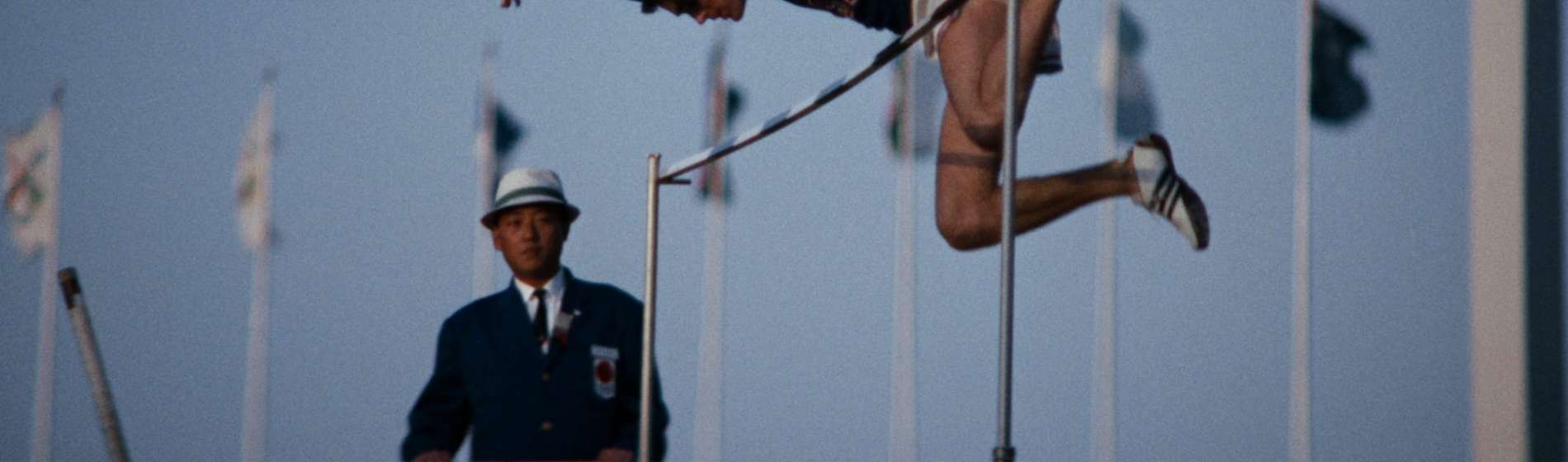
The 1964 games are captured with vibrant life by master filmmaker Ichikawa, who covers an entire range of spectacles in three very short hours. Bookended with the opening and closing ceremonies of the Tokyo Olympics, the film features superb moments of triumph and skill in a wide variety of sports including pole vaulting, swimming, shot put, gymnastics, weight lifting, wrestling, boxing and a highly impressive marathon. What’s even more fascinating is Ichikawa’s deft understanding of the various rhythms of filmmaking that are required to capture these various sports in the most effective possible ways for the screen: lots of quiet intensity for the runners, bright flashy editing for pole vaulters and fluid camera movements for gymnastics are just some examples, and there are plenty of magnificent vistas that Ichikawa finds a myriad of creative ways to shoot. It’s a riveting, beautiful film, true to the pan-national, pro-peace message of the events, a tribute to the human form and the power of its perseverance.