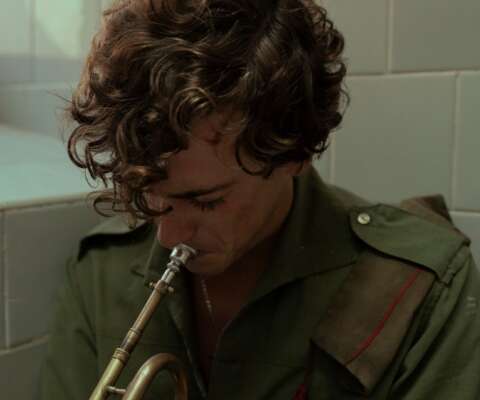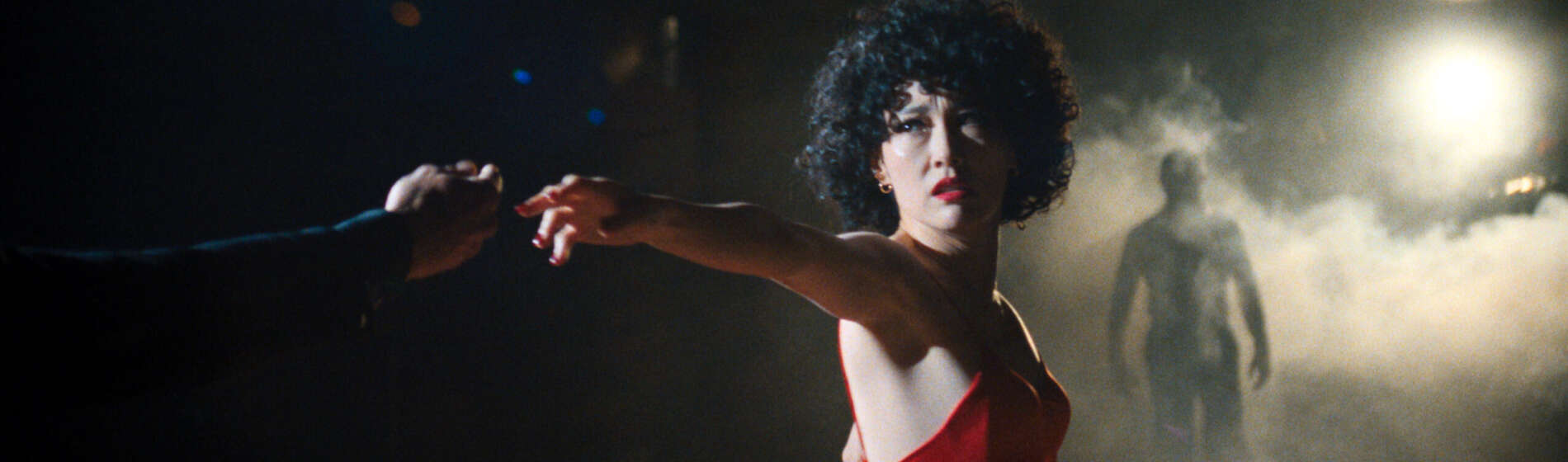


For Haru (Rinko Kikuchi), the central character in Josef Kubota Wladyka’s enchanting, if modestly flawed, Ha-Chan, Shake Your Booty!, every day begins and ends the same: with her life and dance partner, Luis (Alejandro Edda) at her side. They cook and eat their meals together, tend the garden outside their home (or, rather, Luis does and Haru watches), and eventually their mutual obsession, ballroom dancing, takes hold.
As serious about ballroom dancing as she is about Luis and his place in her life, Haru closely studies videos of their past performances, pointing out where they missed a step or mistimed a move. Mirroring Haru, Luis sees his wife and dance partner as the end-all and be-all, not just the centre of his life, but the centre of his universe. It’s a match made in cinematic heaven.
Alas, such paradises can make for a dull, ultimately detached film. Wladyka, drawing on his 80-year-old mother and her lifelong obsession with ballroom dancing, assumes the role of a cruel, capricious god. He forcibly ejects Luis from this mortal plane, in body if not entirely in spirit, in the middle of a ballroom competition. Not for the first time nor the last, Wladyka infuses an otherwise grounded drama with magical realism: Luis, physically elevated by Latin music while dancing with Haru, floats into the air high above the crowd, only for gravity to yank him earthward as the victim of a fatal heart attack.
Already mixing and matching different languages and culture (Spanish, English, and Japanese in both cases), Wladyka takes Ha-Chan, Shake Your Booty! into not entirely unexpected territory. Luis’s grieving family wants to bring his body back to Mexico, where he was born and raised, while Haru, mindful of her own traditions, prefers that his remains do not Japan and thus, her. Either way, heartbreak follows for at least one bereaved party.
Understandably reeling from her loss, Haru retreats into the home she shared with Luis. Everywhere she turns, she feels his presence. Soon enough, grief, personified here as a metaphysical “thing with feathers” (a round-bodied, human-sized black bird), becomes part of Haru’s waking life and her dreaming one. The line between Haru’s waking reality and her dream life blurs, but before it becomes permanent, her longtime friends, Hiromi and Yuki, appear, anxiously concerned for her well-being. But they’re just as eager to kickstart Haru’s return to a semblance of normalcy.
Not surprisingly, Haru begins the slow, halting return to “normal” through a new dance studio and a new potential partner, Fedir (Alberto Guerra). An expat like Luis and, similarly, Latino, Fedir’s resemblance to Haru’s late partner makes him an almost irresistible object of desire. Fedir, however, isn’t single. He’s married to another dancer, Mila (Keren Louis), and he cheekily admits he’s in an open marriage, leaving a slightly perplexed Haru to comically rush to the nearest computer with an Internet connection. She conducts an online search to uncover what exactly an “open marriage” means.
Haru’s positively delighted, of course, but given how far she still has to travel to reach her final destination (i.e., the “acceptance” stage in processing grief), the black hole that Luis’s untimely departure has left in her heartcan only lead in one direction.
Ambitiously shifting genres and tones, Wladyka rarely stumbles and when he does, as when he lingers too long on an individual scene or when he revisits ideas, themes, and plot turns unnecessarily (especially during the last half hour), he still manages to find his narrative footing. The film brings the audience back into the proverbial fold, cheering for Haru to find, if not a second love, then an acceptance of what she lost, but also an appreciation for what she still has: an unquenchable love for life and dance.