

“Everybody gets to be with their mother,” Amy Adams says while playfully correcting a journalist. The critic, a man (obviously), is asking Adams a question during a virtual event about her new film Nightbitch. In the midst of it all, he makes a rambling comment about how everyone has to be with their mom on Mother’s Day. “Everyone gets to be with their mother,” Adams repeats with a laugh.
The semantic quip, however, underscores the frisky gender dynamic at play in Adams’ film. Nightbitch, the new film from writer/director Marielle Heller (A Beautiful Day in the Neighborhood, Can You Ever Forgive Me?) adapts the popular book by Rachel Yoder about a nameless woman who undergoes a canine metamorphosis thanks to the cruel bitch that is motherhood. But this take on Nightbitch, Adams emphasizes, shares how parenting is more a privilege than a curse.
Nightbitch offers what many critics—including this one—consider a career-best turn for Adams as the poochified parent. In Nightbitch, Adams pushes herself to dark corners and comedic highs.
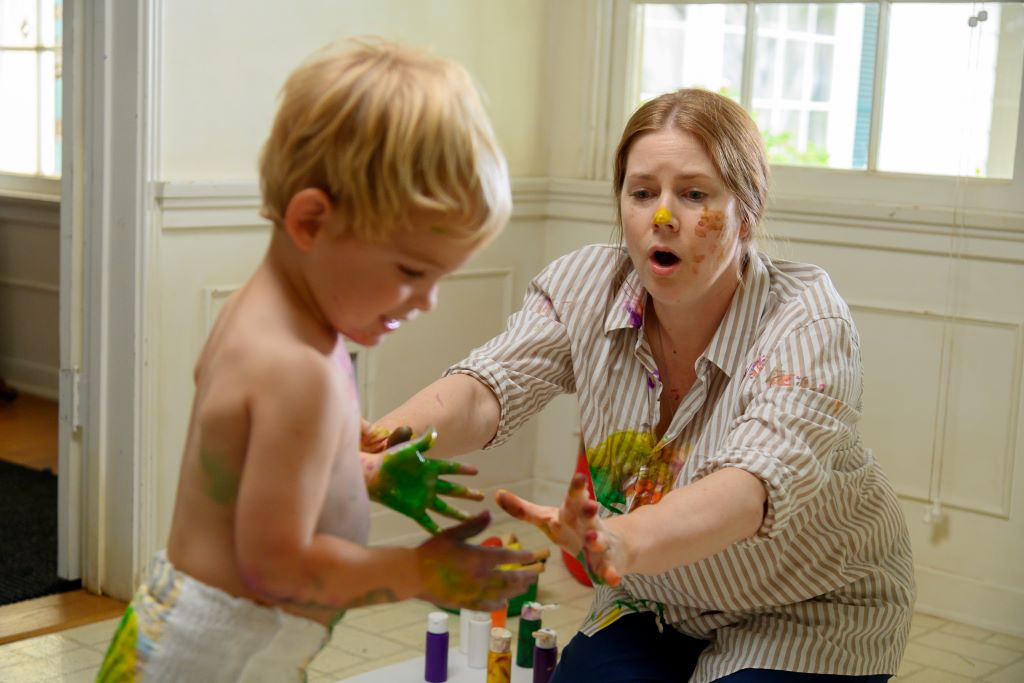
The mother, who grows to accept her new identity as “Nightbitch” once she begins to like the furry patches appearing on her body and the freedom of running on all fours, finds herself wrestling with confusion as she wonders if these bodily changes are real or an imagined escape from her dull routine. Adams says that finding Nightbitch’s rhythm was aspect of raising a child to which she could relate.
“Something I identify deeply with, but I have a different perspective on now because she’s 14 [Adams’ daughter], is this idea of monotony, which I think Marielle communicates so well at the beginning of the film with this montage of monotony,” says Adams. Nightbitch observes the mom undertaking a precise routine to give her son familiar comforts. They thrill him, but she can only cook the same breakfasts and read the same stories so many times a week. The costumes change, but the actions and chores don’t. Eventually, the mom stops fussing with her clothes, too.
“What I’ve learned, and so it was great to get to go back and have the character discover this, is that the monotony becomes the memory and the thing that you take with you,” says Adams. “What I wouldn’t give to sing my child the lullaby tonight for the fifth time. There’s also this reformation of identity that I had to go through, and, I think, at different stages of life, everybody goes through. It’s not specific to parenting. It can happen in several stages of life, and for women, especially, whether it’s puberty, motherhood, and menopause. There’s just a lot of transformation, a lot of identity shifts.”
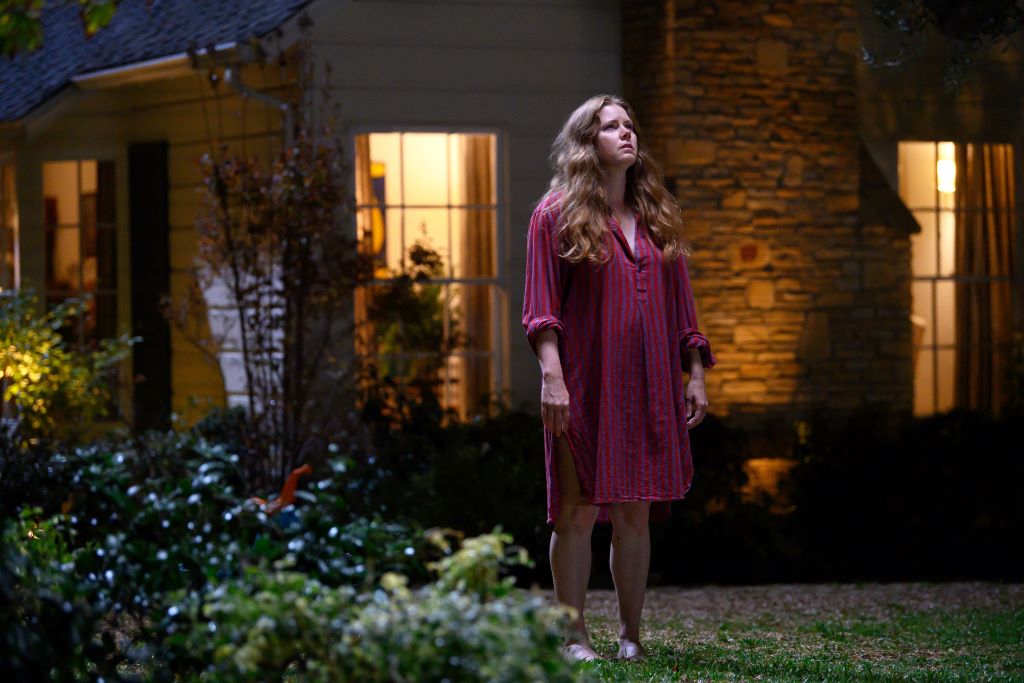
Nightbitch struggles to find fulfillment after leaving her beloved job as a gallery curator and spending two years raising her son. But part of her transformation comes through her newfound perspective. Things that matter to humans seem trivial as she delights in hunting rabbits and digging up yards. The dark humour of Yoder’s book translates wickedly well as Adams’ character offers deadpan readings to her husband (Scott McNairy) and friends. “There was something really wonderful about taking on the challenge of saying the quiet thing out loud,” Adams says.
The mom tries to escape suburban blahs, and possibly becoming a dog, by taking her son to the library. But the moms there don’t quite thrill her. Neither do her professional friends from “before times” when she gets a free night on her own. Nightbitch has an itch she just can’t scratch. As she withdraws, though, she her animalistic urges become more pronounced. This journey tasks Adams with juggling numerous emotional and tonal shifts as faces a reckoning of self-worth.
“I think what’s interesting about the way that the film approaches identity is that this idea of excluding ourselves from community can be so isolating,” Adams observes. “This is where the character finds herself, as she no longer identifies with the friends she used to have. And yet, she hasn’t found a new group of people in which she identifies herself: Part of that is not wanting to release an idea of herself—not wanting to let go of this person she believed herself to be. Once she embraces the joy, the play, the feral nature of motherhood, and really sees it as something she can sink her teeth into, she starts to feel more validated in that experience.”
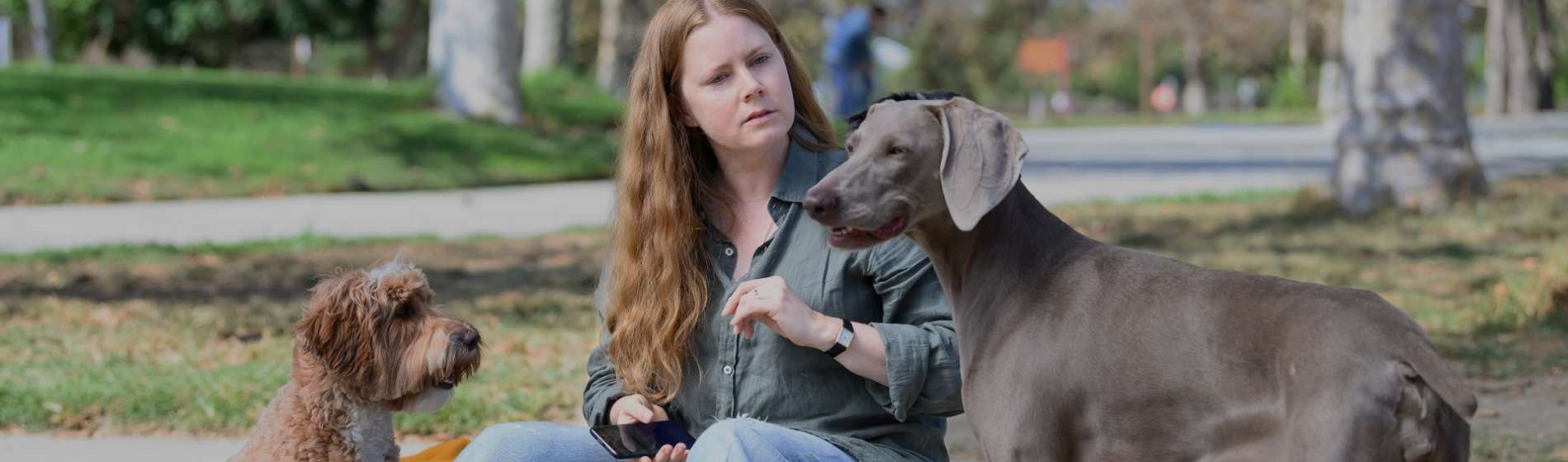
Adams does indeed dig into the “feral nature” of motherhood. She’s fearlessly feral as Nightbitch transforms. She runs alongside the growing community of dogs that converge upon her home. She howls, yips, and barks. All the dogs in Nightbitch are real, moreover, and pose a tricky feat for Heller and Adams alike. The actor says she had to tap into her co-stars’ energy and find her inner bitch.
“My animalistic instinct is a little more golden retriever,” Adams admits. “I just want a snack and to cuddle and play fetch. But I’m definitely very protective, and I definitely have that side. I think that’s when mine comes out: when I feel like I need to protect somebody or if I see something unjust. I get very, like, [makes a doggish “ruff”] and I was able to tap into that.”
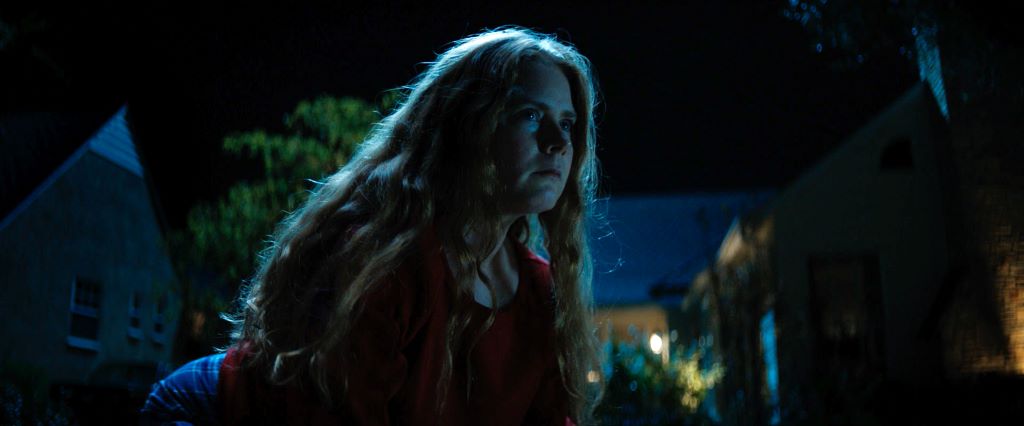
But Adams quickly notes that these instincts, nor the themes of the film, are exclusive to parents. Audiences with furbabies can relate to Nightbitch as well. (If anything, enthusiasm for Nightbitch skews higher with moviegoers whose “kids” have four legs and fur.)
“The idea of tapping into an animal instinct, it’s not just in parenting, but it’s to bring us closer to ourselves,” Adams says. “It removes all of the expectations and the Instagram filters and the veneer of perfection that there’s only one way to do something. It’s like getting back to a basic understanding of identifying your needs, your partner’s needs, and your child’s needs in a really organic way, instead of trying to meet the needs of the pressure of the world around you.”
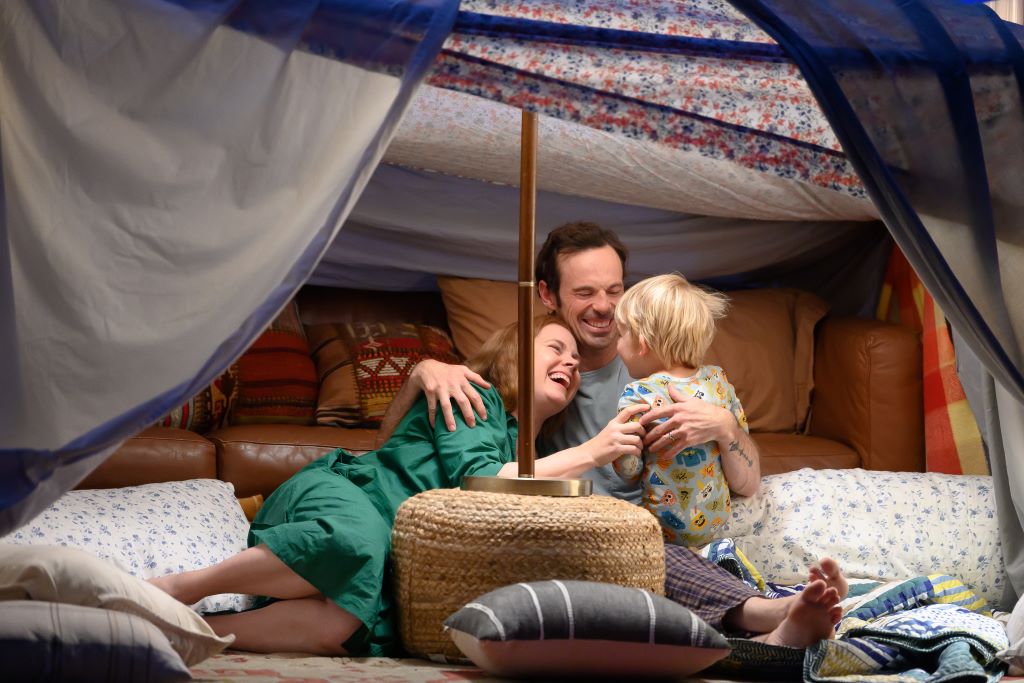
Nightbitch ultimately proves more optimistic than Yoder’s novel, though, as Heller’s adaptation offers its own take informed by the filmmaker’s relationship to parenting. Adams, who produced the film, says she appreciates the fresh take. “Marielle and I are both very pragmatic people, but also really believe in our experience of motherhood as one of optimism and great hope. We look for that. And that’s where we wanted to leave the movie: inside of this. We didn’t want to leave the movie with a negative comment because what we believe about parenthood is very positive. We wanted to uplift the experience,” she says. “That [ending], to me, was like the ultimate vision of hope. That was an intense scene.”
Yoder’s book goes totally gonzo in its finale as Nightbitch fully embraces her animalistic urges. In the film, though, Nightbitch’s metamorphosis provides a loving tribute to the selfless sacrifices that mothers make for their children.
“I’ve heard two responses [to the film] that were really moving to me,” observes Adams. “I’ve heard ‘I feel seen.’ And then I also heard, and this one I liked a lot: ‘I went home and called my mom.’”
Nightbitch is coming soon to Disney+.