


Universal has painted The Uprising into a corner. Anyone interested in the film likely would’ve seen it without the Robin Hood angle, but with it, it’s hard not to think of the many unsuccessful film adaptations of the legend over the past 30 years. We’re not even three months removed from The Death of Robin Hood , which managed less than $10 million at the box office. Hollywood loves I.P., but they really should have left it alone. Now, The Uprising reeks of desperation.
Then there’s the fact that the Robin Hood angle is so detached from everything else; I suspect the studio added it in reshoots. Which is a shame because the material covered in The Uprising is relevant enough to stand on its own. A palpable frustration with the ruling class. Leaders more concerned with their image than living conditions. Tying the film’s themes to the current political climate isn’t arduous.
Especially when you cast human empathy machine, Andrew Garfield , as your lead. Soulful performances in Silence , Under the Banner of Heaven , and Hacksaw Ridge proved that audiences are willing to follow Garfield on any journey. The man almost single-handedly resurrected the rebooted Spider-Man sequels, though Sony didn’t have enough of a handle on things to stick the landing. A rumoured cameo in the newer version of the franchise went viral before it was even confirmed–and it was worth waiting for. A charismatic lead like Garfield can absolutely engage the audience in any storyline without shoehorning folklore into things.
Famine and the bubonic plague tore apart most of 14th-century England’s lower classes. Landowners drove the value of labour down to keep their profits afloat. Boy-king Richard II (Woody Norman) wasn’t fit to rule, but his council gladly renders decisions on his behalf. England’s 100-year war with France needed funding, but the council wouldn’t tax the merchants because then merchants would feel entitled to a seat at the table. So the burden grew heavier by the day for the lower class. Wages couldn’t rise because of the King’s laws, and taxes continued to escalate. Eventually, the fabric that was holding society together broke.
Like many serfs, Ploughman’s (Garfield) wife and children perished during the plague. The film opens with him burying them all. Tied to the land, Ploughman has no means other than his tools and seed to pay taxes. Yet the taxman prods. Ploughman didn’t pay the death tax on his family, so he must pay more taxes to compensate. Poll-tax collectors seeking extra funds also accost young women to prove they’re of age and eligible for taxation. Garfield’s face tells us everything we need to know. “Enough.” He murders the sergeant-at-arms with a sickle (no bow and arrow for him), sparking a rebellion in the town.
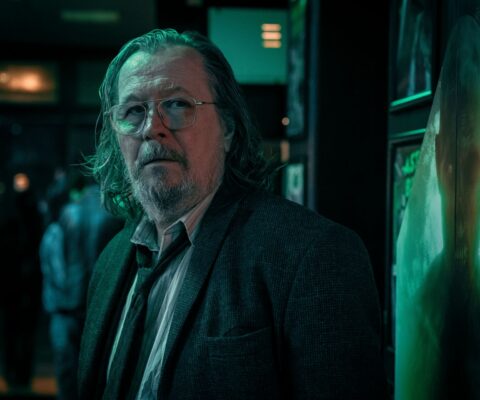
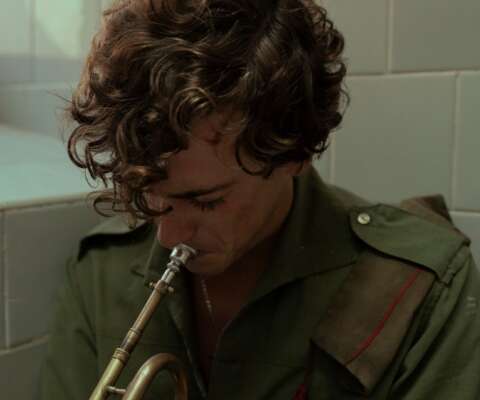
When the bloodlust clears, Ploughman wishes to avoid further violence. But the mob is hungry for more. That includes real-life figures of the revolt like Wat Tyler ( Cosmo Jarvis ) and John Ball ( Jamie Bell ), lending authenticity to the story. “Where is God in any of this?” Ploughman asks when the rebels cry out for indiscriminate murder. Concurrently, King Richard II’s representatives of God dig their heels into the backs of labourers. The Archbishop of Canterbury (Stephen Dillane) uses Ball’s preaching of social equality (and the rage it brings) to excommunicate the priest. Tyler and Ball coordinate the march on London that saw prisons destroyed, government buildings burned, and Crown loyalists killed. Reluctantly, Ploughman takes up the call, hiding his identity under a green tunic and hood. With Tyler and Ball, he forms an army of the people to face the injustice heaped upon them.
The heavyweight ensemble of Thomasin McKenzie , Tom Hollander, Jonny Lee Miller, and Katherine Waterston rounds out the impressive supporting cast of characters. Radicalized nun-turned-tomboy Alyce (McKenzie) cuts her hair to join the revolt. She is one of several characters to get an electric monologue here, but none more so than Jamie Bell’s Ball. Bell feels like the natural lead that The Uprising calls for. And Bell delivers all of the resentment that’s built up over a lifetime of inequity. As expressive as Garfield is, he’s merely asked to grit his teeth and take violent revenge. The film has a beating heart, but no brain. Using John Ball as the lead might’ve alleviated that problem.
Director Paul Greengrass continues his streak of emotionally charged true stories. But where The Lost Bus , Captain Phillips , and United 93 were ripped from the headlines, The Uprising comes straight from the Smithsonian. It wouldn’t be a Greengrass film without his signature handheld technique, and that style meshes surprisingly well with the material, putting the viewer right into the action.
Verisimilitude is key to the filmmaker’s work. We shouldn’t feel like we’re just watching; we should feel like witnesses. Yet that same instinct to use handheld shooting for intimate, conversational scenes with Garfield and the cast feels like a misstep. Dialogue is hard to hear, and the mid-conversation zoom-ins are distracting. Authenticity to the period shouldn’t extend only to costuming and an astonishing amount of mud. I can appreciate Greengrass’s commitment to handheld shooting, but you have to know when to stabilize it and when not to.
Greengrass said during promotion stops that he wanted this film to be his Spartacus or Gladiator , and while the epic scope is there, the backstories are too muddied together for any greater impact. The Uprising is content to ride the coattails of modern political dialogue, but doesn’t engage with the context meaningfully. You can only rage for so long before desensitizing the viewer. If the characters aren’t fighting, the film doesn’t know what to do with them. After investing energy and backstory into these flesh-and-blood characters, Ploughman’s final appearance in a (much greener hood) reads more like an Avengers tease than an appropriate pay-off. The subject matter deserved better.