

The title of this appropriately dour environmental documentary comes from a George H. W. Bush quote, early in his term as president: “Those who think we’re powerless to do anything about this greenhouse effect are forgetting about the White House effect. And as President, I intend to do something about it.”
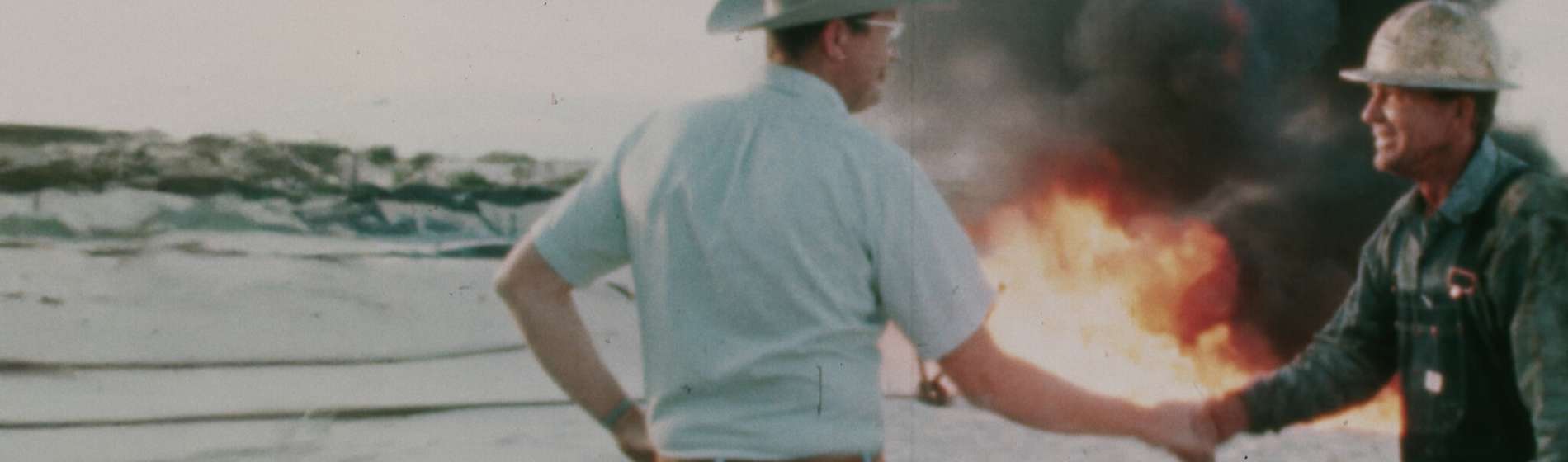
Most of the documentary The White House Effect is made up of selections from television, news, and documentary footage from the 1970s, ’80s, and ’90s. It focuses on the shifts in environment-related policies from American President Jimmy Carter, to Ronald Reagan, and then to Bush Sr. This is the period in American history that the environment, its health, and our impact as a species on it became topical enough to be part of a presidential nominee’s platform. Sell it whichever way you want: It’s all natural, or it’s all because of human interference and consumption, and a large contingent of the population will agree with you. Of course, it will not surprise many viewers that what prompted that spark of interest in preserving and nurturing the environment soon became the energy crisis. America had become so reliant on oil that as soon as it lost a lot of access to it, the consequences were immediate. Once Americans start feeling the hurt themselves, they suddenly become a lot more spirited and vocal in their pushback.
Directors Bonni Cohen, Pedro Kos, and Jon Shenk do a great job at making what sometimes feel like homework seem necessary and, at the very least, pointed, which keeps the narrative interesting. Here and there, hit songs pop up to remind us where we are in a certain decade, and they occasionally find songs in which the lyrics themselves relate to what we now call climate change (then known as global warming).
The most incredible aspect of The White House Effect is its composition. The directors let America speak for itself. They have the receipts, and they aren’t afraid to bring them to the table. Now more than ever, we’re used to politicians lying to the faces in front of them about what they did or didn’t do. In this case, it is both incredibly satisfying and bittersweet to see how every administration since the 1970s had the information telling them to start putting more money into conservation and renewable energy sources, and they didn’t follow the advice. To them, the film shows, it wasn’t financially worth doing that in the short term and that the long term wasn’t something they needed to worry about. There are so many warnings presented here, from scientists, but also from politicians and certain industry insiders, all the way down to the farmers and the working people on the ground.
It is no doubt depressing to see young adults in this archival footage — now likely seniors — state openly how little they care about the future. At one point, a major politician mentions he doesn’t understand why others feel they must be so hasty with their environmental course correction when the science says humanity won’t feel the negative effects for another 50 years. What he is indirectly saying is he won’t be around for it, so who cares that his children and grandchildren will be? This attitude crops up time and again The White House Effect .
Bush Sr. was right. The White House does have the power to do something about climate change, even taking into account that a President may only serve one term, and so it is all the more damning they haven’t just dragged their feet–they’ve turned and run the other way.
It’s hard to hear warnings with money stuffed in one’s ears, and it’s hard to gauge the weather when one’s head is in the sand. If one seeks a fact-based, thorough, yet darkly thrilling and convincing walk-through of the history of the climate crisis, The White House Effect is it.