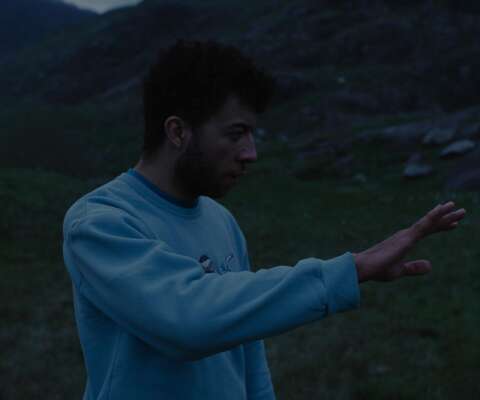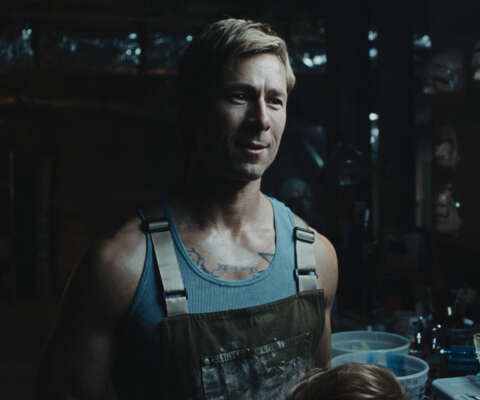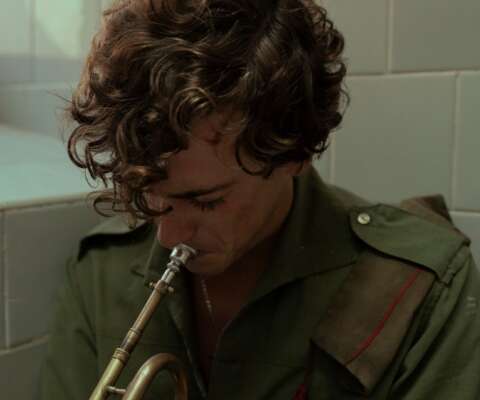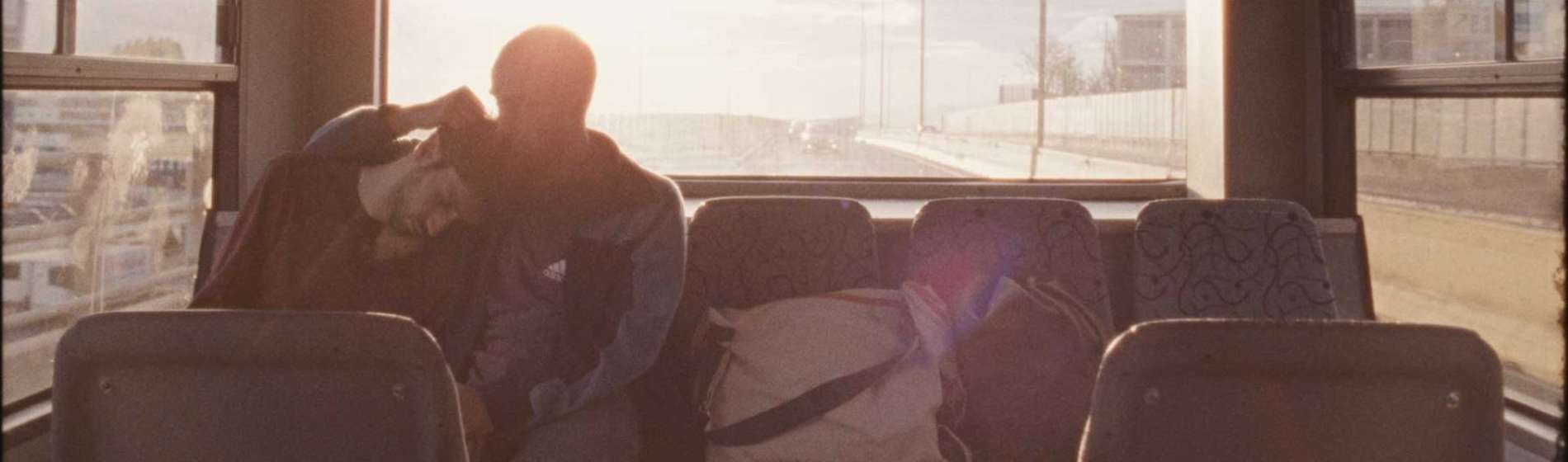


“The poet says, ‘The mask has fallen from the mask,’” Chatila (Mahmood Bakri) advises his friend Reda (Aram Sabbah) in To a Land Unknown. “No brothers, no friends, no fortress.”
Chatila evokes late poet Mahmoud Darwish as the situation for the two Palestinian friends and refugees intensifies in Athens. The reference also artfully connects Darwish’s poetry within a tapestry of citations that ranges from La Haine to Mean Streets to Midnight Cowboy. The latter stamp proves the most unmistakable citation. It’s also the most poignant one in this tragedy about stateless men hustling to survive.
Directed by Danish-Palestinian filmmaker Mahdi Fleifel, To a Land Unknown draws starkly from the author’s documentary roots. It also borrows from his experience growing up in a Lebanese refugee camp and from psychological nuggets of other refugees’ stories. A Lebanese camp references the past for Chatila, who sees Greece as an escape and a gateway to better life. Running the streets and stealing to survive in Athens prove more desirable than living in limbo in Lebanon. At least the hustle as an end-game here. Chatila hopes to make it to Germany where life will somehow improve upon whatever existence he finds in Greece, a sort of in-between place for countless men like himself.
But eking things out in Greece requires masks. Chatila observes with a hint of disdain that dark-skinned Greeks look a lot like Palestinians. He’s one of them, but not. He learns this point starkly while meeting a vivacious Athenian named Tatiana (Dogtooth‘s Angeliki Papoulia). She hits on him and invites him to her place for beers and then some. But she then throws her interest back at him, noting there’s surely a wife and kids back home. However, the mask that makes Chatila enticing also helps make Tatiana a mark. He sees in her a lonely woman with an empathetic button worth pushing.
To a Land Unknown offers a portrait of statelessness and resistance that may initially prove challenging. When we first meet Chatila and Reda, they’re pulling a tag-team con on a woman in the village square. They steal her purse and flee. Unfortunately, all she has on her are a few Euros and a puffer. They’re not exactly stealing from the rich.
Reda, meanwhile, at least scores paydays in the double digits by turning tricks with men in the park. This practice revolts Chatila, but he recognizes that it’s a means to an end. They’re holed up in a jam-packed apartment. Fellow refugees practically sleep in stacks with the arms dangling out of windows. Every dollar counts. If they have no legal means to generate income to survive, petty crime is all there is.
However, Chatila’s relationship with Tatiana coincides with another encounter. The friends meet a child on the streets named Malik (Mohammad Alsurafa), a 13-year-old kid from Gaza. Chatila’s mental sprockets start whirring. On one hand, he feels a duty to this abandoned kid who could easily be his son—or him years ago. On the other, the kid’s valuable goods on the human trafficking market. Chatila conjures a plan to get Tatiana to take Malik to Italy with a promise that they’ll all score a payday upon arrival. The possibility of having enough money to buy a fake passport allows Chatila to weigh the risks for all involved.
That plan doesn’t go the way that Chatila expects it to unfold, though. As he and Reda bide their time in Tatiana’s flat, with the latter resorting to increasingly risky behaviour to support his drug habit, the film finds riveting dramatic tension of living in this state of uncertainty. It’s a film about the unknown known as details about what happened to Tatiana and Malik prove increasingly unlikely. Either way, knowing nothing doesn’t spell anything good for anyone: Chatila, Malik, or Tatiana.
But with that dramatic twist of the plan gone awry, Fleifel flips a viewer’s perceptions of the friends’ petty crime. Nobody is immediately sympathetic here. However, To a Land Unknown invites the unenviable, difficult, and crucial task of weighing necessity, motive, and means. The stakes a palpably real as the easiest marks become other people like them: people who just want a better life and pay for it with great costs. Bakri gives a true breakout performance as Chatila, playing a character who evokes as much stature to Joe Buck as Sabbah’s sweaty, hunched performance calls to mind Ratso Rizzo. But there’s an edge to these characters that the hustlers of Midnight Cowboy lack: there’s no pleasure to be found in their hardened ways of navigating the city. Bakri particularly embodies the every-man-for-himself drive entailed with wearing masks and dropping them.
Fleifel captures this timely story with urgent resolve. Shot with starkly poetic images, To a Land Unknown recalls staples of new wave American independent cinema of the 1960s’ and ’70s, as well as works like La Haine that gave world cinema a jolt in the 1990s. This film offers for today what Kassovitz’s film did then—but Fleifel’s kitchen sink realism serves a stirring reminder that this story is no mere fable. It’s a drama rooted in the experiences of countless stories that get lost amid shots in the dark for a better life elsewhere.
To a Land Unknown opens in theatres including TIFF Lightbox in Toronto on July 11.