

“I want to experience the real thing,” says Mathyas Lefebure (Félix-Antoine Duval), “in Provence, the cradle of Pastoralism.” Mathyas displays a romantic’s notion for pastoral life when Shepherds begins. He gets an awakening, though, as this sumptuous drama by Sophie Deraspe (Antigone) follows his pursuit of being a farmhand. Shepherds adapts Lefebure’s memoir D-où viens-tu, berger? and might thrill audiences with its notion of connecting with a traditional way of life while leaving them equally daunted by the realities of it. This is a touching, soul-stirring film that rejuvenates a viewer like a crisp flick of fresh air.
Mathyas gets the idea to become a shepherd when a vacation in Provence inspires him to lead a new life. The thought of returning to his job at a marketing firm in Montreal sickens him. So, with a few phone calls and some jovial if terse emails, he quits the rat race.
Adopting a new life isn’t as easy as purging an old one, though. The old stock Frenchmen all seem skeptical of this Quebecois poet who wants to get his hands dirty. Mathyas displays a true knack for words: he impresses the French paysans with his philosophical musings, but they best him with pointed reminders that rhetoric can’t soothe a calloused hand. However, they find an affinity for this young man feeling the pull towards their way of life. One of the shepherds connects Mathyas with a farmer looking for a hired hand. With a rugged old satchel and wide-brimmed hat, he sets forth on an adventure.
When Mathyas arrives on the farm, however, his romantic notions quickly fade. The farmer (Bruno Raffaelli) is a chaotic boor. The accommodations hit the sweet spot between rustic and dilapidated. His fellow farmhand (Michel Benizri) berates the ewes with misogynistic slurs. Poetry has no hope here.
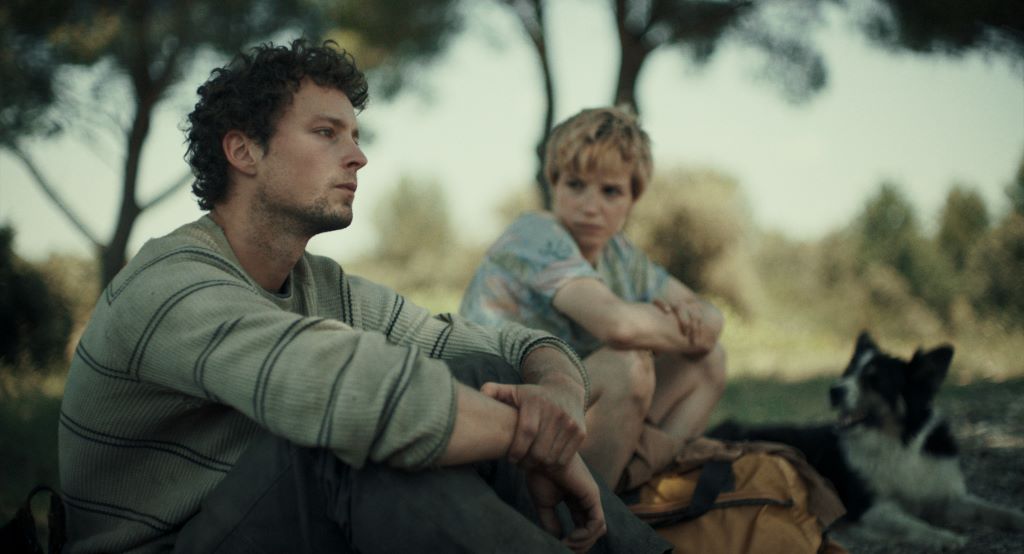
And yet Mathyas finds inspiration from this very hard work. He conjures a romantic portrait of his life while becoming a pen pal with Élise (Solène Rigot), a French bureaucrat who becomes immediately smitten by the notion of a “stray philosopher turned shepherd.” Mathyas’s belles lettres seduce Élise and she makes the same foolish trek to Tellier’s farm. It’s no love ranch. The aspiring shepherds flee the coop with Tellier’s sheepdog Hola, slightly deflated by the divide between expectations and reality.
Deraspe, who wrote the adaptation with Lefebure, unfolds the shepherds’ story in an effective two-act structure. Shepherds unfolds its first half at a pace that leaves one uneasy. Mathyas’s frustration is palpable. One senses his restlessness with the new life and the anxiety he feels in Tellier’s presence. Berating the sheep isn’t the stuff dreams are made of.
However, closing the door on Tellier opens one with a new breeder. Cécile (Guilaine Londez, a terrific presence who adds a perfect jolt of life to the film) seeks a shepherd couple to accompany her sheep up the mountain for an annual grazing migration. It’s just the offer that the lovebirds seek.
As Mathyas and Élise embark on this new quest, Shepherds deftly relaxes its pace and perspective. The cramped quarters of the Tellier farm yield to the revitalizing openness of the French Alps. Wide shots give the shepherds—and viewers—room to breathe, while the slower pace envelopes one with a sense of tranquil serenity. Lensed by cinematographer Vincent Gonneville, this destination proves to be paradise for the hopeless romantics. If only temporarily so.
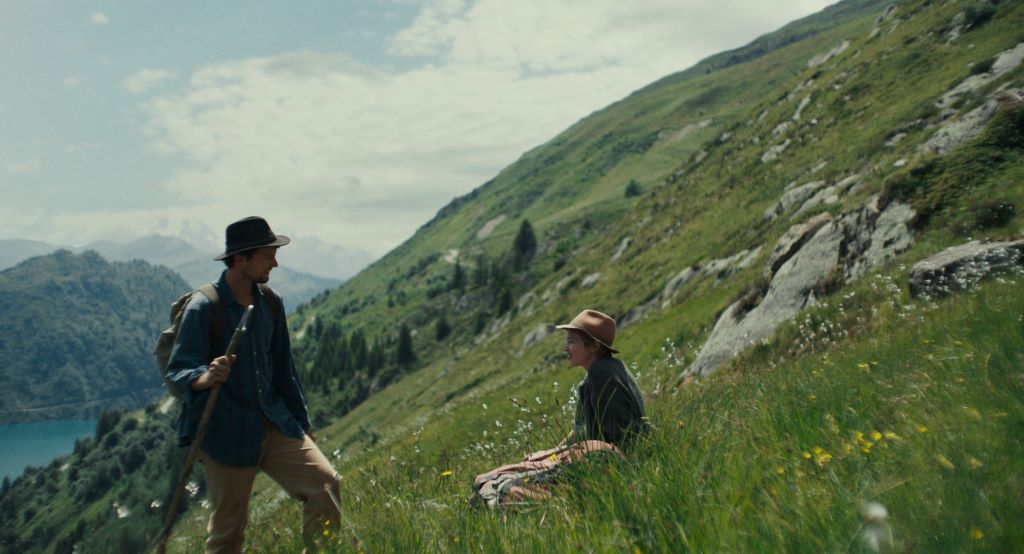
Deraspe finds poetry in the realities and hardships of rural life. Shepherds harnesses tropes of the pastoral—the genre that fuels Mathyas’s romantic urges—while firmly rejecting his idealisation of the trade. The film benefits from the retrospective voice of its author, as Lefebure imbues the films with the philosophical inklings that drive his memoir, but the awakening that happens is not one of a romantic poet, but one of the down-to-earth pragmatist. Mathyas learns that shepherds know not any division between work and play. They eat only the scraps and earn their laurels by familiarising themselves with every inch of the bucolic landscape to ensure their herd’s survival. The poetry here is the authentic and respectful portrait of rural labour.
Shepherds’ poetic naturalism finds a perfect embodiment, too, in Duval’s soulful performance. His Mathyas is a down-to-earth soul who beautifully finds harmony with the natural rhythms of the landscape. Duval (Saint-Narcisse) plays the stray philosopher as a sensitive soul—inquisitive, introspective, yet the kind of calm and strong figure with the wherewithal to transform from a metropolitan yuppie into a countrified farmhand.
Just watch as Mathyas finally lays his hand on a shepherd’s staff when he reaches the hilltop. The shepherd becomes buoyed as the vintage tool feels firm in his grasp, like confirmation that his sacrifices and trials have all been worth it. As the staff passes from his hand later and hits the ground, the actor deftly uses the tool as a symbol for the honour and fortitude entailed in this way of life. It’s like watching a poet lay down his pen. By the end, his appreciation for Pastoralism reflects not a romantic’s point of view, but, rather, a realist’s having lived it.