“Once upon a time, on the North Shore of Long Island, not far from New York…”
So begins the 1995 romantic comedy Sabrina, which celebrates its 30th anniversary today. A remake of the 1954 Audrey Hepburn film of the same name, the film was a modern Cinderella story, directed by Sydney Pollack (Out of Africa, The Way We Were) and starring Julia Ormond, Harrison Ford, and Greg Kinnear. From the production design to the costumes to its mention of the tech boom, the film couldn’t be more nineties. Though the original version is better remembered, particularly for the stunning gown designed by Hubert de Givenchy (which marked the designer’s decades-long collaboration with the iconic actress), the remake deserves its flowers too.
Billy Wilder directed the Hepburn-led vehicle, which saw Humphrey Bogart and William Holden as her co-stars. But the film itself was not an original screenplay; it was based on Sabrina Fair, a 1953 play by Samuel Taylor and headlined by A-listers Margaret Sullavan and Joseph Cotten that ran on Broadway for over 300 performances. The subsequent film, like so many of Hepburn’s relatively limited screen credits, remains a classic. Remakes eventually followed in both India and Turkey, too. Considering its Broadway origins, Sabrina Fair leaves quite a legacy.
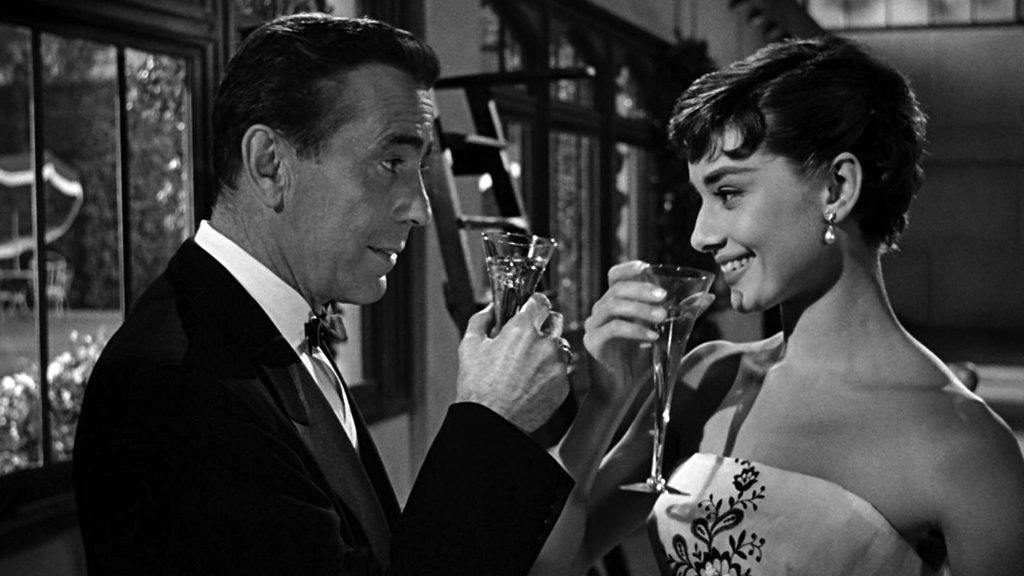
The core story varies little between the first film and its ’90s remake. The titular Sabrina is the daughter of the Larrabee family chauffeur, Thomas Fairchild (John Wood). She has maintained a lifelong infatuation with the wealthy family’s younger playboy son, David (Kinnear), who’s oblivious to her studied devotion. On the eve of Sabrina’s leaving for Paris to start a two-year internship with Vogue (updated from Le Cordon Bleu cooking school) she finally confesses her feelings, accidentally pouring her guts out to the older brother, Linus (Ford), instead of David. Cut to Paris, and Sabrina’s making plenty of faux pas in this flashy new world of style and la vie en rose (which, if you’re unfamiliar, roughly means seeing life through rose-coloured glasses). She returns to Long Island with a glow-up, and finally attracts the attention of a newly-engaged David, whose wife-to-be’s (Lauren Holly) family, the Tysons, is to sign a hefty merger deal with the Larrabee corporation upon his marriage. To get Sabrina out of the way, Linus decides to charm her away from David. Naturally, things get messy.
While the two films are set forty years apart, they are both inherently modern stories for their time. Though there’s a brief tut-tutting of “the chauffeur’s daughter” as a scandalous match, it’s superseded by the importance of the merger and all the money it will bring to the two families involved. Interestingly, in both cases, the fuss stems from a particularly lucrative formula for heavy-duty plastics. This fits into the major tech boom of the nineties, with chunky laptops and car phones, and into the internet’s entry into the proverbial chat of modern discourse.
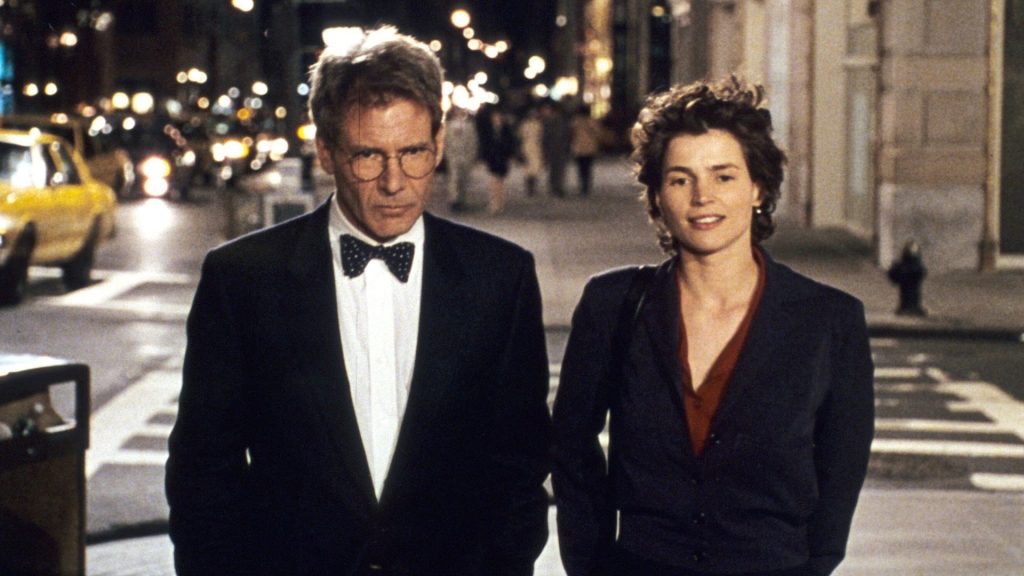
Likewise, the newer film’s production and set design are peak mid-nineties. The Larrabee mansion, “almost a castle” as Sabrina describes it, feels appropriately luxurious and opulent with its endless rooms and oak panelling. At the same time, the Larrabee Corporation building is fully modern, with subtle hints of frasurbane and plenty of glass fixtures. This contrasts with scenes at the cottage on Martha’s Vineyard, which is very nautical, preppy, and Martha Stewart-inspired.
Clothes are a recurring theme for Sabrina’s character from a transformation standpoint, and the costumes (designed by Ann Roth) here provided excellent reflections of Sabrina’s personal journey. At the start of the film, Sabrina, despite growing up observing countless worldly, stylish people, has a more childlike appearance—dressing in a maxi dress with a t-shirt underneath and a knotted headband holding back her long, wavy mane. By the time she returns from Paris, she’s cut off most of her hair, swiped on red lipstick, donned black suits, and seems entirely at home in a stunning velvet evening gown with a sparkly bolero shrug. While the two looks are night and day, Sabrina’s overall appearance is similar to that of her Vogue boss, Irene (Fanny Ardent), suggesting that, while she’s distinctly more confident, she’s still finding herself and imitating people she admires in the meantime.
Music also plays a prominent role in Sabrina. There is a gorgeous piano score here by legendary composer John Williams that conveys pure grace and loveliness, much like Sabrina herself. It fits perfectly in the opulent setting of the Larrabee estate and works as a backdrop both before and after Sabrina’s time in Paris. A song, important to the narrative, called “How Can I Remember?”, sung by Michael Dees, was written for the film, as was “Moonlight,” a touching ballad sung by Sting.
Sabrina is, at its heart, a fairy tale. Undeniably, it’s also fluff about people who spend a lot of time talking about money while doing little with it, at least in a way that’s not completely self-serving or in pursuit of accumulating even more wealth. But it is also unexpectedly inspiring. The film’s central theme is about making changes in your life to be happier and more fulfilled. While Sabrina had not been living her life fully up until the latter half of the film, neither has Linus—albeit for completely different reasons. It’s beautiful that Sabrina, who was very lost at the start of the film, has learned enough to positively influence and alter Linus, a man who has been just as lonely and wanting as she was.
Sabrina is a nostalgic escape to a simpler time, thirty years ago, when tech innovations were going to help humanity rather than harm it, as AI is doing, one generated image at a time. Fluff or not, this small time capsule is a delightful way to spend a couple of hours.
Sabrina is available to stream on AppleTV and Prime Video.