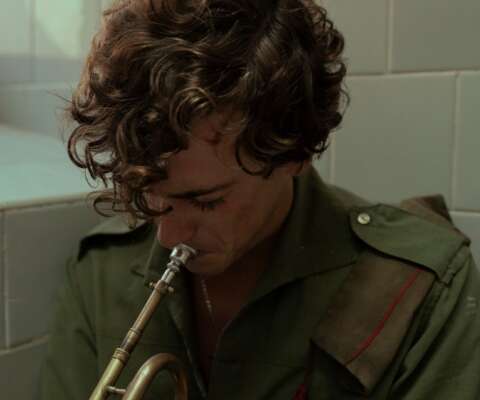


“Meet in front of Jongno 3-ga Station, exit 6 at 7 p.m,” reads a message in a group chat. Users in the chat, all members of Seoul’s gay community, reply if they’re interested in hanging out. The shorthand begins with 367, and then users note their attendance with the fourth digit. The first attendee writes 3671. If another guy wants to hang, he replies 3672, and so on in a collective “I’m in!” chain. It’s not a sex thing, as contemporary hookup apps and online social hubs might imply. Rather, 3670 invites audiences to join members of South Korea’s queer community as they establish a place for themselves in a country where they can’t comfortably or safely be out. In the spirit of Weekend or Moonlight, 3670 feels like an authentic milestone in queer cinema.
The value of this queer-coded shorthand affords new life to Cheol-jun (Cho You-hyun). 3670 explores the life of this young man who dips his toes into the queer scene after defecting from North Korea so that he can live open and freely. Life in Seoul, freeing as it is, initially seems isolating. Cheol-jun explores his sexuality through anonymous hook-ups on apps. He’s a catch, but finds himself caught in a catch-and-release scene. Guys prefer to cum and go, but Cheol-jun wants someone to share noodles with.
Moreover, life as a defector isn’t easy in Seoul, especially as a gay defector. Cheol-jun isn’t out to his fellow defectors. He meets them for English classes and enjoys a level of cautious friendship. But he’s still in hiding mode. He’s a minority within a minority, too, as being from the north brings its own connotation when meeting with people from the south. The stakes of the life behind remind them of the weight of shadows as Cheol-jun’s friends borrow money for human traffickers who will hopefully help bring family members over the border.
Alternatively, being a gay defector can be kind of hot. Cheol-jun finds a great surprise that he carries a rare ‘plus’ on the dating scene. He takes a leap of faith by attending a queer meetup. Many guys find themselves struck by this bashful hunk with a rare backstory.
Cheol-jun’s shyness ultimately doesn’t lead to any matches, but it turns out that one of the attendees, Yeong-jun (Kim Hyun-mok), lives in his neighbourhood. They strike up a quick friendship. Cheol-jun immediately flourishes as he finds someone with whom he can let down his guard. They do karaoke together, practice English, and prepare for college exams. Yeong-jun also invites Cheol-jun to join the chat where he learns the 3670 shorthand and finds a community both online and IRL. This includes Hyeon-taek (Cho Dae-hee), whose looks could easily front a KPop band. He was Cheol-jun’s first choice for a match at the meetup. But where Hyeon-taek exudes confidence, Cheol-jun’s still finding his footing.
Writer/director Joonho Park offers an authentic coming-of-age story in Korea’s underground queer community as Cheol-jun navigates love and friendship. This tender portrait intimately explores queer friendships in ways that few films do. It’s not a tale of hot hook-ups, lusty encounters, and scenes of finding love through recreational sex. Instead, Park considers the bravery it takes to put oneself out there and the journey towards self-acceptance and self-love entailed before giving, or inspiring, that fateful swipe.
Park confidently mirrors Cheol-jun’s hesitance to finally let down the protective cover he’s carried prior to defection in the stories of the South Koreans who form the friend group. For one, Yeong-jun clearly has eyes for Cheol-jun. Yeong-jun teases about how his mother insists on bringing him to church to find God, but he tells Cheol-jun that he sees their friendship as an act of God of its own. “Imagine, two fags saved by God!” he laughs.
But the bravery of Cheol-jun’s story intimidates him. So too do the reactions from his friend group when he introduces Cheol-jun to them. They all swoon, and then squeal with envy when they learn that he’s a top. A hot top defector! What a unicorn, they imply.
But Yeong-jun instead likens his friend to a duckling. He turns on his friend, putting up his own shield and encouraging Cheol-jun to stop following around the first person he saw upon coming out of his shell. Cho You-hyun’s extraordinary performance affords a sense that Cheol-jun does indeed imprint upon his friend, but that identification and seeing himself in another queer person gives 3670 a tender spark. This is a film about want it means to go from feeling like the only one in the room, as noted by the titular zero that completes the shorthand, to being part of community.
Park imbues 3670 with a sense of longing as these gazes often find themselves transfixed at other men’s eyes, but also at phone screens. As Cheol-jun navigates his new friendships, he often finds himself flipping to Google Maps. His cursor frequently lands back on his hometown of Chongjin in North Hamgyong Province. The bird’s eye view of his former home offers the only snapshot of the family he left behind and never see again. 3670 lets us witness this young man find himself in a new home, while struggling to let go of one he can’t reach even by shorthand.
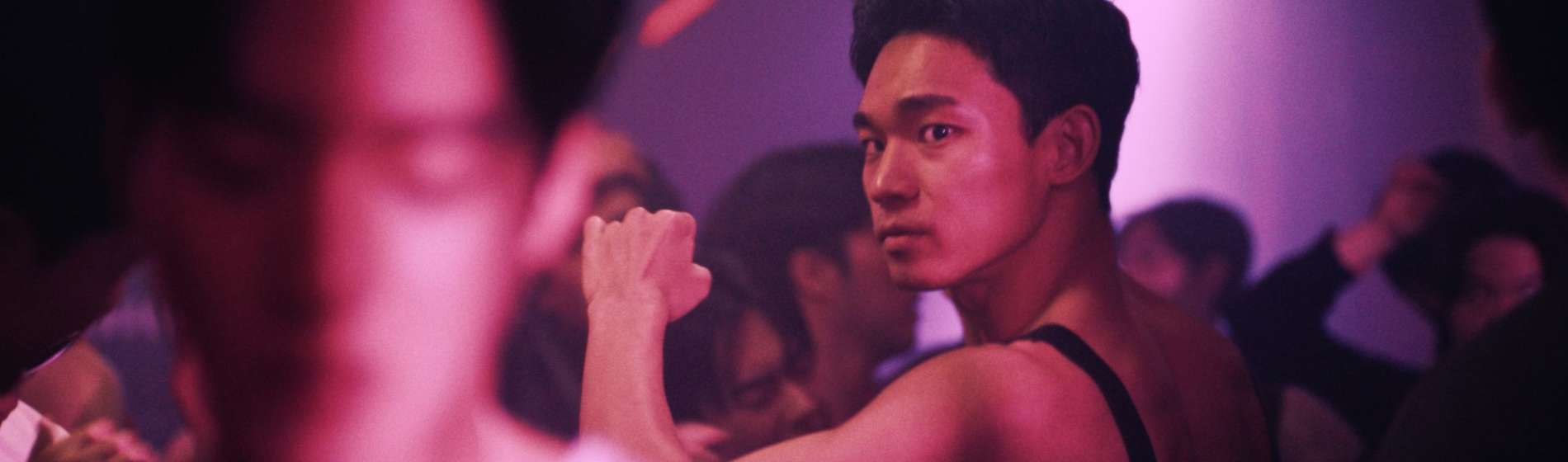
Things come to a head in a stunning sequence as the boys all meet for Hyeon-taek’s birthday. By now, Cheol-jun has come out of his shell enough to loosen up and have fun. It’s his first trip to a gay nightclub, and when Hyeon-taek introduces him to the staff, the DJ sees an opportunity. He playfully pressures Cheol-jun to lose his nightlife cherry and wear a harness. Once Cheol-jun whips off his shirt, reveals a six pack, and accentuates his assets with the leather gear, nobody’s eyes defect from his body.
This extended scene pulses with life as love, lust, and love unrequited collide on the dancefloor and in the darkroom. The young cast confidently wrestles a minefield of emotions. Everyone puts on brave faces for the party, bopping along to the techno beats that pulsate exhilaratingly on the soundtrack. Cho conveys remarkable emotional maturity for an acting making his feature debut as Cheol-jun searches for the right rhythm on the dance floor as he finally feels great in his skin, but has to learn what it means to be desired and to be looked at in the same way he’s gazed longingly at other men. 3670 frequently captures its characters in the act of looking. They hesitatingly survey the field before cautiously making any move. Cheol-jun may be the group’s lone defector, but they all know the feeling of hiding.
Joonho Park asserts himself as a visionary with this scene particularly showing a mastery of the landscape of human emotion. As far as first features go, debuts rarely mark such an assured introduction. Every move on the dance floor and every blocking choice in the complicated geography of nightclub culture, accentuates the heartfelt emotional stakes between these characters who’ve finally found a community, but have so long defended themselves from rejection that they can’t risk bumping down the numbers on that 367 thread. Gorgeously shot, beautifully acted, and invigoratingly alive, 3670 is groundbreaking queer cinema that makes the heart swoon.
3670 screened at the 2026 Palm Springs International Film Festival.
It has its Toronto premiere at TIFF Lightbox on Jan. 28.