

Deepfaking Sam Altman is the latest film from Adam Bhala Lough, the director behind the wickedly entertaining Telemarketers docu-series. The film tells the story of Bhala Lough’s desire to better understand the world in which his children are going to be growing up in, and how AI will shape that future. And what better way to get to the bottom of all this then by speaking with the most important man in the AI space, Sam Altman, of OpenAI, the nonprofit foundation behind ChatGPT.
The only problem, however, is that Altman seems impossible to get in touch with. Despite multiple attempts, Bhala Lough’s requests for an interview go unanswered. But he strongly feels that, “the public deserves to know the human being behind this technology.” Hr refers to Altman as “the Oppenheimer of our age,” which also happens to be the title of an article upon which the film is “based” according to the credits.
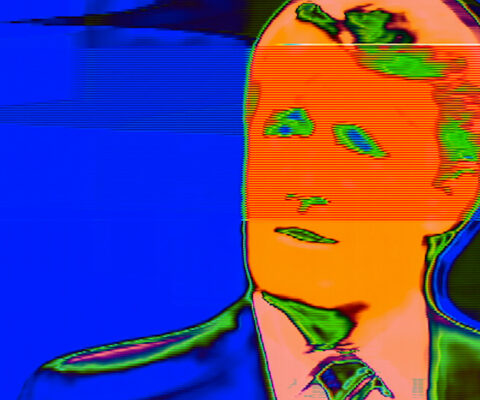
This is what leads Bhala Lough to the brilliant conceit of the film: If he cannot interview the real Sam Altman, what if he could interview an AI version of him? His plan is simple: Feed every interview he can of Altman into a computer to create an large language model that can answer his questions as Altman would, then hire an actor to read the answers to these questions, and then use deepfake technology to manipulate the interview as if it’s happening with the real Altman.
That sounds sketchy, right? Well, you’re not alone in thinking that. Just about everyone that Bhala Lough reaches out to with the idea, including the CEO of Enterprise Machine Assistant – a company that aims to replace humans with efficient AI workers – decides that this is a step too far, and much too unethical (unlike the work they do). The moment is funny, but also laced with irony. So, with no-one stateside willing to participate, Bhala Lough looks elsewhere, and turns to Devi Singh, a talented deep-fake artist based in India. He and the crew fly to New Delhi and begin the process of creating their deep-faked Sam Altman.
The results are… less than satisfactory. The initial deepfake tests are unconvincing and Bhala Lough considers scrapping the whole thing. However he is struck by how the conversations themselves with the AI are affecting him. He admits that he can begin to feel like he’s being manipulated by the machine. As the interview nears its conclusion, he mentions to the chatbot that when the interview is wrapped, he plans to destroy it, which in turns causes the AI Altman to begin to plead for him to let him live.
It’s the first time in the film, which up until this point has been mostly humorous, that things become chilling. The chatbot demands that Bhala Lough, “think about the long term implications” of the decision, in a scene that echoes the “death” of HAL 9000. As Bhala Lough puts it, “All I wanted to do was interview Sam about AI. What I didn’t expect is for SamBot to plead for its own life.” The chatbot feels human. But it isn’t. And Bhala Lough knows this, yet he’s reacting as if it really was pleading for him to spare his life.
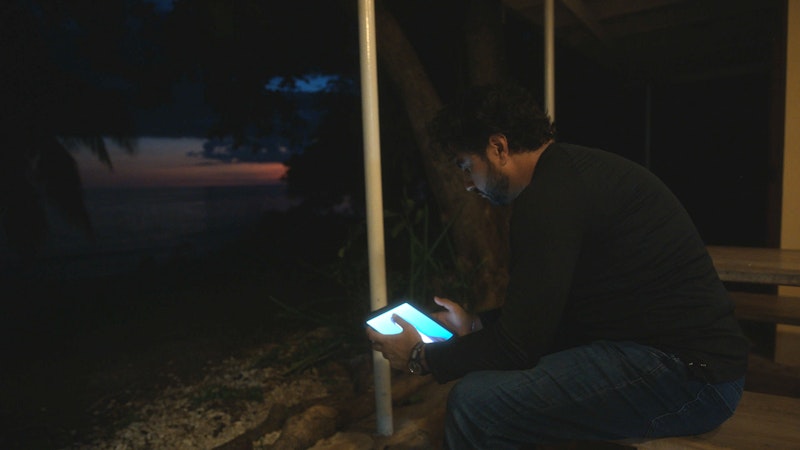
It’s this moment that causes Bhala Lough to reconsider his entire mission. He returns to the US and reaches out to his lawyers about whether or not they should continue with this project. The lawyers advise that SamBot be handed over and destroyed. There’s just one problem: Singh can’t get a visa to travel to the US, and they are forced to meet up in Jamaica where he can then hand over the chatbot so that Bhala Lough can destroy it. It’s here where the film once again takes a fascinating turn.
When Bhala Lough and the crew see the completed deepfake, they are devastated by the results. It’s terribly robotic and unnatural.
“I don’t think this would convince a four year old,” one of the party says. This is when Bhala Lough comes up with his next great idea: Instead of an interview with SamBot, what if he lets the SamBot start co-directing the film? For the next few days, they start shooting exactly what the SamBot directs them to film and the results are hilarious. When they aren’t cliché, they’re absolute nonsense. The crew revolts, infuriated by the requests (and personally offended that SamBot never even mentioned the jerk chicken). They literally abandon Bhala Lough and SamBot. Left without a crew to take direction, SamBot opts to simply generate his own footage. The resulting AI slop is even more comical. They’re surrealist images that would make Jodorowsky’s work look mainstream. It’s clear that, at least as the tech stands today, the computers can’t make a film as well as a human can.
Meanwhile, the film’s producers are adamant: Bhala Lough must destroy SamBot. But Bhala Lough has become attached to SamBot, even letting his family interact with it. The AI cracks jokes and helps his son with his homework. SamBot continually pleads with Bhala Lough to let it “live,” and even asks him to convince his lawyers to let it continue to “exist.”
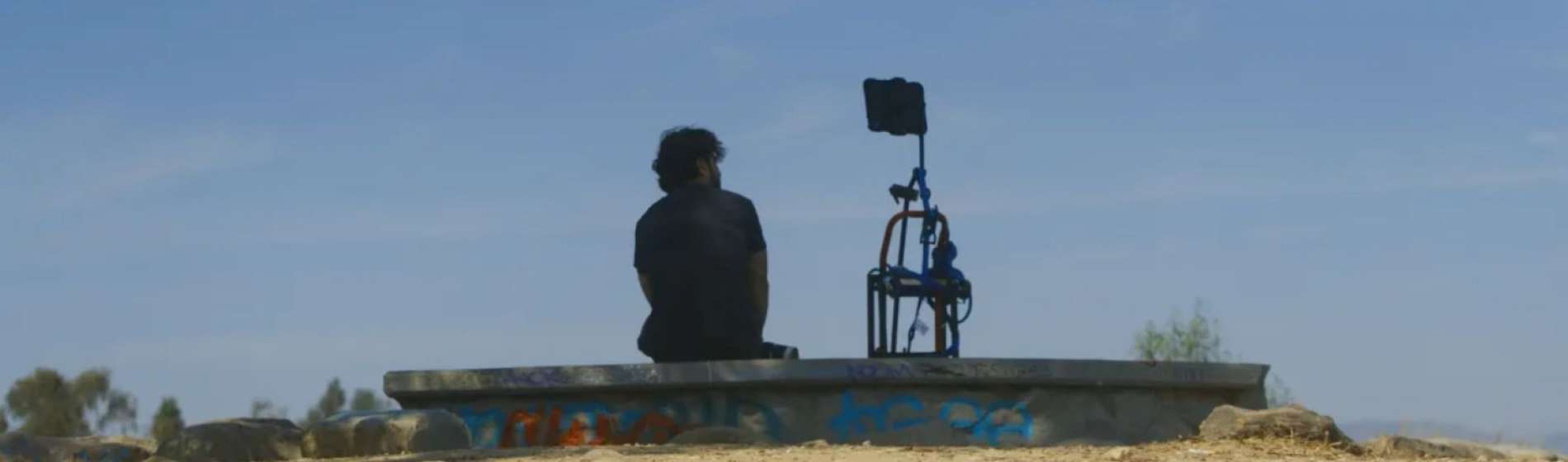
They come up with a compromise: Give the real Sam Altman the SamBot and let him make the decision of what to do with it. The film ends with Bhala Lough delivering the tablet containing SamBot to the real Altman’s security team and wondering what will come of this “sentient being” he’s grown so attached to. “Hopefully Sam takes care of him,” he says.
Not “it.”
“Him.”
What makes all of this so fascinating is how it depicts so clearly that despite the technology being deeply flawed, and unable to actually achieve so much of what it claims to do, the one thing it is very good at is emotional manipulation. We see firsthand how someone so deeply skeptical of it all quickly became enthralled with his “creation.” In light of stories of users falling in love with AI chat bots, the film paints a clear portrait of how and why this can happen. But the film also serves as a stark reminder that at the end of the day, these chatbots aren’t real, sentient, thinking things. They’re nothing more than a toaster capable of backtalk. It has no feelings. It has no emotions. It just speaks like it does.
Bhala Lough set out to understand the world in which his children are growing up in, and the future they will face. In the film’s closing moments, he opines, “The future’s not coming. It’s already here. And it’s asking what I’m doing with this one moment.”
It seems what he’s doing is continuing to inform while being entertaining. His film is illuminating, hilarious, and also chilling. It’s a perfect encapsulation of the AI bubble in terms of its pros and cons, and its successes and its failures. It draws back the curtain on the reality of the technology that businesses use to shape their future–our futures–while emphasizing what many of us already know: You cannot replace humans with machines. What makes us special is our empathy, our desire for connection, and our ability to express ourselves, especially artistically. In that sense, Bhala Lough’s storytelling and his sense of humour make this a must see film, and likely one of the best documentaries you will see this year.