

Our fairy-tale ideas of living happily ever after- what do they actually mean and represent? After all, a happy ending will always be different depending on who you are. Filmmaker Feng-I Fiona Roan gives us a new, modern take on the concept in her sophomore effort, Happily Ever After. It’s a beautiful, touching film that follows two sisters as they struggle with family influence. We track them on their individual journeys to their own happy endings and, more importantly, the even happier beginning to their futures.
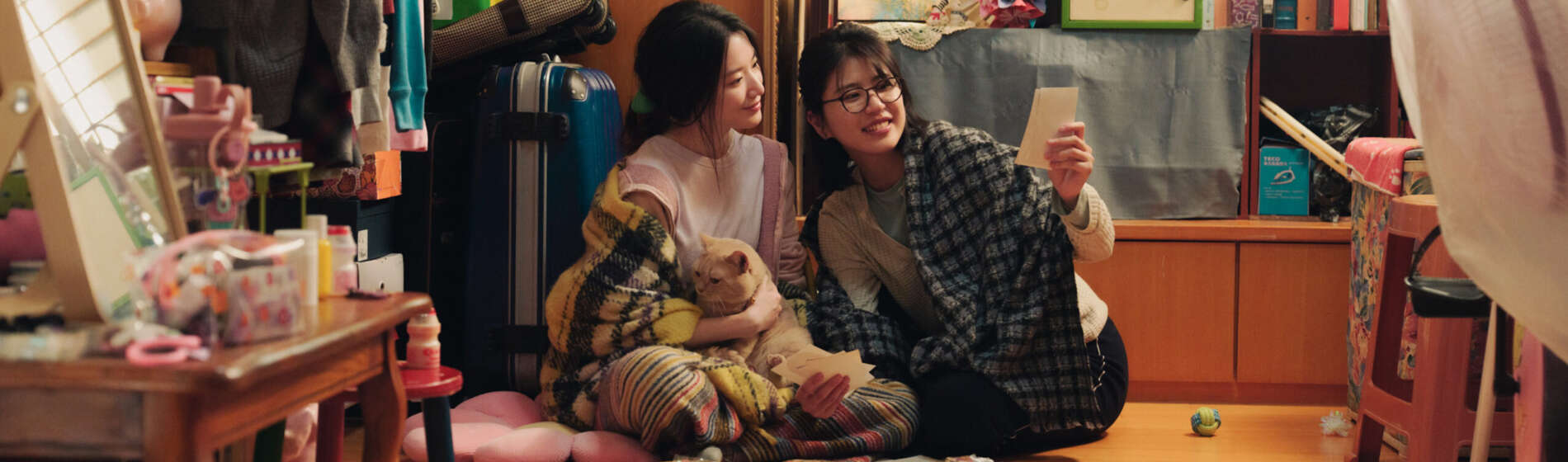
The two live separate lives, but as a magical melody rushes through the speakers, they reunite in the biggest embrace. Kitty (Shuhua Yeh) and Claire (Xuan Chen) are completely different in personality and outlook. As the family favourite, Kitty is the textbook younger sister. About to receive a promotion at work and engaged to a wealthy man, her life could not be better. Claire, on the other hand, isn’t what her parents want her to be. She is working towards the career she wants; she has the freedom she believes she deserves and the potential partner she sees herself with. But for her family, this is the opposite of what she should be doing.
As the two move forward in their individual lives — Kitty’s proposal and Claire’s book sales — a mysterious cat finds itself in their presence. Craving a pet and wanting to save the animal from the streets, Kitty brings the feline back to their shared home. Unfortunately for Claire, this only causes more chaos in their lives and kicks off a series of unprecedented events. As the little interloper brings about upheaval, the girls’ mother and father show more and more disproval of the younger generation’s choices–continuing to put pressure on Claire, in particular. Their attitude brings immense and complex emotional wounds to the surface, and bonds begin to break between family members.
Roan knows what she is doing in developing the particular family dynamic in Happily Ever After. The struggles both sisters go through are all too real and will feel familiar to audiences. There is something so relatable in the sisters every day battle to balance parental approval with finding their own sense of happiness and fulfillment. Children, no matter their age (or state of denial), are forever seeking to appease their parents and make them proud. But Roan takes her characters even deeper, adding layers to that struggle from what feels like firsthand experience.
A successful cinematic collaboration comes from every department firing on all cylinders, and Happily Ever After’s story, score and actors do just that. The film explores themes of family relationships, sibling rivalry, differing expectations across generations, and what it means to truly be happy. Each piece is complex and well-layered, and nothing is as simple as it seems by the time the credits roll. Everyone wants success and simplicity, but in today’s society, it is a constant challenge to be your own person and to strive for your own definition of happiness. Roan’s film fully embraces that journey in a way that will feel familiar to many, while also illuminating new elements of the complicated, daily struggle.
As she introduces her audience to Kitty, Claire, their partners, Mother (Yang Kuei-mei), and Father (Kent Tsai), Roan also carefully crafts their personalities so they rise above caricature and stereotype. A typical younger sibling, Kitty is engaged to a man and ready to help her parents through the struggles of aging, yet she also depends on them for everything. On the other hand, Claire is more of her own person, unwilling to forfeit her life to the societal and cultural norms her family enforces.
What is most beautiful about Happily Ever After is the way the sisters share such an intense bond despite their differences. It’s clear that Roan understands that dynamic. Sisters in the audience will recognize the emotional rollercoaster of fierce love and constant bickering. Uncertain in their own lives, and perhaps listening too much to those around them, the sisters let the cat push them to the brink of an argument that has long been brewing.
Bringing those familial bonds and struggles to the forefront are two debut actors, one of whom–Yeh–is a member of K-pop group i-dle. Yeh and rising star Chen turn in two impressively sincere performances and play very well off each other. Though the favourite child can come across as bland, Chen brings an appealing element of mischief to Kitty. Yeh’s portrayal of Claire is likewise strong, with a tangibly brutal need for parental approval always in the forefront of her performance. Though the two characters are not quite sure what they want, they share struggles the audience can relate to.
The film also features a melancholic score that further brings these sisters’ world to life. Fitting perfectly with the script and amplifying the emotions at the core of the film, the music lets viewers dive deeper into the characters’ minds. As the relationship between Kitty and Claire strains, the score builds anxiety.
As a film, Happily Ever After has a deceptively simple concept, but the story thrives because of the authenticity and honesty of the sisters’ relationship. Roan uses every moment of the film’s 92-minute runtime to remind audiences that to truly live your best life, you must make your own happiness. A touching portrait of sisterhood and familial drama, Happily Ever After is a stunning and simple exploration of personal joy and contentment.