


Eight years after Burning, Lee Chang-dong has returned with a title that reads as a question. Possible Love asks what kind of affection can actually survive between people separated by an unbridgeable amount of money, and it spends 165 patient minutes declining to settle the matter.
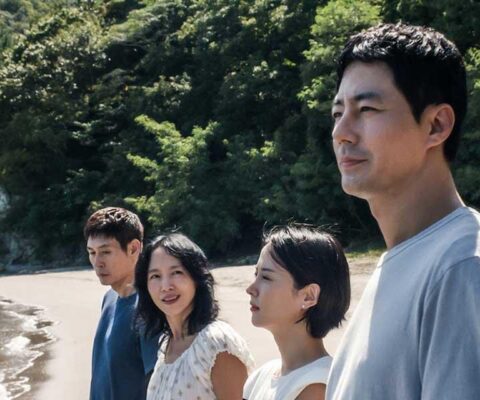
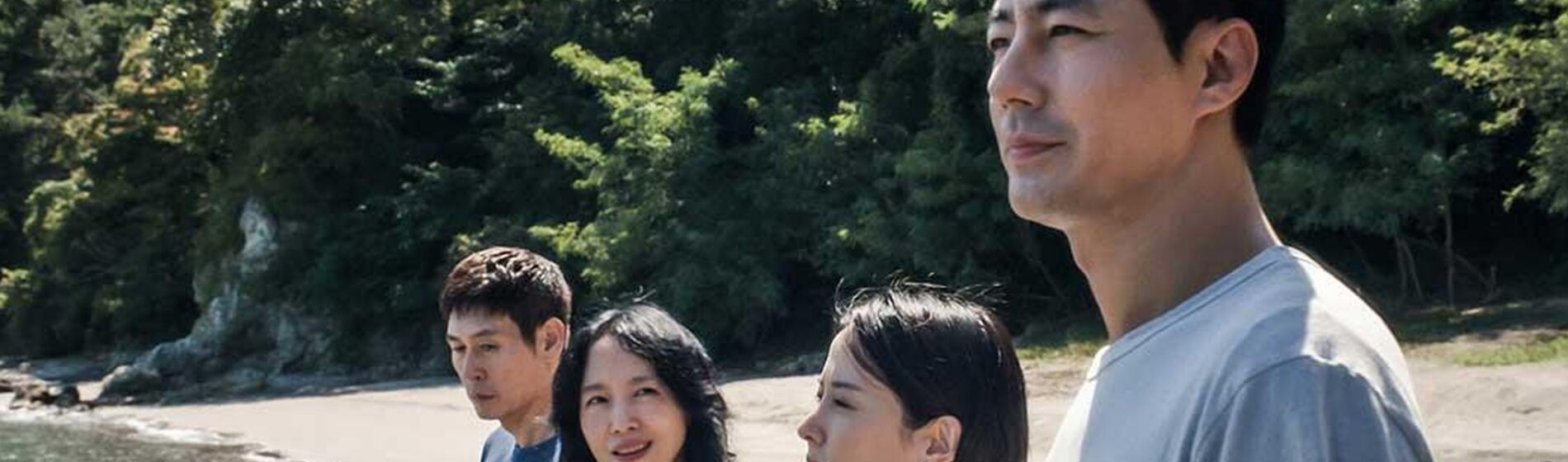
Choi Ho-seok (Sul Kyung-gu) was one of the workers let go when SP Heavy Industries cut 40 per cent of its workforce. The strike that followed was broken by the state, and two years on, the damage is still being counted among the men who lived through it. His wife, Ahn Mi-ok (Jeon Do-yeon), holds the household together while he tries to find his footing. Into this walks Lee Ye-ji (Cho Yeo-jeong), a documentary director who wants to film ordinary labourers living ordinary lives, along with her husband Sang-woo (Zo In-sung), who has money of a kind this family has never been near.
Sul Kyung-gu is astonishing as a man who has lost the ability to say what was done to him. He is nearly silent for long stretches, and the grief sits so heavily in his face that dialogue would be surplus. He bolts from the group therapy sessions his former colleagues attend. He will not sit for the director’s camera. When the film finally gives him the floor, the release is shattering, and it lands because Lee has spent two hours loading the spring.
Jeon Do-yeon is every bit his equal, and the film ultimately belongs to her. Mi-ok does the talking her husband cannot, recounting his injuries and his arrest and their nightly drinking to a stranger holding a microphone. Jeon plays her as warm, funny, and entirely unfazed by wealth, and her best actress prize from the Korean Association of Film Critics is well earned.
That arrangement produces the saddest idea in the film. A man who was beaten, jailed and discarded has no language for any of it, so his wife becomes his translator, and the official record of his suffering ends up assembled by someone else entirely. His story will exist in the world in another person’s voice.
Lee is merciless about what the camera is doing to these people. Ye-ji believes she is an ally, and she may well be sincere, yet the film keeps catching her in small, revealing gestures. She reaches for the record button when somebody else is about to say something painful. When the story turns out to be her own, she reaches for it the other way. Whether a camera pointed at somebody’s worst years counts as solidarity or as extraction is the question running under every scene, and Lee lets nobody off.
The class writing is just as sharp. Wealth announces itself here in small things: the price of a shirt, the ease with which an obstacle dissolves, a house that appears to run itself. Ye-ji is faintly ashamed of where she comes from and works to recast it in humbler terms, while Sang-woo carries his inheritance without a flicker of apology. Neither posture closes the distance by an inch.
The film is also unusually clear-eyed about what remains after a strike has been lost. Solidarity was the one thing these men had, and its collapse has left them unable to face each other. Former colleagues cross the street. The slogans that once meant everything have curdled into something nobody wants to say aloud. Lee understands that a defeated labour movement metastasizes into private shame.
Kim Ji-yong’s photography moves between three worlds without ever editorializing: the close warmth of the family’s small house, the bars of downtown Seoul, and a coastal estate so vast it may as well be a separate country. The images are gorgeous, and they make their argument quietly.
At 165 minutes, this asks for patience, and it repays every bit of it. Lee has come back with a film that treats a labour dispute as a love story and a love story as a class problem, and it settles on the chest and stays there for days afterward. The title keeps its question open right to the final frame, which is exactly where it belongs.
Possible Love is now streaming on Netflix.