


On June 30th, 2001, I was watching Doctor Dolittle 2 at a multiplex in Hanover, PA. I wanted to watch Steven Spielberg ‘s AI: Artificial Intelligence , but my parents said no; Eddie Murphy’s comedy was more appropriate for the whole family. I quietly respected their decision, but set about thinking of ways that I could catch a glimpse of the film. About 30 minutes into Doctor Dolittle 2, I told my parents I needed to use the bathroom. A believable enough ploy to briefly sneak into Artificial Intelligence .
The film was an event at the time. Spielberg had finished a project that Stanley Kubrick had developed decades earlier. TV spots I saw were intriguing, but alas, I was below the PG-13 threshold, and too young to see the film by myself. I walked into the Flesh Fair scene without context for the wanton carnage and cruelty happening onscreen. Paying audiences rip apart, melt, and mock androids who look like us. A carnival barker (played by Brendan Gleeson) lays humanity’s disrepair and demise at the robot’s feet. It was terrifying. I left quickly thereafter and resumed watching Doctor Dolittle 2 , now knowing that my parents were right. I wasn’t ready for that story.
Twenty-five years after the release of Steven Spielberg’s AI: Artificial Intelligence , we are much closer to realizing the film’s premise, but no closer to developing the emotional intelligence to responsibly create new life. Watching large corporations handle this new technology, it’s clear that we won’t be generating the utopia science fiction films promised, merely a ruthlessly efficient means for billionaires to become trillionaires. The addition of a sentient android to society doesn’t create space or free time for humans; it’s just another body for the ruling class to use as a plaything.
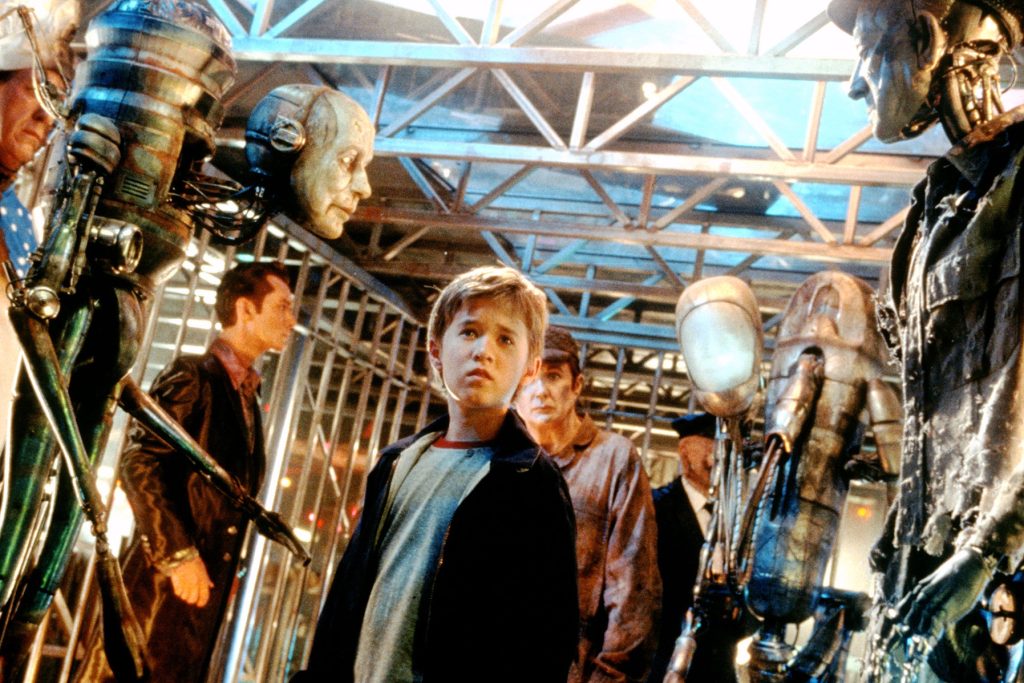
In A.I. ’s prologue, a voiceover informs us that carbon emissions warmed the planet, causing ice caps to melt and flood major metropolitan areas, killing off large swaths of society. “Mechas” became necessary for humanity to survive. They provide labour without resources like food and water. But academics like Professor Hobby (William Hurt) are convinced that robots are capable of more. That the gap between artificial intelligence and human ingenuity can be bridged. Enter David (Haley Joel Osment), a mechanical boy.
In a world where population controls must be strictly adhered to, David is a commodity with no rival. A forever child who needs for nothing.
After an accident leaves a couple’s son in a coma for years, the husband decides to use the “mecha” as a surrogate for his wife, Monica (Frances O’Connor), to love. Doctors are skeptical that Martin (Jake Thomas) will come out of his coma, and Henry (Sam Robards) wants some normalcy back. Monica is uneasy around David, but Henry insists she’ll come around. If she doesn’t, no harm either—they can simply return him. David smiles like a real boy, is curious, and wants to be around Monica at all times. David can’t replace Martin, but Monica does see David as more than a collection of wires and circuits. She initiates the irreversible hard-bonding process. David will never stop loving Monica until he ceases to operate.
It’s obvious what happens next: Martin awakens from his coma.
Martin returns home and takes his place as Henry and Monica’s sole focus. The flesh-and-blood child treats David as a toy, prompting David to take risks to win Monica’s affection again. Jealous of any attention David gets, Martin manipulates and bullies David. After an act of cruelty by one of Martin’s friends at a pool party, David falls into the pool with Martin in tow. It was an accident, but the onlookers reacted as you likely would if an appliance tried to kill you. Monica defends David initially, but relents when Henry banishes David.
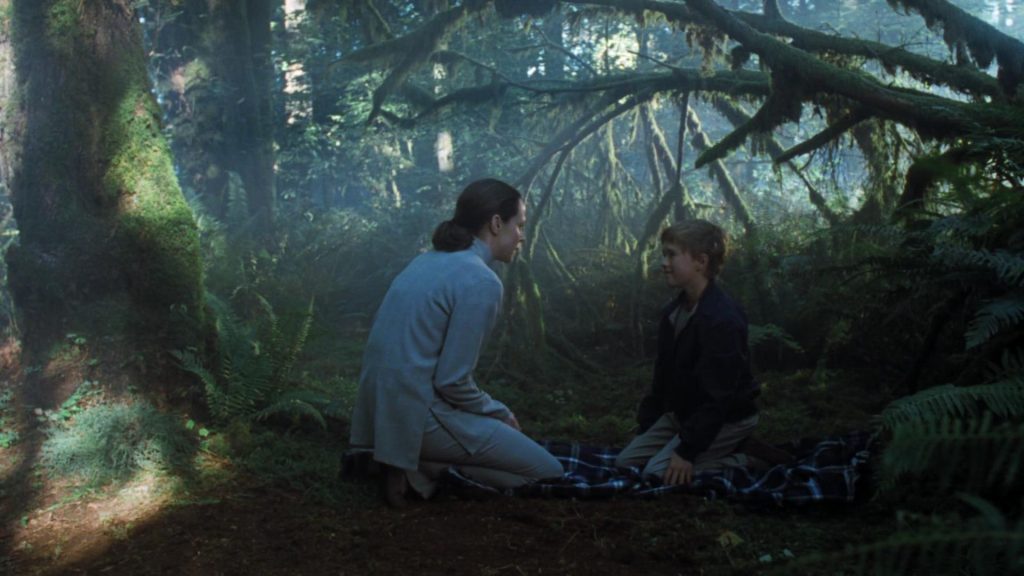
It’s unclear whether Monica ever grew to love David or if the mecha just filled a need and became disposable as soon as Martin recovered. When she abandons him in a forest, David initially assumes it’s a game, but once Monica explains she’s never coming back for him, the devastation sets in. In a scene that rivals Miller’s Crossing for pleading in the woods, David is abandoned and left on his own with a few warnings. Stay away from the Flesh Fairs, stay away from the company grounds that built David, and stay away from humans; they’ll hate you.
So much was asked of Haley Joel Osment in his performance as David. Osment’s turn in The Sixth Sense put him on Spielberg’s radar, and the child actor delivers a complete performance here. David is simultaneously off-putting and deeply relatable. Without that connection for the audience, A.I. does not work as a film. Osment’s performance is more key to the film’s success than any special effect. David will remain unloved until he can become human, something the audience knows is impossible, but Osment’s desperation rings through even the hollowest heart.
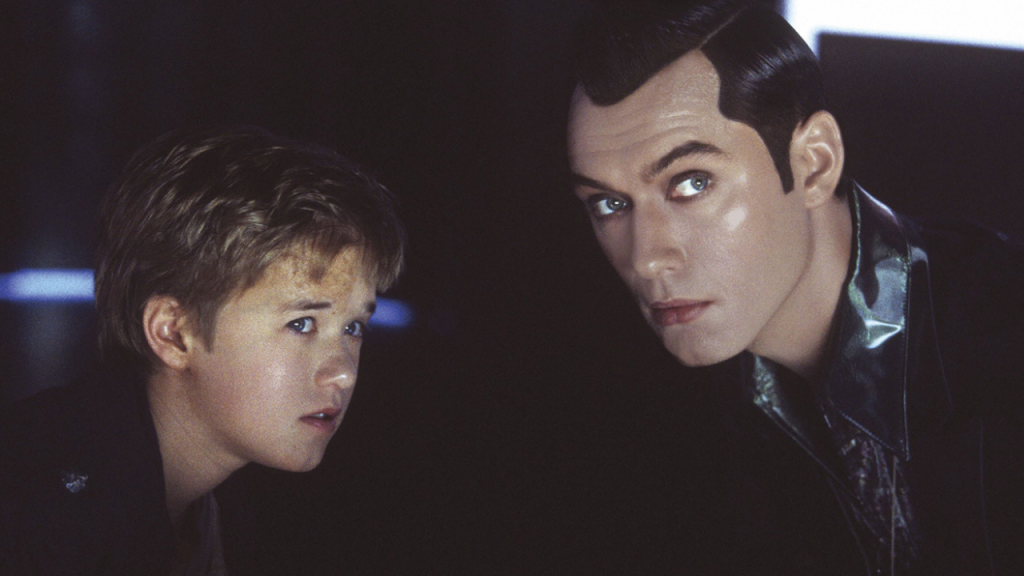
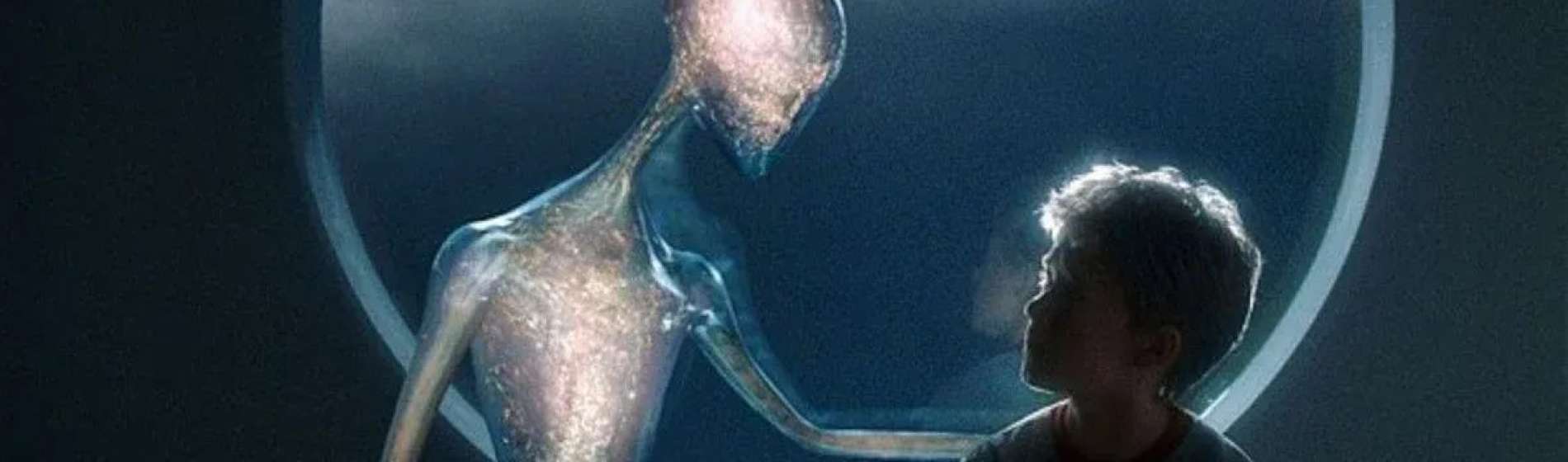
The future world that David and other mechas inhabit is filled with hatred. Jude Law’s Gigolo Joe only does what he was created for, and he is framed for murder by a jealous ex-husband. Joe doesn’t appear sophisticated, but he knows humans well from his exploits over the years.” They made us too smart, too quick, and too many. We are suffering for the mistakes they made because when the end comes, all that will be left is us. That’s why they hate us.” In the end, Joe was right. Advanced artificial intelligence that physically resembles grey aliens is now the dominant life-form on Earth. Two thousand years after David crashes into the flooded ruins of Manhattan, everything is frozen. But David is brought back online. David becomes a sort of Holy Grail for the advanced A.I. to study.
They hope David can help them glean life’s meaning from his time with humans. Little do they know we’ve spent centuries trying to discern exactly why we’re here. David’s inability to understand his creation mirrors our own search for meaning. The advanced A.I. presses David on what it was like to interact with humans, but David has only one wish: to be reunited with Monica. They explain that she can only be resurrected for a day, but David remains steadfast. While his wish to be reunited with Monica is granted (temporarily), it’s not the feel-good ending many assume.
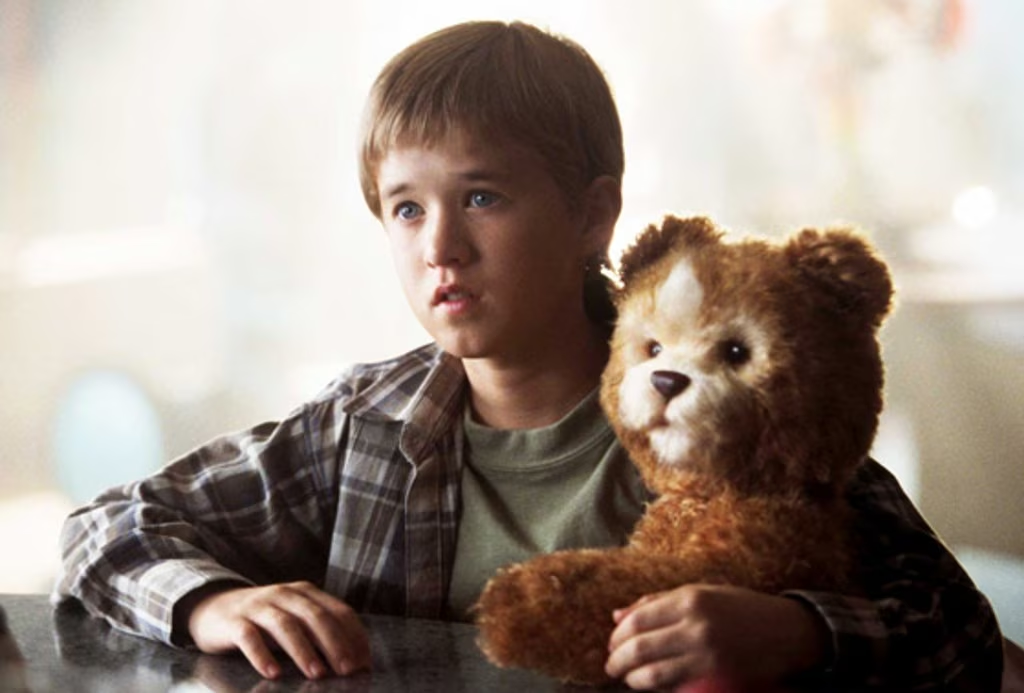
If everything inside Monica and Henry’s home feels like a Spielberg film, the outside world is where Kubrick comes into play. But the director, known for scathing works like Dr. Strangelove and Paths of Glory, was responsible for the teddy bear and the ending. The Flesh Fair (which still bothers me all these years later) was all Spielberg. Spielberg merged his style with what he thought Kubrick would’ve done. Critics weren’t forgiving of that fusion filmmaking upon release, but with distance from the director’s death (Kubrick had been dead for roughly two years when A.I. was released), the film’s tone is appropriately uneven. The wonder on David’s face at something as simple as a coffee press is as vibrant as the terror of his watching humans round up and publicly execute mechas. Life can be sweet. Life can also be brutal and cut short at any moment.
Humanity, however evolved we imagine ourselves, isn’t far removed from the apes flinging bones of 2001: A Space Odyssey . I think Kubrick would’ve been pleased with the film. If you haven’t seen A.I. Artificial Intelligence , please give it a watch.