

“I feel like Diane wouldn’t like me,” Allison Janney says while reflecting upon her character in Miss You, Love You. “I talk about feelings all the time. So I think she wouldn’t want to be around me.
Miss You, Love You forces Diane to talk about feelings whether she wants to or not. Janney gives her best performance since her Oscar-winning turn in I, Tonya , this time playing a widow who grieves her husband under bizarre circumstances. It’s a ferocious performance driven by the bitter sting of abandonment, yet buoyed by dry humour and the love for her son she can’t shake. The film, written and directed by Jim Rash ( The Way Way Back ) positions Diane in an odd situation when her son Tyler doesn’t come home for his step-father’s funeral. Citing work commitments abroad, Tyler sends his assistant Jamie (Andrew Rannells, The Prom ) in his place.
Jamie dutifully helps Diane with the practical matters of preparing a funeral. But the personal connection they share in this fragile moment proves far more than either party bargained for. Particularly for Diane, who finds herself reeling from not one but two losses due to Jamie’s absence, the circumstances force a regularly composed woman to bare herself to a stranger.
For someone in real life, the premise of Miss You, Love You sounds like pure hell. But for two actors, it’s meaty material. Janney and Rannells deliver one of the most ferociously compelling and well-matched duos that audiences will see on any screen this year.
Janney and Rannells, speaking with press during a virtual event ahead of Miss You, Love You , create two captivating characters. Diane and Jamie navigate uncomfortably forced intimacy with Tyler offering being an absent connection. Jamie becomes a surrogate through which Diane unleashes tough love. However, he also recognizes how lucky Tyler is for having a mother who loves him so unconditionally.
“She’s very controlling, very hard on herself, hard on other people. She’s very prickly,” Janney says. “I’m the opposite of her, so her traits were fun to play for me. I get to move quickly. It was fun to let that part of me out, like say what you feel. Playing Diane, I got to let out some of my inner anger at family members that I had in my mind.”
She turns to Rannells with a sly laugh: “You were many different people in my family at many different parts of the film.”
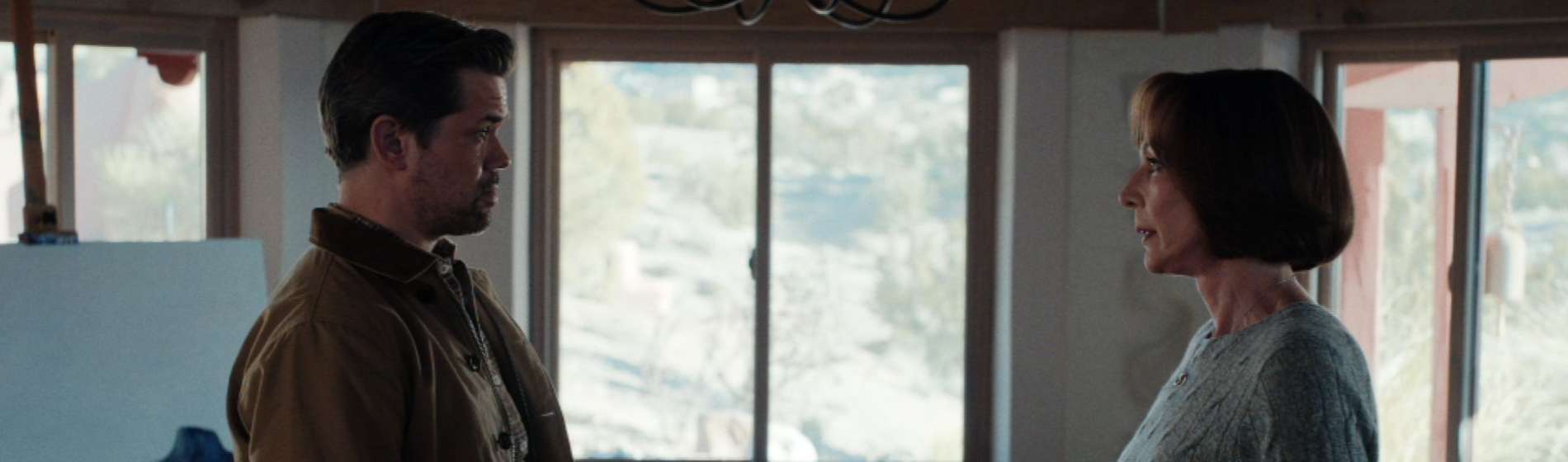
Miss You, Love You unfolds as a dramatic two-hander. Diane and Jamie maintain their distance as they cautiously move about the kitchen and living space of Diane’s New Mexico home. Small talk leads to deeper emotional elements as they get to know each other and Diane lets off steam. Once she starts unburdening herself, she can’t stop. This release leads to some brutal hard truths, which Jamie takes in stride.
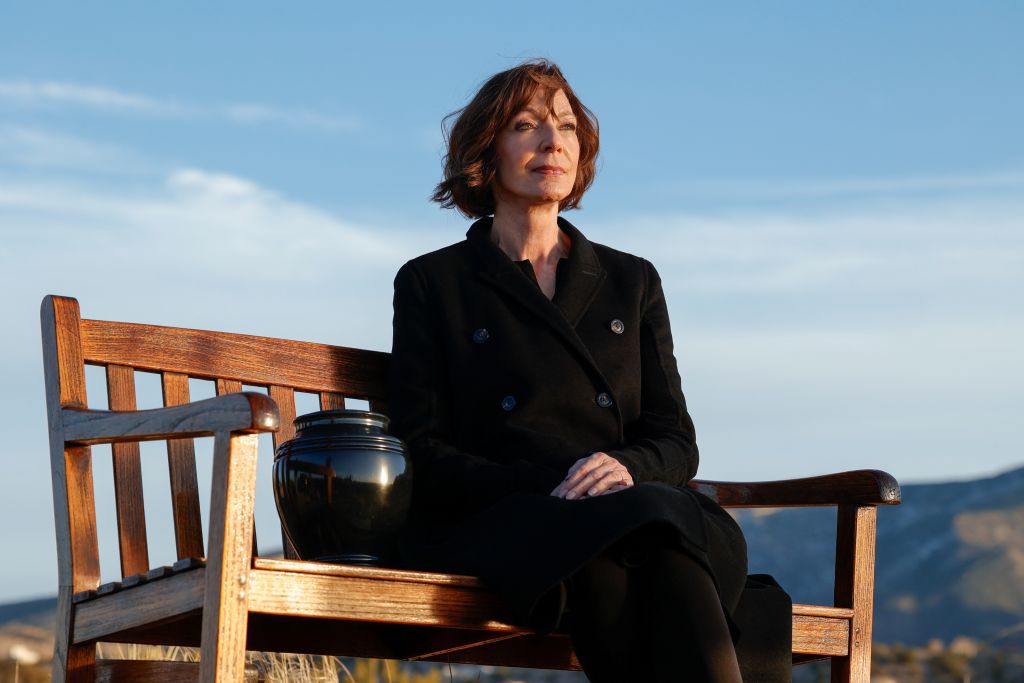
“I certainly have gone through periods in my life where it feels easier to not share with people. You don’t want to be a burden,” reflects Rannells. “I don’t want to take up too much time or too much space and then you do find yourself in these situations where you’re opening up to a total stranger. Someone next to you on a plane or [you’re at] a barber and you’re crying in front of someone you’ve never met before.”
Rannells says that, like Janney, his attraction to the role came from having a very different personality. “They’re both people who feel like they can just do it alone. And, of course, that’s not the case. We all need to share that grief and that pain with someone else and it does lighten that load the second you share it with someone,” he says. “I think I’m good at asking people questions. I’m not always good at answering the question. Answering it is harder.”
“And giving advice,” agrees Janney. “I’m a good listener. I like to ask people what they feel and people can open up around me a lot.”
The film builds its dramatic tension through the fine art of communication that Diane and Jamie generally deny themselves. It’s a talky film, if a very dynamic one that builds undulations of emotions throughout its acts, with Diane and Jamie gradually moving from medium shots to close-ups as they, for better or for worse, let their guards down and move from mutual discomfort to intimacy.
The film, which Rash says he began writing as a play but shifted to a screenplay simply due to the circumstances of writing during COVID, uses dynamics of theatrical space and time to heighten the tension. Rash says he often shot pages upon pages of dialogue with the actors during the 17-day shoot, and shifted from fixed to handheld cameras when Diane and Jamie have their biggest fight before the third act.
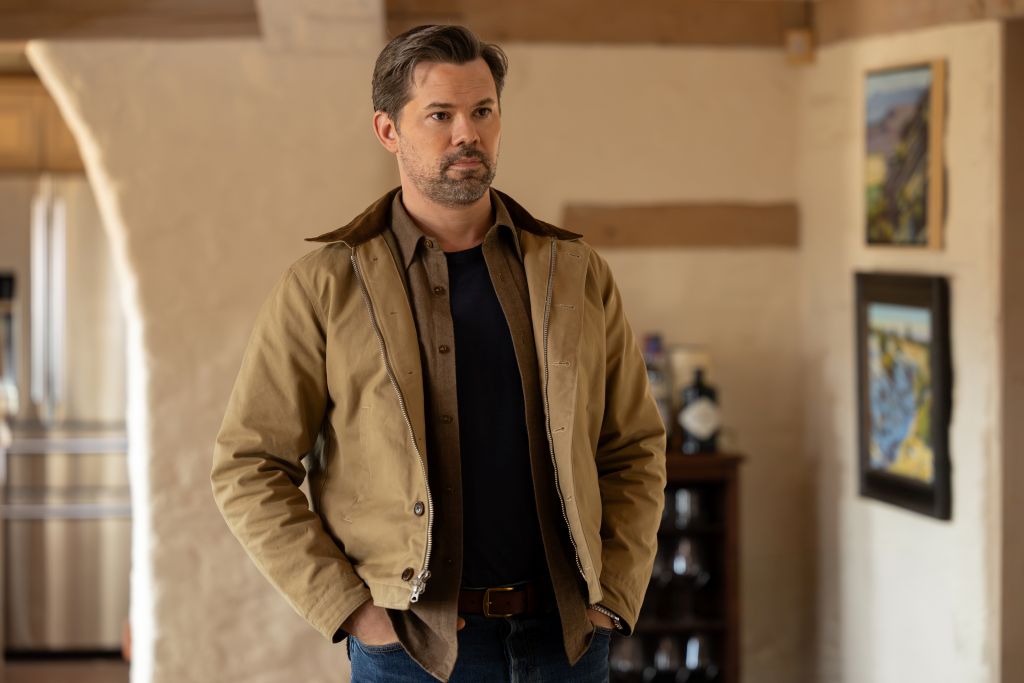
“Along with [cinematographer] Danny [Moder], we didn’t introduce handheld until Diane gets up with the salad [and] handheld would allow us to do the next chapter, which was them pretty much boxing around the room,” explains Rash. “I would just follow their emotions, but then there were moments where the emotions were held in and you have the beauty of both of those things when you get into the edit because both are correct. It just depends on how much Diane wants to be exposed at this moment or how much Jamie wants to be vulnerable in this moment.”
“We never did that many takes of anything, really,” adds Rannells. “We would sit in moments and the takes were longer than usual. We’d do pages at a time which you don’t generally get to do, but Jim created the space for Allison and I to ramp into things or sometimes we would come in real hot.”
“I struggle with that as an actor,” Janney says on the preparations for stage dramas compared to film. “Sometimes it’s hard to have to be true to a moment eight shows a week. It’s very challenging and in this movie, we got two or three takes and we got it. It’s still challenging, but different.”
The longer takes really allow the actors to marinate in their characters’ volatile cocktail of anger, grief, and love. The theatrically-inspired process lets them feel the scenes out and take the drama to places one doesn’t expect. There’s laudable vulnerability as they crack open Diane and Jamie.
“I’ve never been offered a role of this size and the scope of Diane’s journey is quite extraordinary. I was a little intimidated, but also really excited about the challenge of doing a role like this,” admits Janney. “All the different layers and the dark humour, just everything about it was so appealing. There’s not any bad in there anywhere. It’s just all resentment and anger. Even getting to take it out on this perfect stranger was heaven.
“It was the perfect dynamic for her to just take out everything from him,” Janney continues. “As a result, they learned a lot about each other. More than you would [with] someone you love, a family member.”
As the grieving mother and the helpful assistant open up, Diane quickly deduces that there’s more to Jamie’s relationship with Tyler than he discloses. This observation partly arises through intimate knowledge of her relationship with her son that a strictly professional bond might allow. Jamie also responds strongly to Diane’s recollection of Tyler’s coming out after admitting that he did so late in life following his parents’ deaths.
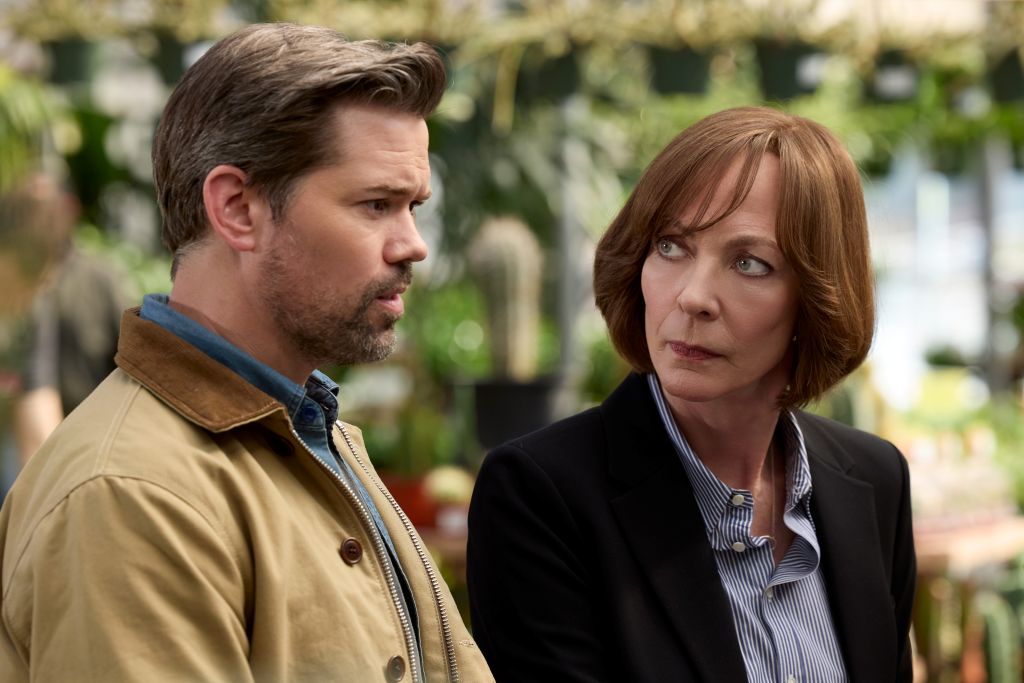
Rannells says that as an out actor, he found the dynamic refreshing. Coming out isn’t a narrative beat in Miss You, Love You . It’s a just a point of connection that affords emotional depth and love to two queer characters—one onscreen, one off. “The movie is not a coming out story, nor is it a movie specifically about [Jamie’s] sexuality or how Diane’s son’s sexuality changes their relationship,” says Rannells.
“[Allison] has that really beautiful speech about walking through the door and how painful it was to witness her son go through that [entering rooms while gathering the courage to come out] and to not feel like he was ready to do it. What Jim wrote was so beautiful and I had never read anything quite like that before. It does speak to what kind of projects are getting made and what kind of stories we get to tell as queer actors. I love being the sassy gay friend, but I’ve done it a lot and it’s sometimes nice to not have to be the sassy gay friend.”
Rash echoes the sentiment that rooting the characters in authentic experiences—his idea for the film came after his sister brought her assistant to a funeral, that helped the film go there while telling a story about the complexity of love through the pain of only two people.
“There were many things going from me to the page of my experience and also I want to tell the story of a mother who was very ready to receive that love, was very ready to be the parent,” says Rash. “When you put your love towards somebody who doesn’t reciprocate, that’s a unifying existence of gay strength. I think it’s very important to elevate these types of stories because grief is universal. Love is universal. All these things—we will all have this experience.”