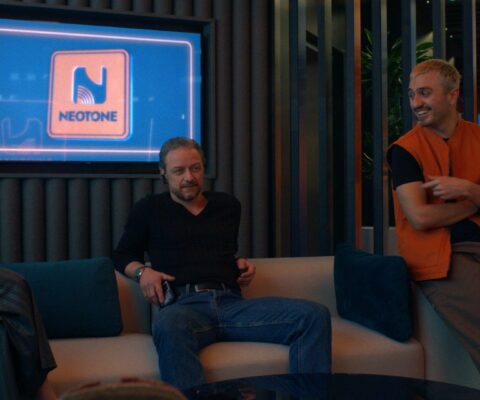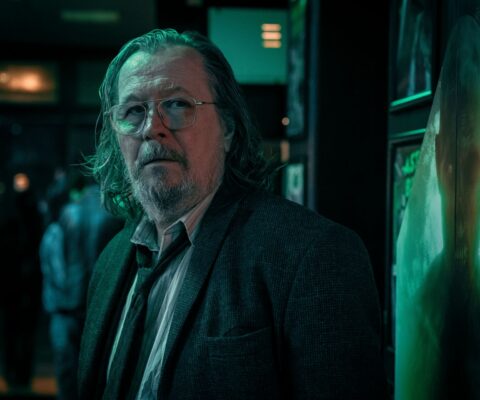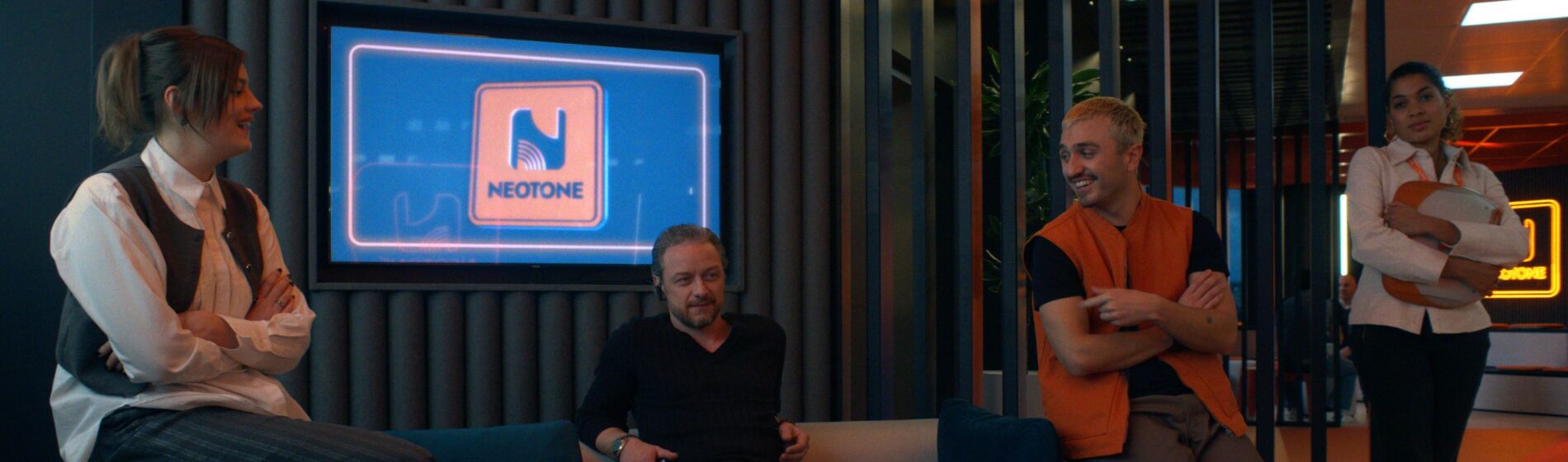


A hit rap song needs solid inflection points, but lean a little too hard into the accent and the track might never make the air. That dilemma fuels California Schemin’, which tells the story of Scottish rappers Billy “Silibil” Boyd and Gavin “Brains” Bain. The friends performed from 1998 to 2005 as the rap duo Silibil N’ Brains, but as a pair of California boys. The duo, played by Samuel Bottomley and Séamus McLean Ross, endures snickers from the recording industry when they audition with their native brogues, yet they find that success comes much easier when they pose as American artists. Their Beastie Boys-ish sound and generic story gives the label something familiar to sell. In an industry built upon distinct voices, they only thrive by suppressing their own.
Actor James McAvoy makes his feature directorial debut with California Schemin’ and this rambunctious ode to the Scottish brogue drops a solid beat he knows well. The film’s an upbeat anthem of pride much in the fashion of the Irish sensation Kneecap as it owns what it means to be distinctly Scottish on the world stage.
McAvoy, speaking with That Shelf over Zoom admits there was clear pride in making the Silibil N’ Brains story so unmistakably Scottish. “We worked really hard to make sure that it felt really strongly true to the Scottish sound at the same time, and hopefully not excluding people from the rest of the world,” he says. “We’ve been told so many times that our accent is beautiful, but impenetrable. And so that was a fine balancing act because we didn’t want to make it for the rest of the world alone. We wanted to make it for our own people as well to enjoy.”
The ear that one brings to the story will inevitably reward some Easter eggs. McAvoy says he and his crew played around with the soundscape, mixing tracks by the duo and sampling work that inspired them. “For the Silibil N’ Brains tracks, we chose some stuff that they wrote later than the film takes place, but we were looking for some of their funnest tracks, but also looking for something that felt climactic near the end,” says McAvoy. “Their stuff is really funny and witty in a really young, almost juvenile way.”
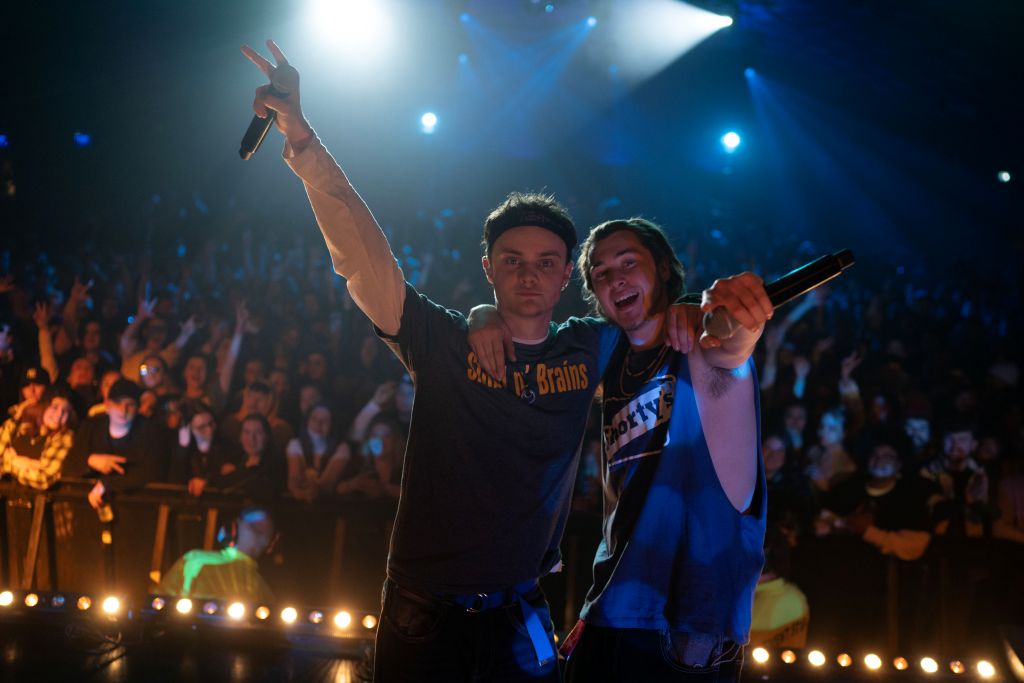
McAvoy adds that the nature of the music meant that some songs had to be changed if they were too “full on,” while other tinkering, including needle drops on the soundtrack, came through practical means. “We had to get really clever with how we worked with some of them,” says McAvoy, noting that some songs were rebuilt. “On some of them, we took the stems, the original piece of music that had been sampled, and then we rebuilt that, so we got a piece of music that sounds like something else exactly, but actually it’s the original sample that we paid for rather than the Wu-Tang track that would cost us 150 grand. We also wanted something that gave that early noughties, even ’90s sort of rap and hip hop vibe.”
Audiences who aren’t familiar with the Silibil N’ Brains story, or the duo’s music, can still relate to their mischievous tale of chasing a dream. At the same time, McAvoy emphasizes the working class milieu of the story. Dundee plays a key role, as does McAvoy’s native Glasgow when the boys get their break. The sense of place contrasts sharply. Meanwhile the intensity of the music leans into what’s gained or lost as Gavin and Billy alternate between their true voices and their stage ones.
“I guess me growing up in a similar background to the two characters as well really helped lend a bit of authenticity and a bit of local integrity,” adds McAvoy.
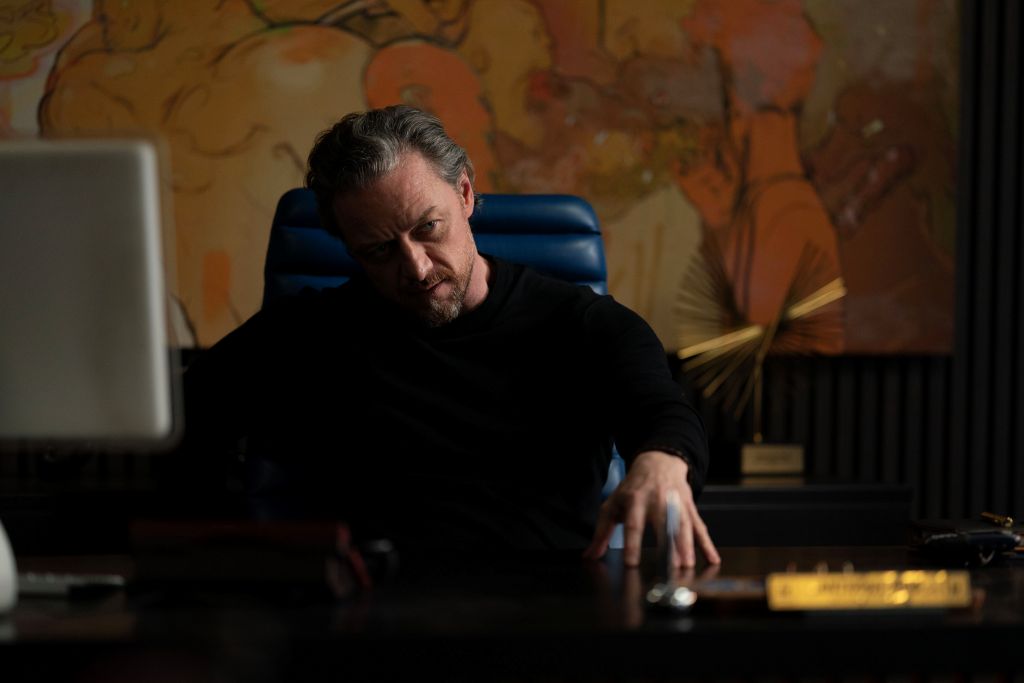
McAvoy admits that his own entry into showbiz didn’t quite force the same confrontation with being audibly Scottish that the duo encountered. “It’s not quite apples to apples because my job is about pretending to be someone else a lot of the time,” he observes. “But I think I’ve been acting for 30 years and I think I’ve got to use my own accent six times out of the 40-45 movies that I’ve made.”
Obviously The Last King of Scotland comes to mind, but look for McAvoy’s most iconic parts, and one’s more likely to hear a British accent (see: Atonement and the X-Men movies) or an American one (see: Wanted and It: Chapter Two). Audiences can hear his native brogue in films like Filth and, naturally, California Schemin’ where he plays the Glasgow record executive who signs Silibil N’ Brains. In Split, however, fans can hear him try nearly two-dozen inflections.
What he relates to, however, is the desire to see and hear something with which one can identify, be it a voice, experience, or sense of place.
“It’s not moments like this again and again and again, but over the whole of my career, I’m like, ‘Where are the stories about people who sound like me?’” he explains. “And that’s not just for Scotland, that’s many parts of Northern England, Wales, parts of Ireland, and I’m sure parts of America and North America are left out of the equation when it comes to who gets stories made about them. Really, what we need for a cultural output, what we need as human beings, is to see everybody reflected, dissected, vilified and glorified, exalted, and torn down.”
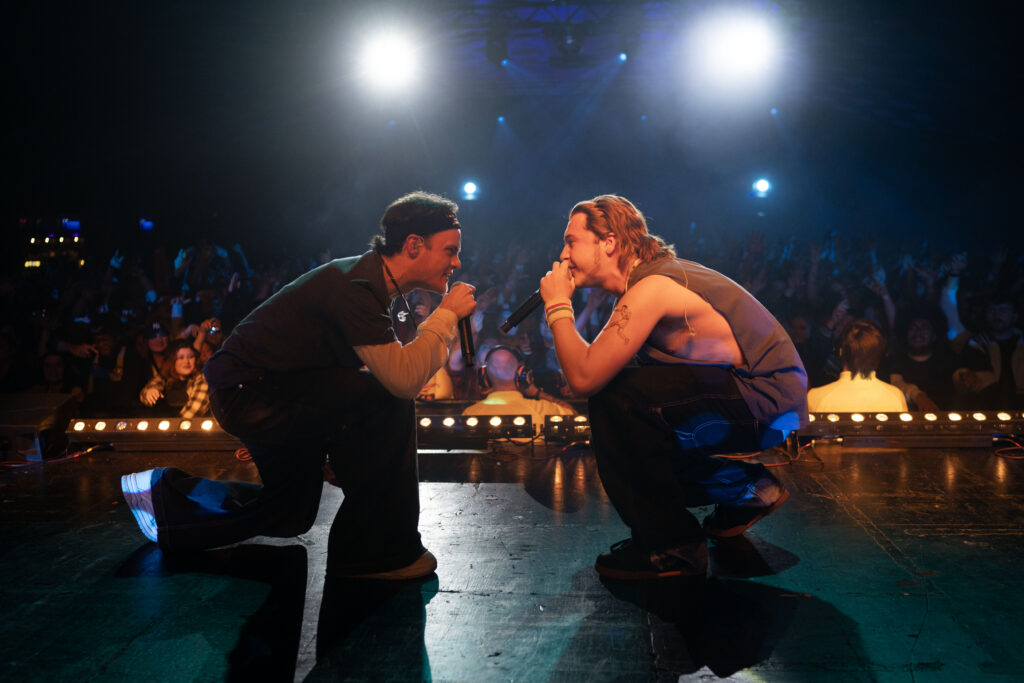
There’s a fair balance of glorification and dissection, too, in this take on the Silibil N’ Brains story. The friends struggle with the usual excesses that comes with the high life—drugs, girls. Meanwhile, the lie in which they sink themselves so far in takes its fair share of casualties. This includes the talent scout who discovers them. It’s especially rough on Billy’s relationship with Mary (The Testaments’ Lucy Halliday), although McAvoy notes that the real couple is still together and has three kids.
“We’re dredging up bad times in his life and bad times in their relationship,” says McAvoy. “So could we do that without absolutely assassinating their character as well and yet not pull our punches with it? I think they would say that we’ve done that as well. They’re really pleased with the film and I’ve seen them both cry watching the film as well, which is nuts.” McAvoy notes that he had Jeanie Finlay’s 2013 documentary The Great Hip Hop Hoax, too, as a point of reference. “In the documentary, you see the pain of it for them watching it,” he says.
But with that eye for making sure that everyone’s exalted and town down with equal measure, McAvoy says that Boyd and Bain gave him one key note for telling their story: have fun with it. “They knew we would capture the fun,” he says. “We were going to go and capture the fun of it, but we’re also telling the story about these two real people at a time in their lives where they weren’t always at their best or acting their best—trying to capture that authenticity, the integrity of what they were going through without absolutely slaughtering them as well.”
Whatever accent one brings to the story, though, McAvoy hopes that audiences can relate to Silibil N’ Brains underdog spirit. “Everybody needs to see themselves or a version of somebody who looks like them, sounds like them, prays like them, has sex like them—whatever it is needs to be up there,” he says. “And it’s only certain parts of the world, so that’s why, in some ways, it’s quite a universal story even though it’s very specifically Scottish.”