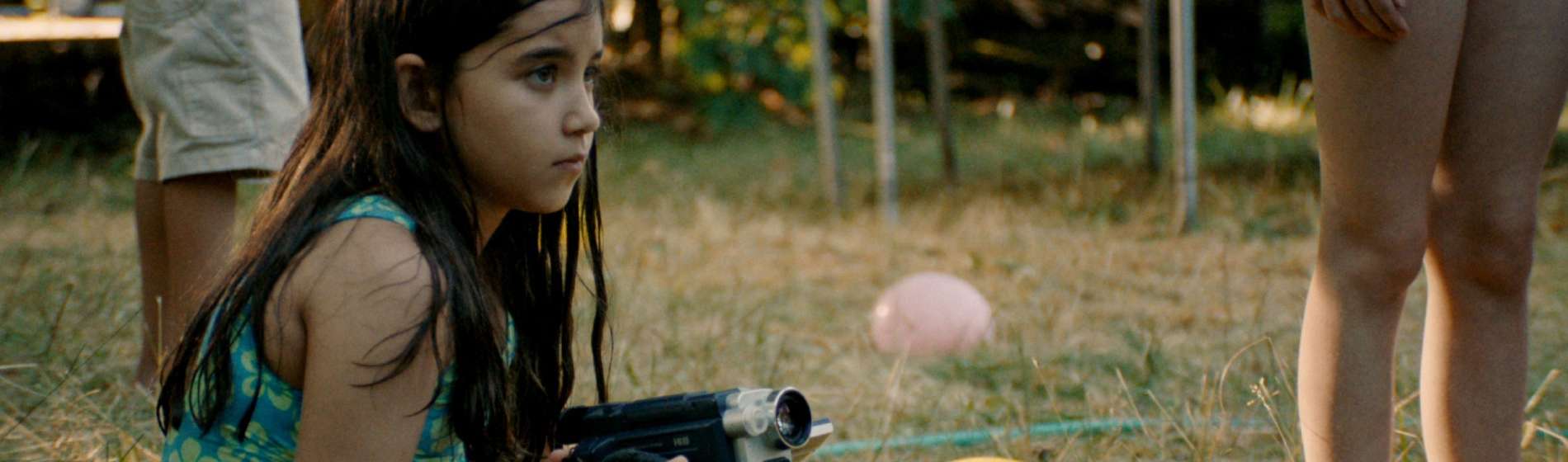


No stranger to mining deeply personal aspects of family life and artfully turning them inside out, Sophy Romvari delivers upon the promise of her short films with her feature debut. Blue Heron builds upon Romvari’s appreciation for, and understanding of, the fine line between art and life. This understated family drama observes a fateful summer for a Hungarian-Canadian as their eldest son struggles to adjust to life in British Columbia. The film observes the drama that unfolds before the eyes of Sasha (Eylul Guven), the younger daughter in the family.
Although loosely inspired by Romvari’s family story, Sasha provides an inquisitive cypher through which one discerns the filmmaker’s long-gestating consideration of this life-altering episode. The fact that Sasha grows up to become a filmmaker herself by the film’s end only opens it up to further reading.
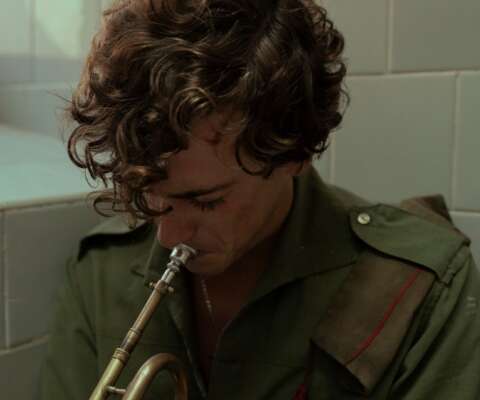
Sasha watches closely as the increasingly erratic behaviour of her oldest brother, Jeremy (Edik Beddoes), weighs on their mother (Iringó Réti). Sasha’s parents came to Canada from Hungary to give their kids a better life, but their mom can’t make sense of Jeremy’s antisocial ways. At first, he just lounges on the front steps as if he found a good place to nap and dropped down right there. But his mood swings become wider and the outbursts greater, going from disappearing acts to self harm, and a drive home from the police in handcuffs.
As Sasha’s parents conspire in Hungarian, switching tongues to discuss next steps without worrying Sasha and her twin brothers, the young girl pays close attention to her older brother while taking in the toll on her mom and dad. The summer hours go by with play and ’90s cartoons, and Sasha can do little but sit silently in Jeremy’s company. The whirs of summer life fill the silence, from neighboring lawn mowers to dad rock to whatever junk is on TV. Blue Heron immerses us with a sense of presence as we casually share these summer moments.
Things change gears when Jeremy’s situation escalates to the point that social services makes a house call. In a scene that more overtly displays Romvari’s habit for exploring the space between fiction and non- fiction, a round table of social workers debates Jeremy’s file. They’re real social workers assessing the report on Romvari’s own late brother.
Further blurring steps into the frame with a new character, a filmmaker (Any Zimmer), who observes the family, particularly young Sasha as she idly enjoys ’toons on TV. Romvari deftly flips Blue Heron on its head here, rupturing her young heroine’s innocence with a profound sense of loss and of a woman forced to grow up too soon.
Romvari has previously explored questions of grief and letting go in her work, notably the short doc Still Processing. But where that film resonates with cinematic catharsis, there’s a different weight here, like the closing of a book and the start of a new chapter. This sense of closure arises when the filmmaker gives her report to Sasha’s parents. It’s a heartfelt confessional about forgiveness, words a child can only now express as an adult after all those years of processing the efforts they made.
The camera holds as the family takes in these words and the filmmaker’s voice breaks. The camera never moves in Blue Heron, actually, giving audiences a view limited to a child’s perspective, with cautious zooms to convey the sense of aliveness in these summer hours before idyllic innocence shatters.
The only pan we see is the shot of a smartphone held by the in-movie filmmaker as she bookends the film by soaking up a panoramic view. There’s an indebtedness to loss that births something new when the image returns at the film’s end, evoking the old adage about writing what you know. Blue Heron therefore offers the best kind of personal filmmaking: at once disarmingly intimate, yet wholly accessible with its refreshing specificity.
Blue Heron may be more overtly scripted and structured than Romvari’s shorts, but she doesn’t lose a beat while expanding her canvas with the poetry of life. The film isn’t so much an introduction to a fresh new voice so much as a confirmation of one. This is beautifully honest filmmaking that displays disarming vulnerability but also great sensitivity for the delicacy of its subject matter. The film draws from lived experiences and empathetically understands the shared sense of loss that bodies in the room will inevitably feel as they watch family unravel during that summer in the 1990s. If there’s a breakthrough talent at this year’s festival, this is it.