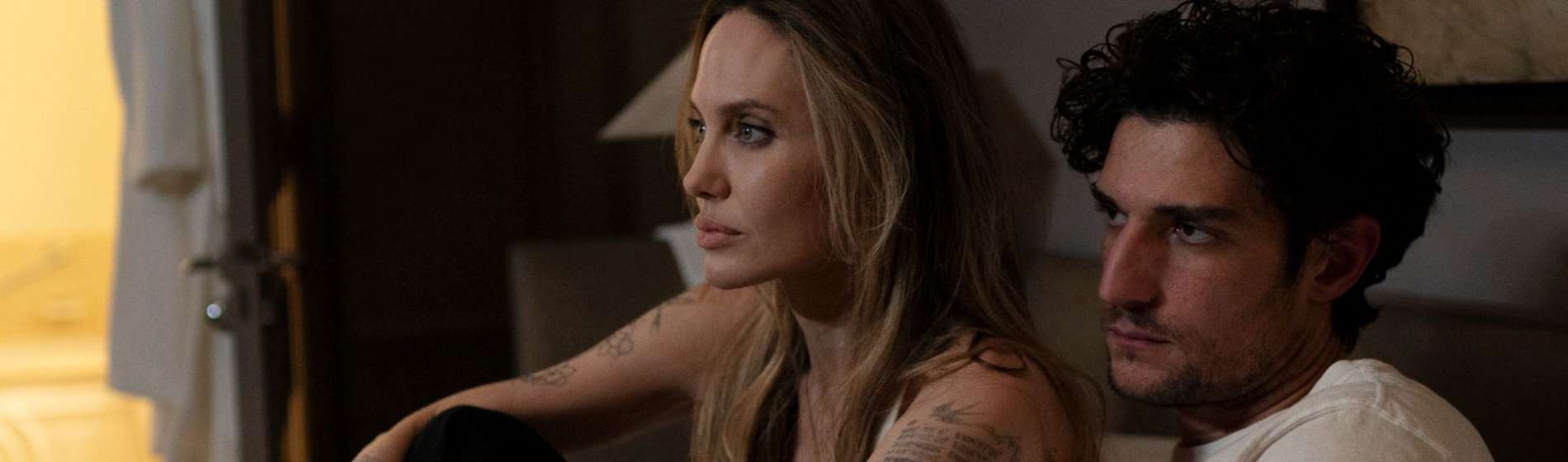


The spirit of Cléo from 5 to 7 endures in this artfully pensive drama set in Paris’s haute couture scene. Filmmaker Maxine (Angelina Jolie) arrives in Paris just in time for fashion week festivities, which will kick with a short film she’s directing just for the event. However, Maxine can’t enjoy the couture scene’s high for long. Her doctor calls her with an urgent request to follow up regarding a recent biopsy. The looming dread of bad news has Maxine seeing her life and work anew. Her perspective gives a sense of Paris when it fizzles, or when the City of Lights fails to illuminate the joie de vivre it promises.
Instead of trailing Maxine in real time à la Agnes Varda’s New Wave classic, Alice Winocour ( Paris Memories ) instead explores the lives of girls and women whose craft and dedication intersects with Maxine’s presence on the circuit. Ada (Anyier Anei), an 18-year-old model, arrives from South Sudan with hopes too support her family via splashy spreads and cover shoots. Ada’s in way over her head, but Maxine takes an interest in this ingénue whose piercing scream offers the dramatic punctuation note for her opening night short. It’s a vampire movie, too, an apt metaphor for the scene rife with predatory bloodsuckers, aka men.
Ada, meanwhile, finds an ally in makeup artist Angèle (Ella Rumpf). Angèle dreams of being a writer and filters her observations about the fashion scene into a novel. But literary agents—male ones—don’t believe the thinly disguised scenarios that inform her fiction. Finally, a dedicated seamstress (Garance Marillier) commits herself to stitching and beading Ada’s dress that will open the show. She all but sacrifices her personal life for the dress, an idea that Couture underscores by offering her far less of an interior life than the three women in the film.
Couture cuts a surprising and chic ensemble drama as Jolie admirably yields considerable screen time to her young co-stars. Maxine disappears for stretches of time as Ada finds her footing in the fashion scene and her colleagues prove equally nurturing once they get to know her. Winocour creates a backstage drama where women commit themselves to their craft, but remain secondary players in an industry ruled by male gatekeepers.
The director has a playful eye for the quotidian chauvinism that fuels micro-aggressions and outright sexism. Meanwhile, outdated standards for beauty and casual racism force Ada to work even harder to prove herself, while moulding her body into a living display rack that sells the garment without letting the model underneath steal the show. But Couture also flips power dynamics with Maxine in the director’s seat as she enjoys a push-and-pull relationship with her cinematographer (Louis Garrel) who often undermines her on-set decisions, but frequently finds himself eating crow for failing to recognize the artistry of his colleague and superior.
As Couture weaves in and out of different pockets of the runway assembly line, Maxine’s grasp of her situation sets in. Jolie gives a natural, understated performance as Maxine confronts the gravity of her diagnosis. Caressing a wig in the dressing room assumes new meaning, as does the art of seduction and revealing one’s body before it’s cut like a fabric to fit a bodice.
The news also coincides with an arrival at the fork on the roads of her personal and professional lives, too. She’s in the middle of a divorce and is estranged from her daughter, who clearly inspires her protective interest in Ada. She’s finally readying for her next major film project after years of cutting it in low budget horror flicks, too, so the looming diagnosis offers a cruel twist of fate for someone who entered her passion as wide-eyed as Ada, and fought hard for her place at the top.
The veteran actress finds striking vulnerability by acting in French as Maxine’s clear, if intermittently cautious, use of language illustrates her discomfort in the world of haute couture. She’s not a fashionista, either, as all her clothes are black. But unlike the style mavens who come to fashion week to see and be seen, Maxine interests herself in the bodies that sell the high-end garments.
Jolie’s intuition as a director lends itself well to Maxine’s natural rapport with the film sets, and Couture seamlessly parallels the craftsmanship of filmmaking with the artistry of high fashion. Visual equivalents between, say, the threads that stitch together Ada’s dress and the spiralling wires that light Maxine’s shot illustrate the painstaking craftsmanship in each element of the fashion show.
Similarly, the cut lines that Maxine’s doctor traces on her body for an impending mastectomy find striking counterpoints in the red pattern designs that create curves from the models’ measurements. Winocour strips the fashion scene back to an art of clinical precision where women’s bodies are worked over in service of the gaze. Blisters and sore feet receive far more attention from the camera than the haute couture does as Winocour turns her eye to the aspects of labour entailed in work that some folks—men again!—might find trivial. But by bringing a diverse group of women together to explore facets of the scene, Couture gives new meaning to the word ensemble. Sisterhood never goes out of fashion.