

My first memory of Game of Thrones was watching the second episode of the series (“The Kingsroad”) in an auditorium with a couple of my undergrad friends. I had no idea really what this series was about but by the end of the episode, I was hooked. Looking back at the story as it nears its conclusion is a strange thing to experience, especially when I think about my own life changes in the past seven or so years.
Theoretically, top ten or even twenty-five lists are incredibly easy. For a show like Game of Thrones , it’s incredibly difficult. There are the bombastic moments – who can forget the obliteration of the Sept of Baelor? Or our sinking hearts as we saw Jon (Kit Harrington) struggling to breathe in the Battle of the Bastards? Then there are the quiet moments, like the sigh of relief as we realize that the Margaery (Natalie Dormer) had not abandoned the Tyrell name after all, or the awe we felt at Lady Lyanna Mormont’s (Bella Ramsey) ferocity.
Below are the Top 10 Moments from seasons five through seven of Game of Thrones . As with the previous list, There are certainly dozens of other great scenes or moments that I left off of this list that we’d love to include, but please chime in on Twitter @ThatShelf and tell us your own!
10. The Gravedigger (Season 7, Episode 1: “Dragonstone”)
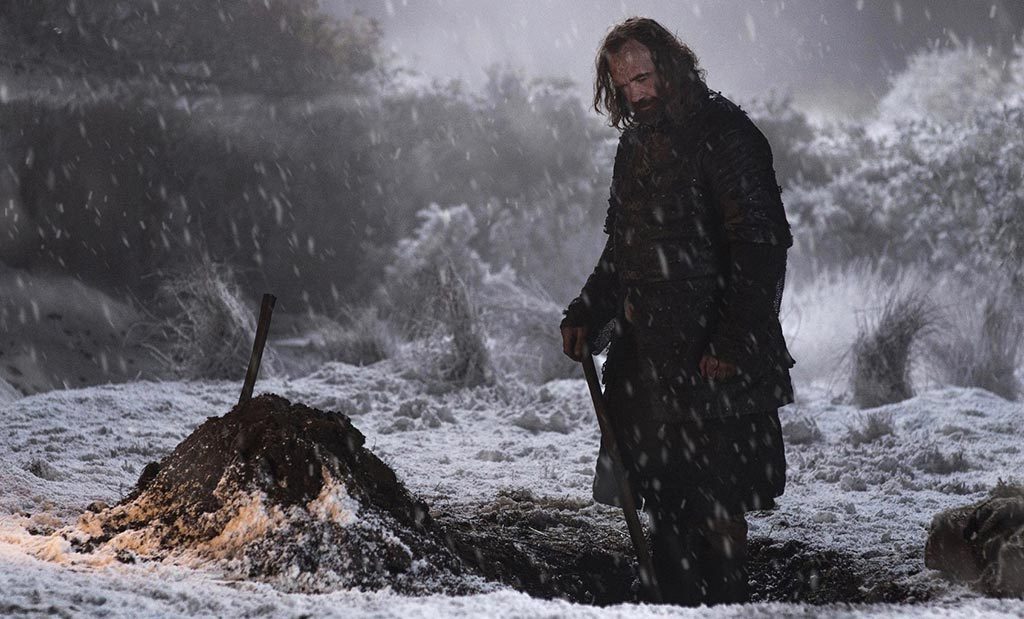
The Hound (Rory McCann) is a figure whose life has been shaped by masculine violence. It has molded his childhood, his adulthood, and every moment where he felt death was right nearby, inescapable. That hardened him and his worldview and the world seemingly rewarded that worldview by proving it right repeatedly. Or at least that is what the Hound saw. But he slowly realizes that in spite of the world being what it is, in spite of the horrors and the backstabbing and the bloodletting, that there is room for empathy, for kindness, for justice.
[nextpage title=”9. The Kiss of Death (Season 7, Episode 3: “The Queen’s Justice”)”]

Revenge is a central theme to Game of Thrones , a theme often explored through the futility of it. When Cersei (Lena Headey) visits the imprisoned Ellaria (Indira Varma) and Tyene (Rosabell Laurenti Sellers) in their cell, the entire tragedy of revenge comes together in a haunting, stunningly acted sequence. Ramin Djawadi’s somber notes echo throughout the background as the viewer realizes just how cyclical the nature of revenge is, how far it goes, and how much tragedy it continues to lay without flinching.
[nextpage title=”8. ‘Needle was Jon Snow’s Smile.’ (Season 5, Episode 3: “High Sparrow”)”]
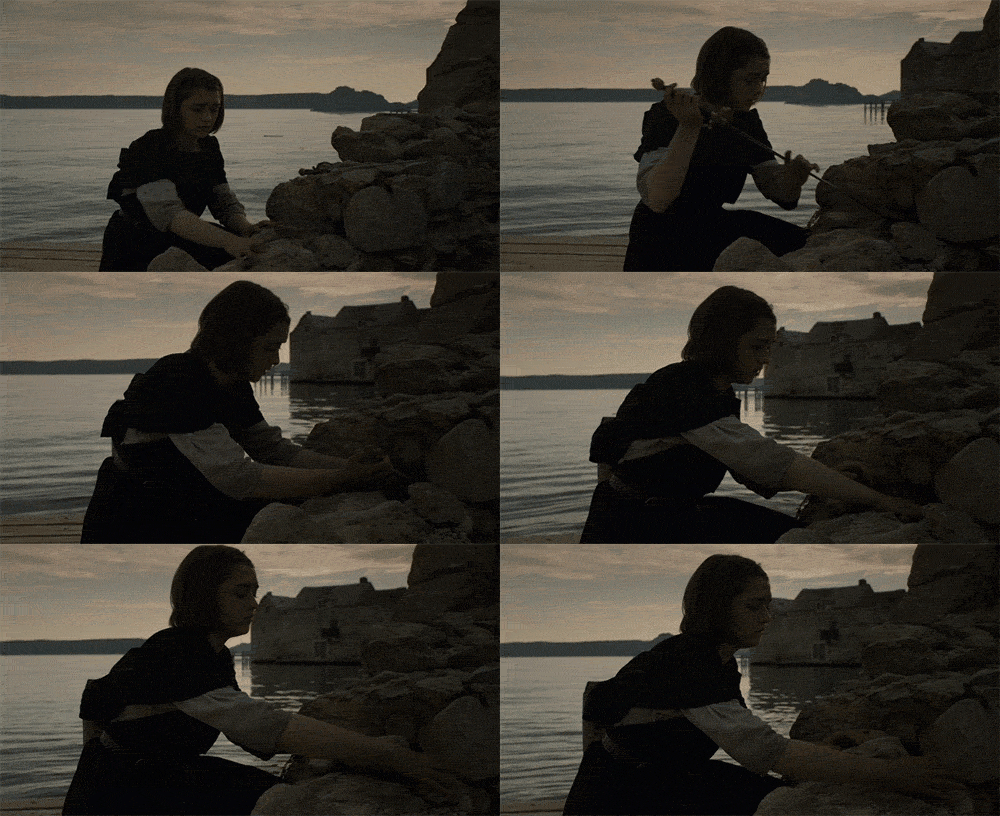
Arya Stark’s journey is one centered on finding an identity and a home. In her quest to finding an identity, she chose to give hers up entirely – almost. The Faceless Men find individual identity to be an anathema to whom they are, to whom they serve. They require that for anyone finding a home in their House of Black and White, they must abandon their past, present, and future selves. Any vestige that ties one’s self to whom they used to be must be discarded. Arya sent many of her belongings to watery depths but she could not bear to let go of Needle, the sword that was Arya, her brother, her being. That was too much to let go, to set adrift while she was adrift herself.
[nextpage title=”7. The Walk of Shame (Season 5, Episode 10: “Mother’s Mercy”)”]
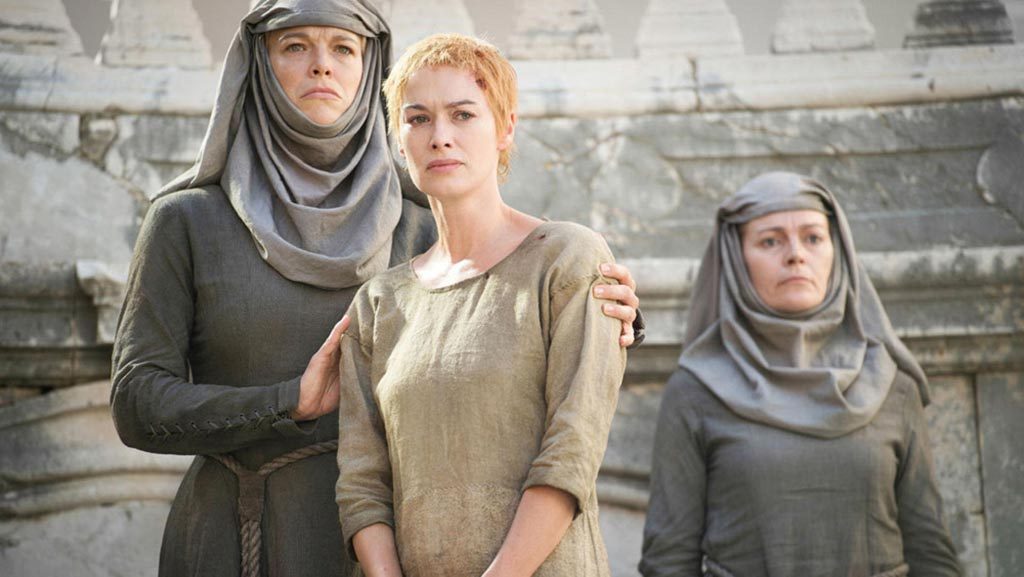
Cersei Lannister is a phenomenally complex character whose life in many ways is defined by the tragedies inflicted upon her, those she has inflicted upon herself, and those she has inflicted upon others. In her pursuit to inflict pain and wipe out the power of the Tyrells, she handed power over to a man who eventually came to be known as the High Sparrow (Jonathan Pryce). Cersei’s Walk of Shame is one of the most important moments in Game of Thrones , a moment where you find sympathy for someone who may deserve just punishment but not a spectacle of misogynist violence. It is a devastating moment for Cersei herself, whose dignity is violently taken away from her, abandoning her at the steps of shock, rage, and despair.
[nextpage title=”6. Sansa Executes Ramsay/Littlefinger (Season 6, Episode 9: “The Battle of the Bastards”/Season 7, Episode 7: “The Dragon and the Wolf”)”]
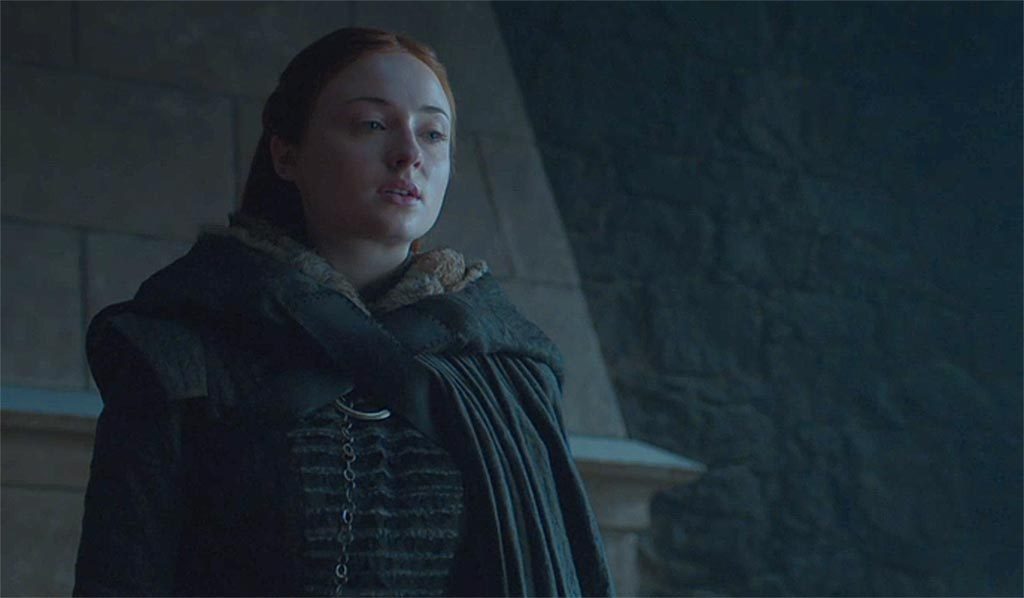
Sansa Stark (Sophie Turner) has suffered a great deal and that in and of itself might be the understatement of the century. Her innocent dreams of a happy marriage were darkened by the second episode and the suffering only increased from there. She persevered, yes, and often in a way that goes unnoticed and is undervalued. But she has accumulated a significant amount of trauma in achieving that perseverance. It did not arise in a vacuum, that is important to remember. She grew and learned and that resilience proved to deal her two winnings hands against men who had abused and used her. But even in her executions of the men who caused her torment, there is an underlying tragedy of the darkness they imparted upon her. Lady Stark will survive but that survival has come at a great price.
[nextpage title=”5. “Tell Cersei. I Want Her to Know It Was Me.” (Season 7, Episode 3: “The Queen’s Justice”)”]
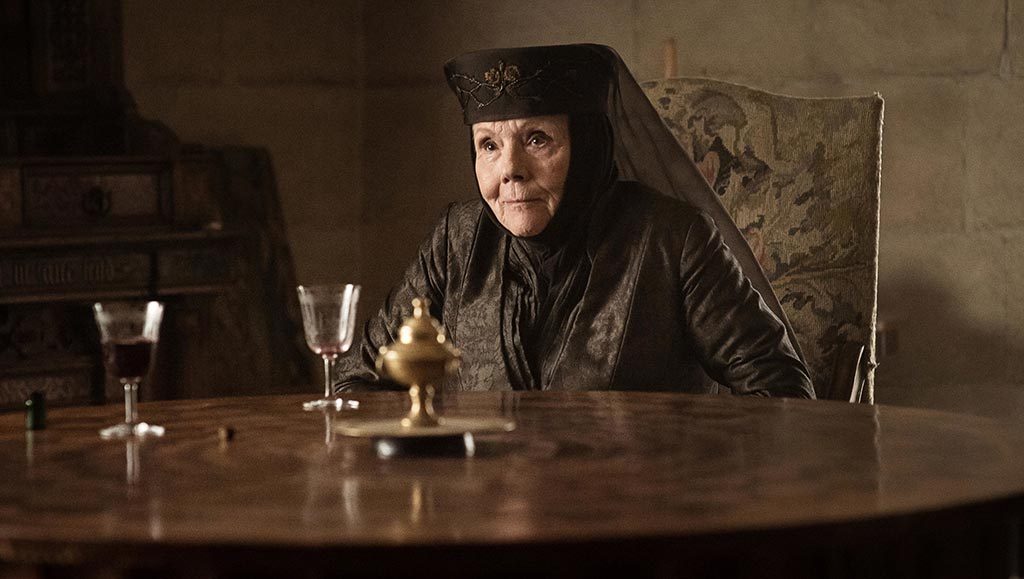
Olenna Tyrell (Dame Diana Rigg). What can be said about her that would be worthy of the Queen of Thorns? From her first appearance in the gardens of King’s Landing that she loathed to her final, breathtaking scene in her chambers at Highgarden, Dame Diana Rigg’s Queen of Thorns commanded the screen effortlessly. Each line of hers was delivered with a relish, a force, a personality to be reckoned with. Few characters in storytelling can claim that they won in their death scene, which is exactly what she accomplished when Jaime (Nikolaj Coster-Waldau) walks in to deliver his poison. She warns him once of the horrors Cersei would bring upon him before dropping that beautiful line every Game of Thrones fan has etched into their hearts.
[nextpage title=”4. Massacre at Hardhome (Season 5, Episode 8: “Hardhome”)”]
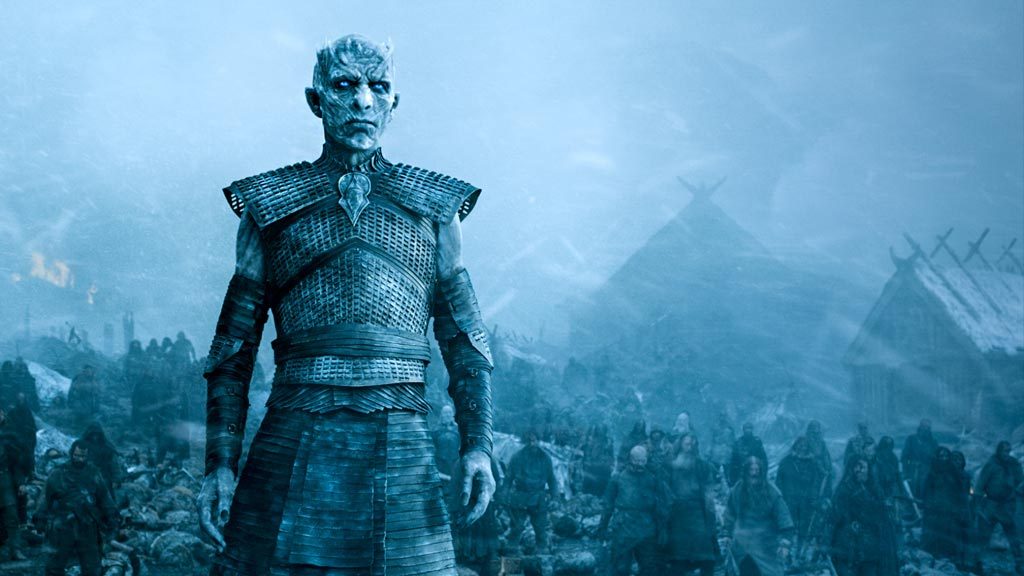
Until the Massacre at Hardhome, the threat of the White Walkers was often opaque. We caught a glimpse of them in the pilot episode, a glimpse of them at the end of season two, once with Sam (John Bradley) and Gilly (Hannah Murray) in season three, and then a terrifying trip to the lands far, far to the North in season four. The opaqueness was just fine for the politicking was taking up plenty of necessary storytelling real estate. Then Jon made a fateful trip north and the true consequences of the impending doom came to true, terrifying light.
[nextpage title=”3. ‘Hold the Door!’ (Season 6, Episode 5: “The Door”) “]
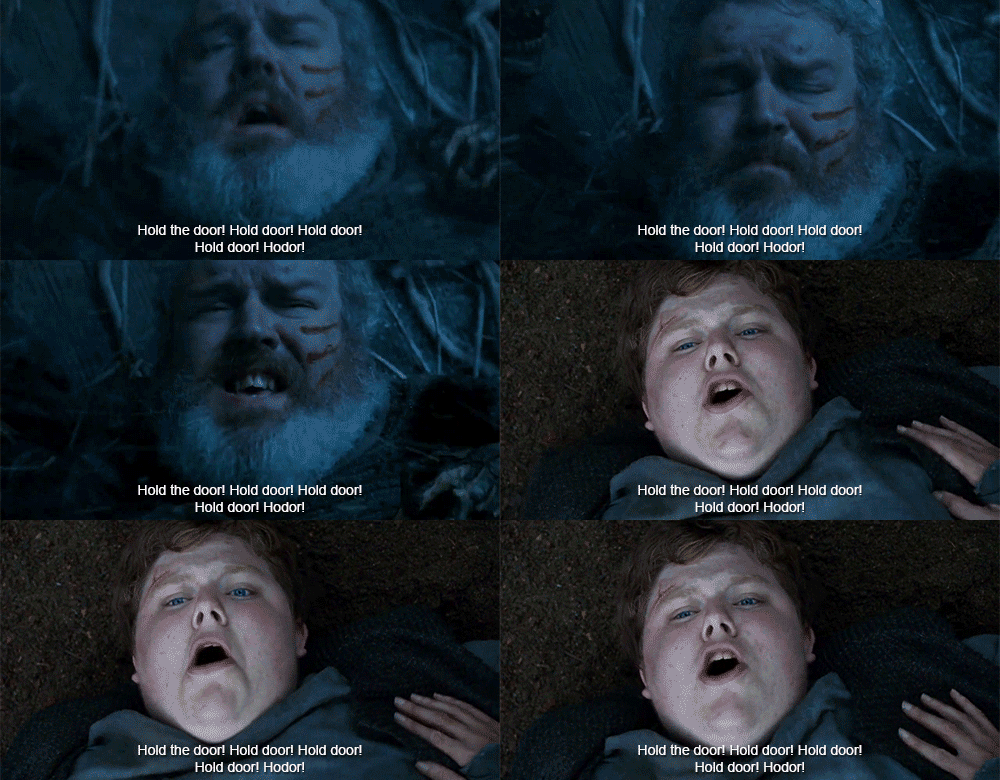
The death of Hodor ( Kristian Nairn) is one of the greatest tragedies of Game of Thrones . The tragedy in part comes from the simplicity of the self-sacrifice, a fate one could have easily foreseen for a character defined by his unrelenting kindness. It comes in part from the fixed point of Hodor’s sacrifice, a tragic consequence of Bran (Isaac Hempstead-Wright) delving deep into the past and committing that dangerous act of warging into another human’s mind. It comes in part from knowing that in one way, Hodor’s fate is yet another consequence from the careless actions of a high-born. Rest in peace, gentle giant.
[nextpage title=”2. The Field of Fire 2.0 (Season 7, Episode 4: “The Spoils of War”)”]
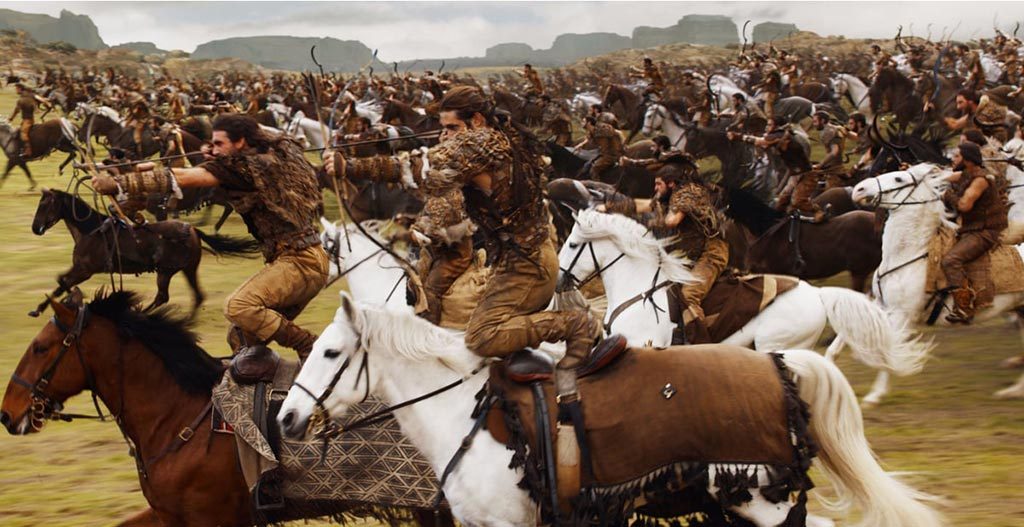
Robert Baratheon (Mark Addy) once warned that a man who met the Dothraki in an open field was a fool. The Lannister army became that fool near the Blackwater Rush, if unknowingly. Their triumph over Highgarden was short-lived as soon as the Dothraki came charging. It was finished when Drogon’s roar echoed through the clouds. From the moment the dragons were born to Daenerys at the end of season one, the audience has waited with baited breath to see what would happen when a fully grown dragon unleashed its fury in war. We waited, we saw, we were in terrified awe.
[nextpage title=”1. Light of the Seven (Season 6, Episode 10: “The Winds of Winter”)”]
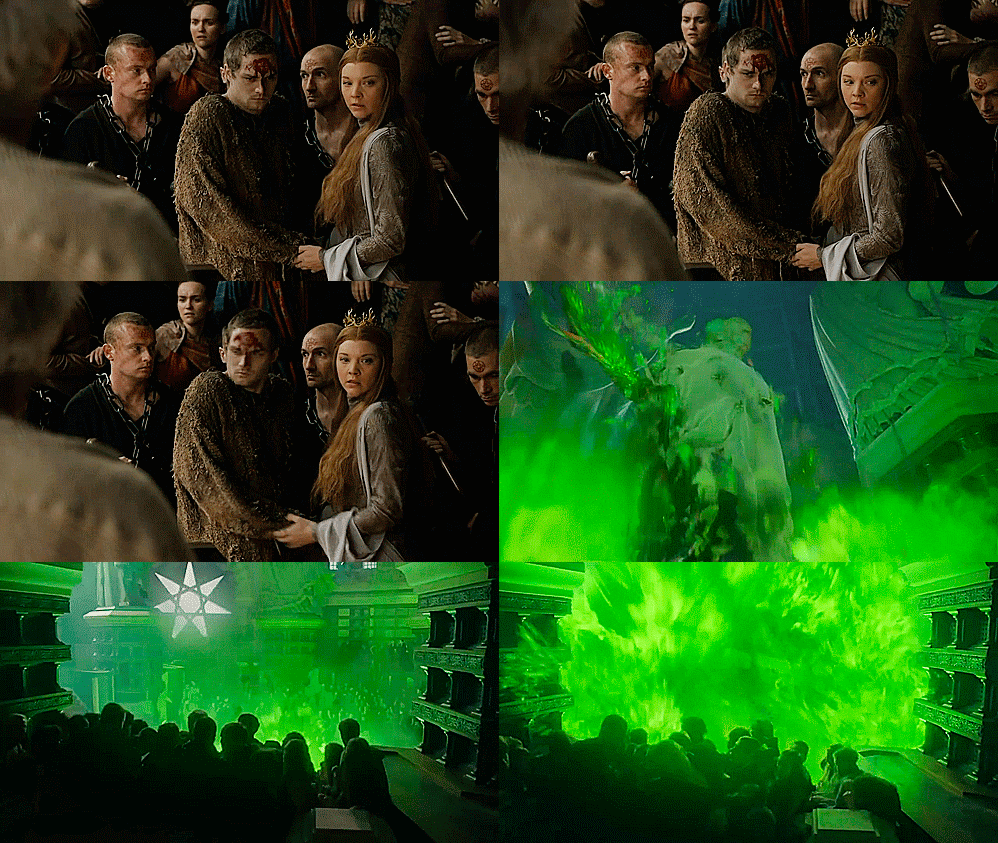
The Light of the Seven sequence is a cinematic masterpiece. It may very well go down as not just the greatest scene in the history of Game of Thrones , but also one of the greatest scenes in television history. It begins with a quiet, piano-driven sequence of dressing. It grows quietly into one of disquiet and personal tragedy. The sense of foreboding grows quietly as Margaery wonders where Cersei is if not at the Sept of Baelor for her trial. The chorus begins and Ramin Djawadi’s stunning score rises like a crescendo, cutting into the pipe organ. Blood flows across the stones, the High Sparrow (Jonathan Pryce) is blinded by his own ignorance, and Margaery realizes that the chess game no longer exists, that the chess board has been simply tossed away. It is too late and King’s Landing is shrouded in smoke.
Bonus: “I’m Up for Anything, Really.” (Season 6, Episode 9, “Battle of the Bastards”)
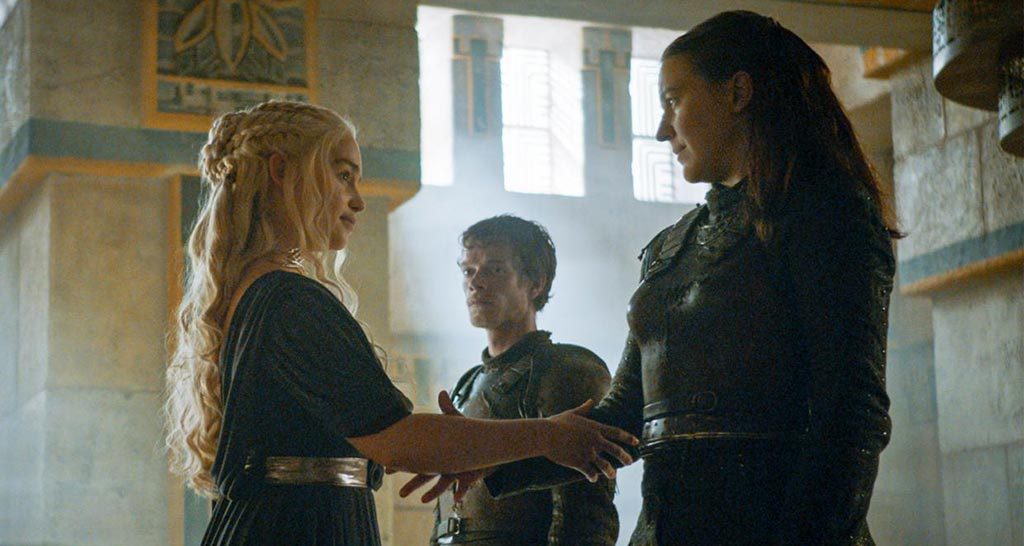
Daenerys and Yara. Two powerful women forming an alliance. I ship it.
What are your thoughts? What are your favourite moments? Is there a shocking or surprising moment we missed that you think should be on the list? Let us know on Twitter @ThatShelf !