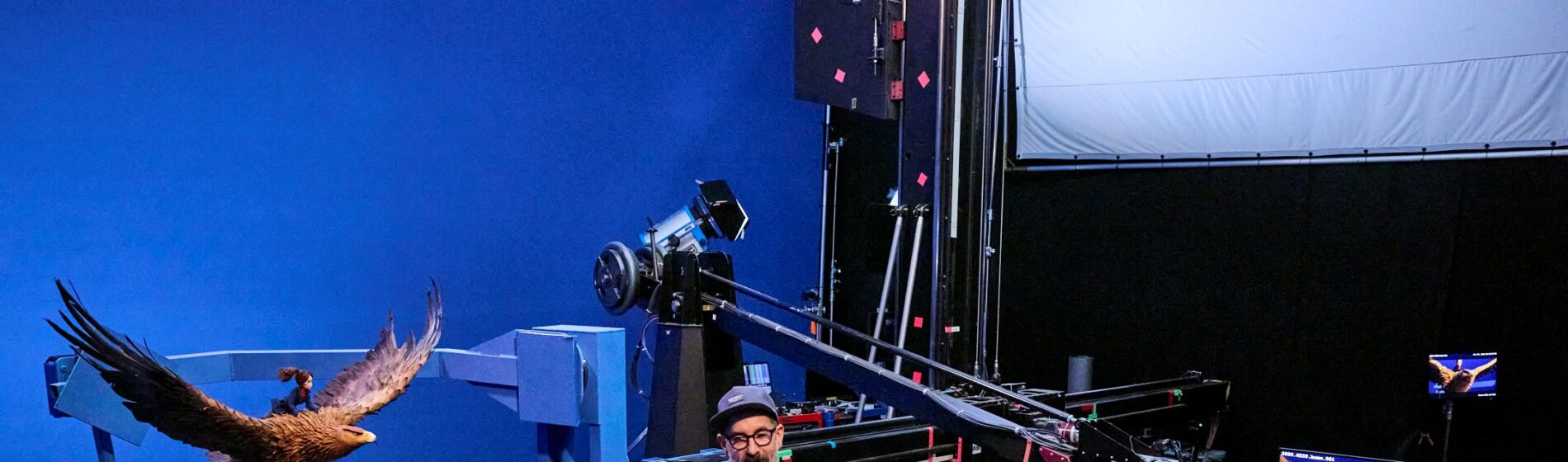


In an age when anyone can create a world with a few A.I. prompts, Wildwood delivers a thrilling reminder that there’s no match for feats of imagination sculpted by human hands. The stop-motion epic marks the sixth feature film from the animation studio in Portland, Oregon. It’s the culmination of the Laika’s ambitious craftsmanship and collective innovation as seen in predecessors like Coraline, Missing Link, and Kubo and the Two Strings. Wildwood adapts the beloved novel by Colin Melloy and Carson Ellis, and director Travis Knight and his team bring an appropriately grand sense of imagination.
Wildwood offers a breathtaking cinematic achievement, but the sheer scale of its production really needs to be seen to fully grasp the artistic and technical accomplishments that build the world of the mythical forest creatures who reside in the woods surrounding Portland. During a recent set visit to Laika Studios, That Shelf got to witness the behind the scenes magic that brings young Prue (Peyton Elizabeth Lee) from the stage idea to becoming the moving and breathing heroine who explores the woods while searching for her brother, Mac, after he’s abducted by a murder of crows one sunny afternoon. Put another way, it’s pretty amazing to see how the sausage of Wildwood gets made. There’s a whole universe of tiny wheels in motion behind the fantasy that unfolds on screen. When production yields roughly 1.8 seconds of footage a week, that’s a lot of shared love and labour.
“It’s a culmination of skilled employees that have been here working and honing their craft,” says Keith McQueen, head of Laika’s model shop, while touring press through the sets of Wildwood. Those years of collaboration extend from the props on the sets—like meticulously created espresso grinds, Prue’s spindly bicycle, or the overall offbeat atmosphere of Portland in the sets that offer a love letter to the city of Wildwood’s creation.
“A lot of people that have been here for long periods of time and every [film] has pushed layers of detail and hopefully the speed and complexity at which we’re able to make some of this stuff,” says McQueen. “All of that together has allowed for the scale of Wildwood to really come together.”
The scale of Wildwood really is awesome. Touring the sets, from the recreation of the Portland market to the stylishly Gothic coyote warren in which the film’s baddie, Alexandra (Carrie Mulligan) holds court, the team really has built an entire world. McQueen says the scale of the sets for Wildwood eclipses that of any other Laika production. But the leaves and blades of grass that give the forest its textures are also made in house. Those craft fair accoutrements simply don’t jive with the other magic when the cameras roll.
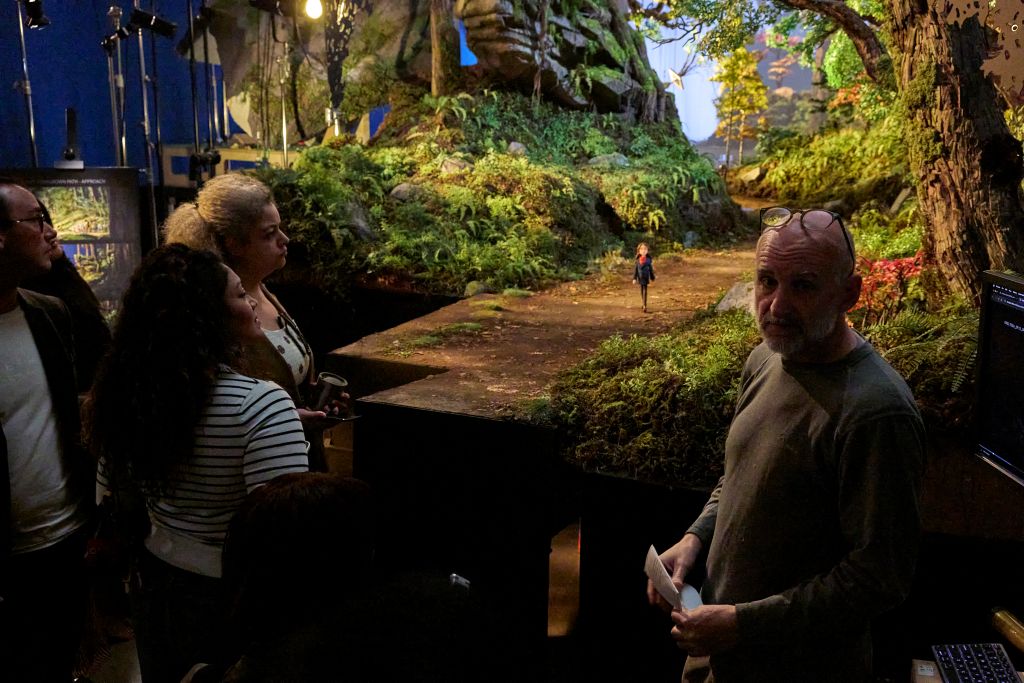
Wildwood also wades further into the woods, so to speak, with the Laika team’s incorporation of visual effects shots. The film features roughly 1800 VFX shots—i.e. images with digital wizardry to complement the animation—out of the 2800ish shots that comprise the film. This partly accounts for elements like fire, but also crowds of extras. Wildwood culminates with an awesome battle sequence with echoes of Braveheart. As McQueen notes, characters close to the camera are generally practical puppets, while folks in the background are more likely to be CGI in crowd scenes.
However, the effects reflect Laika’s emphasis on the artisanal. Executive producer David Burke, speaking at the studio tour, says that while the company embraces digital tools to achieve the scale of Wildwood, Laika won’t be using A.I. anytime soon. “If you choose A.I., you’re cutting the corners of a collaboration,” he notes. “I don’t think I want to work at a place that does that.”
A prompt, for example, wouldn’t have the emotional intelligence that Deborah Cook brings to the costume department, for example. Cook demonstrates how Prue’s costume changes illustrate shifts in her emotional states. In the Portland scenes, she and others have lots of knitwear to reflect the city’s eccentricity. When they enter Wildwood, knitted hats and scarves fall by the wayside. Woven into each costume, moreover, are foils and wires that facilitate the sense of motion. Puppeteers and animators bend and fold the costumes to accentuate characters’ movements and expressions.
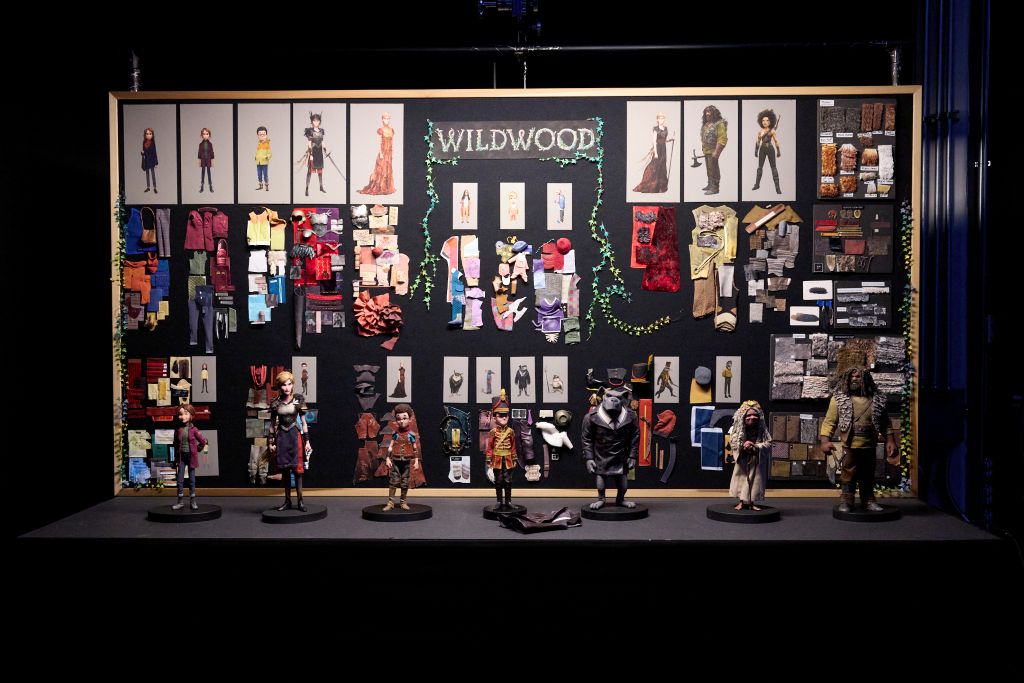
Costumes especially shape Curtis, Prue’s friend who accidently accompanies her on the journey. He goes from bashful dork to reluctant hero after being cast in Alexandra’s army. Voiced by Canada’s Jacob Tremblay in a performance that captures his own transition from adolescence to adulthood, the costumes convey a sense of lost innocence as the kids join the fight with their new allies and animal friends.
Touring the studios, collaboration becomes a recurring theme. The interdepartmental synergy is evident from the sets to the costume department to the animators who bring them to life. “We’re going to have to breathe life into this puppet,” observes Oliver Jones of Laika’s puppet department. “We want our audience to feel like it’s a living, breathing person.”
Jones demonstrates the intricate design that creates the many characters of Wildwood. Developments in 3D printing, moreover, facilitate the production of the figures on all sorts of scales, although Jones adds that “everything here is designed in-house and produced in-house.” Jones disassembles a Prue puppet and her armature to demonstrate the process. Her face pops off to enable the frame by frame expression of emotions, while sprockets, hinges, and swivels put the motion in stop motion.
“Every movie, we try and elevate the life of these characters,” says Jones. He also points out that the studio uses each film as a learning step to develop character production. For example, Wildwood expands upon the “jet packs” devised for characters in The Boxtrolls.
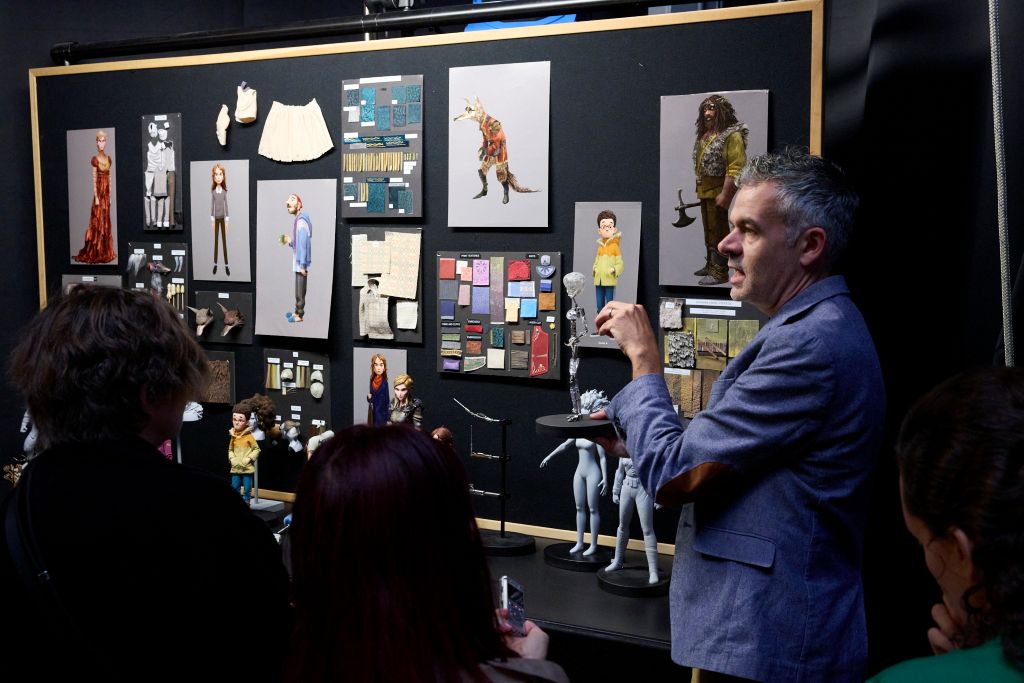
“This is a turnbuckle device that the animators will use to create very, very small increments. These increments are so small that they can’t see them on their frame grabbers,” Jones explains. “I’ve turned the turnbuckles one way, the puppet will pitch left, pitch right forwards and backwards. These are very good for when we have large characters with lots of silicon, when we have characters with lots of fur or lots of costumes.” That’s key in Wildwood, which includes an army of animal characters: coyotes, rats, rabbits, and majestic birds.
The puppet artisans further breathe life into the characters by literally adding the respiration process into their design. Jones motions to a puppet for Alexandra to demonstrate the “breather” on her chest plate. The device, developed for the Golden Globe winner Missing Link, lets the puppet’s chest expand and retract to evoke the body’s inhalation and exhalation. New here, too, are snazzy levers that emphasize a character’s strength. Alexandra’s arm flexes impressive biceps, and all the characters bring out the big guns for the epic battle sequence. The attention to detail amid large-scale spectacle astonishes.
Different hands put in the work that creates the characters’ expressive faces. In the replacement animation department, which fashions the pieces that convey change—like the individual masks that, say, convey the progression of a smile across multiple frames—Brian McLean conveys how developments in 3D printing revolutionize the ways in which Laika produces the many elements that give characters their personable charms.
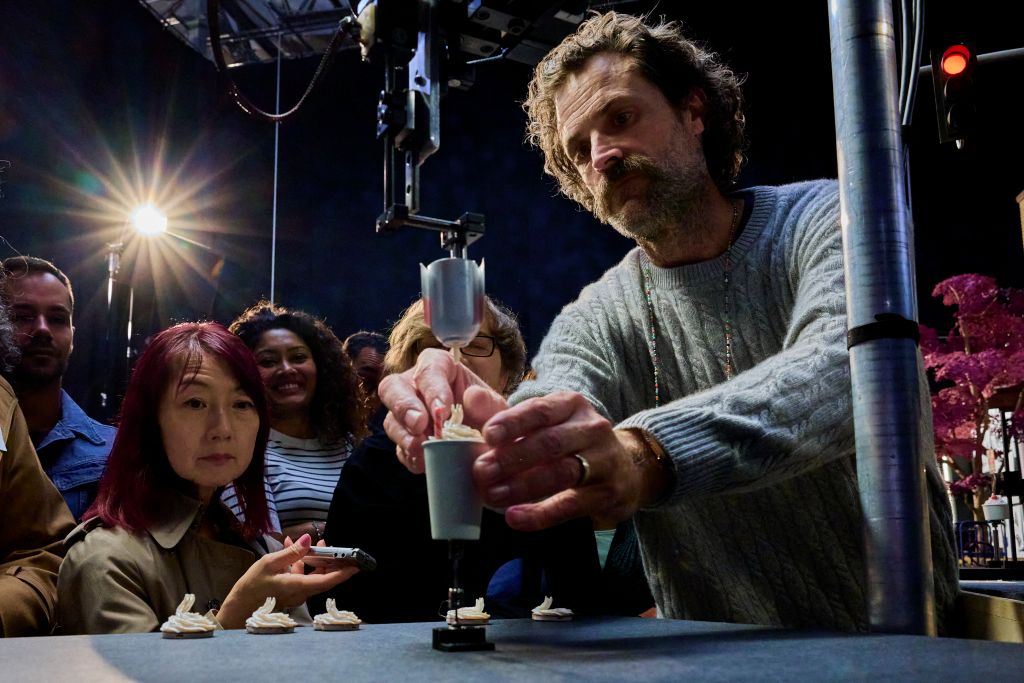
“Animators are delivered their puppet and they’re also delivered a box of faces that we have animated ahead of time. We have worked with the director and we then have 3D-printed custom faces for every single shot in the movie,” McLean explains, presenting a box of 24 individual Prue faces that represent one second of footage as her expression changes. “We’re producing 24 faces for one second of footage. The thing that’s really amazing about this technique is the fact that we’re using these printers that have the ability to put colour into the face. We are actually painting the faces in the computer and then this is how they come out of the printer.”
McLean shows the meat within the sausage casing as he pulls out a detailed and catalogued chart that assists artists in the process as they use the replacement animation department’s tools to bring the characters to life. “There’s one team of artists who are building the facial performance in the computer and then printing them out and the whole army of people who are getting them ready to set. But then there’s another animator who is inheriting those faces and they’re going out with their puppet and they essentially get delivered what’s called an X sheet,” says McLean. The X sheet identifies when to place the pieces sequentially, although he admits that creative types inevitably have disagreements.
“That’s where we recognize that in order to support the best performance overall, we have to work really closely with the stop motion animator who’s going to be animating the face or animating the body,” says McLean.
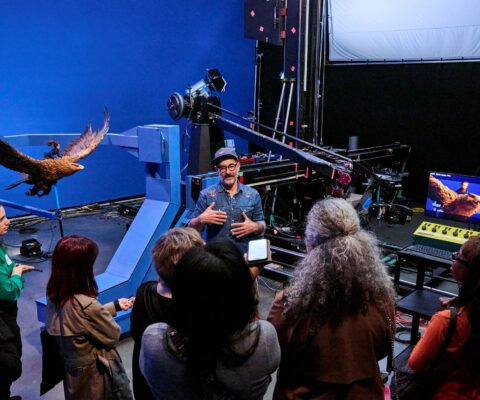
Especially impressive among the detailed designs is the work that goes into the General. The majestic golden eagle voiced by Angela Bassett gets a bravura sequence as she ferries Prue across Wildwood. Navigating the high skies, she flaps her wings mightily while spinning through the air to evade pesky crows and she darts around trees, all the while instructing Prue how to hold on. That’s a lot of movement for a character with hundreds of feathers on her body that ripple with the wind. Two stops on the studio tour emphasize the General with a chance to observe the five-foot wingspan that makes her the largest puppet to date for a Laika film.
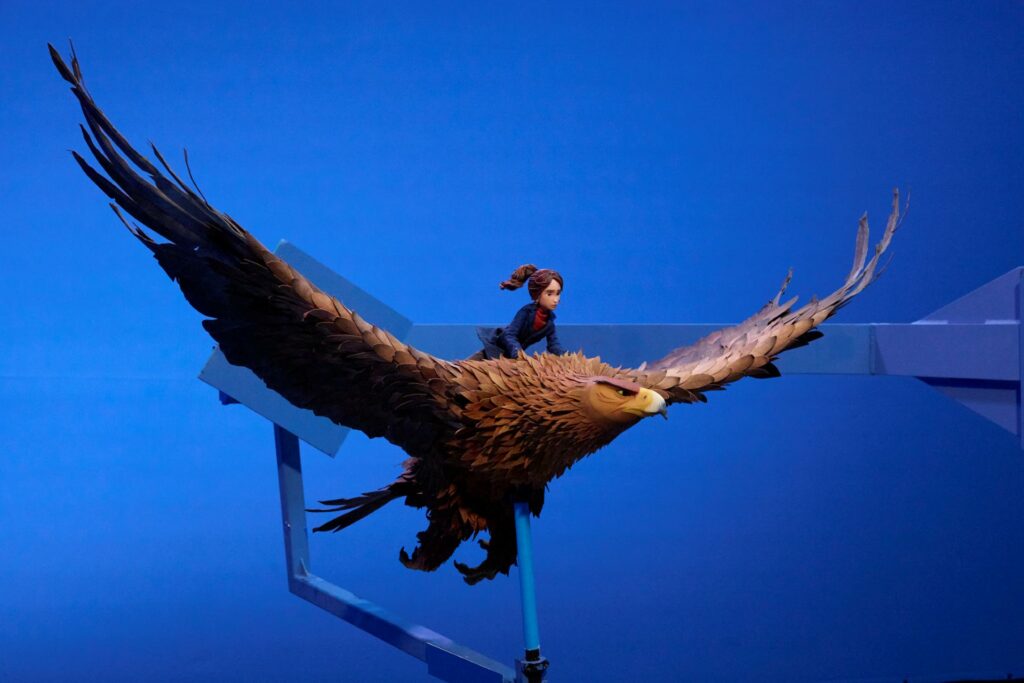
“We had a horse in Missing Link and a cat in Coraline, but we didn’t have anthropomorphic animals to this extent that needed to feel like dual animals,” explains animation supervisor Brad Schiff. While Schiff notes that some animals in Wildwood come to life by having the animators film videos of their own movements as references for natural, authentic motion, the hand guiding the General generally looked to nature documentaries to capture the bird’s traits.
“She has to feel authentically like a golden eagle with a human on her back, but there’s the anthropomorphic aspect in that she talks, but she really just needs to feel like a bird,” Schiff explains. “Birds are hard because they’re shape shifters: They stretch, they contract. Their wings go way out.”
Having anthropomorphic characters, moreover, means that Schiff had to cast his animators in new ways. The casting process pairs animators with animals for which they have the best vision or to which they can relate. For example, the hands guiding the stop-motion animation for Septima, a rat character voiced by Awkwafina, come from an artisan who had pet rats. Schiff says its one way that Wildwood keeps the sense of authenticity while realising their collective vision on a scale they haven’t seen before.
“Historically animators have been looked at as technicians, but now they’re actors as well,” says Schiff. “There’s this incredible collaboration between voice actor and animator. And you’ve got the voice actor who acts it out in a studio and that’s what the animator listens to. But Travis really wants animators to bring something of themselves to these shots.”