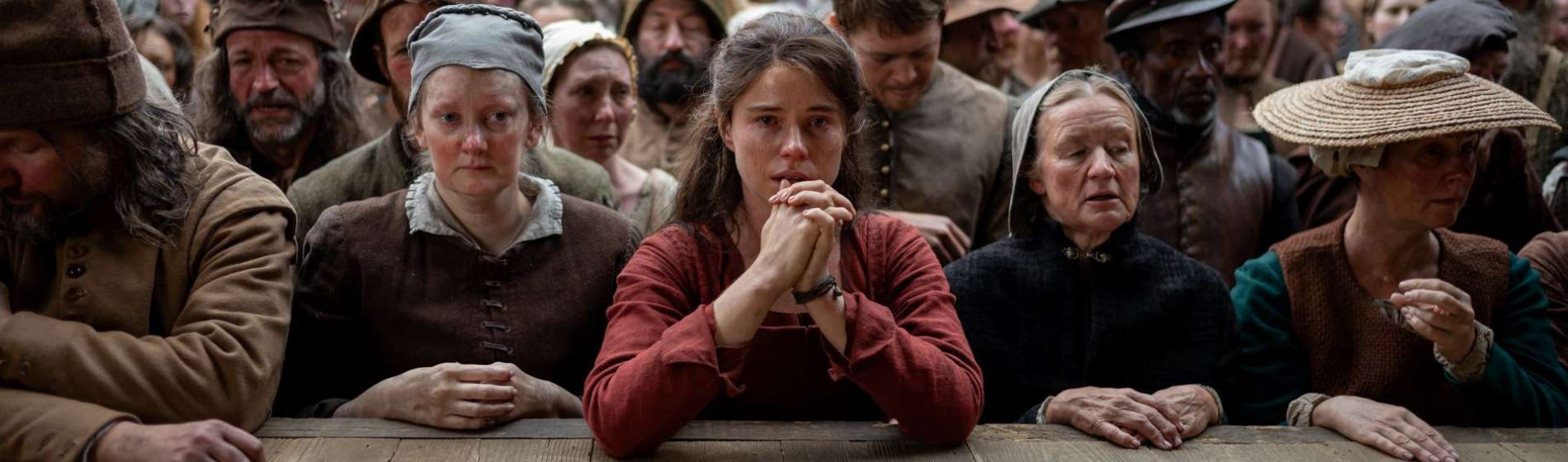


“Nobody knows who anybody is. Nobody knows who Will Shakespeare is, nobody knows who Anne Hathaway is,” Hamnet star Jessie Buckley tells That Shelf. “I think actually for Maggie [O’Farrell], there was something about reclaiming this woman’s identity, which has been tarnished throughout history as somebody who sullied Shakespeare, who pulled him back, who wasn’t really liked.”
Buckley, speaking with That Shelf and director Chloé Zhao at the Toronto International Film Festival where Hamnet won the People’s Choice Award, pushes herself to extraordinary limits as she brings to screen the story of a wife and mother whose aching loss inspires William Shakespeare’s beloved tragedy. Buckley notes that the naming of her character as Agnes in the drama signals a fictional interpretation of the Shakespeares’ marriage. At the same time, the film based on O’Farrell’s meticulously researched book Hamnet & Judith, which the author adapted with Zhao, evokes the smudges of historical records with the names “Hamnet” and “Hamlet” generally used interchangeably. Questions about whether Agnes is really Anne Hathaway are beside the point. This incredibly moving drama invites audiences to rediscover a work and the historical figures whose lives inspired it.
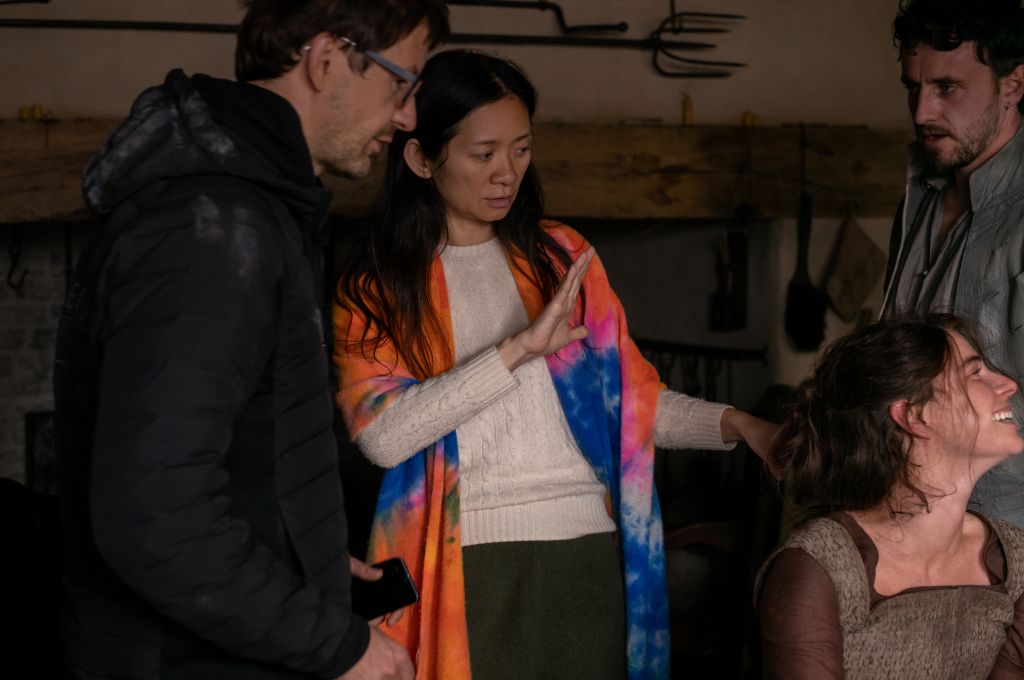
Zhao says that Buckley was her first choice to play Agnes, just as Paul Mescal was a favourite of hers to cast as William Shakespeare. “I started watching their films more after I cast them, but I never cast people based on how many films [of theirs] I’ve seen,” says Zhao. “But it’s like this energy I have today. I don’t know what it is, but I see somebody and I just know this person’s right for the film. When I see the nomads [in Nomadland] or the cowboys [in The Rider], I just know it’s got to be Jessie or there’s no film.”
The director’s instinct for finding lived-in personas to play authentic characters presents a hallmark of her unofficial trilogy of hybrid dramas—Songs My Brother Taught Me (2015), The Rider (2017), and Nomadland (2020). Zhao’s commitment to casting real people as variations on themselves pays off with the move towards more overtly stylized works like Hamnet. But her direction remains grounded and she finds an equal in Buckley. The star gives a ferocious performance that has many pundits pegging her as the frontrunner for Best Actress. And with good reason. Buckley is heartbreakingly good as the mother devastated by the loss of her son, Hamnet (Jacobi Jupe), when the plague takes him.
Buckley’s performance finds incredible power by rooting Agnes in her surroundings as the “girl of the woods,” as neighbours liken her. She gets incredibly feral with her emotions, digging into the earth and intimately connecting with the lush landscape that surrounds the Shakespeares’ home. Mescal similarly comes alive as Will commands his true environment: the stage. The Bard ranges from humble to lost when Hamnet sees him in the domestic setting, but Shakespeare finds his voice with his theatre company. His effort to immortalize his son through Hamlet inspires an exacting command of the verse.
Mescal, speaking with That Shelf in a separate interview, says that he really recognized how much freedom an actor could do with Shakespeare after seeing his All of Us Strangers (2023) co-star Andrew Scott play Hamlet. Although Hamnet and Hamlet are obviously very different parts, he says it was a reminder that roles with which audiences are well-versed can still afford a sense of discovery.
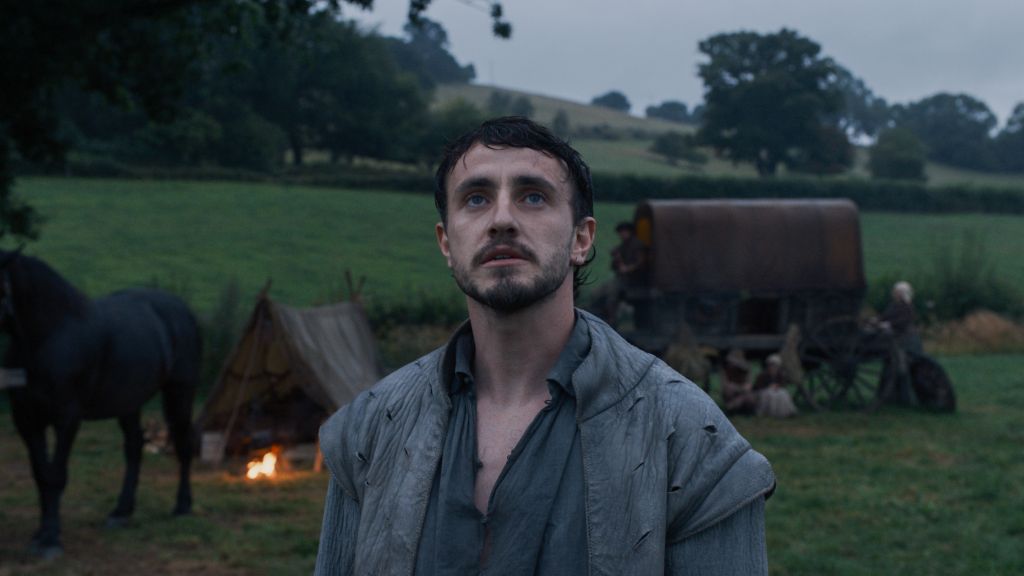
“I’d seen a string of Shakespearean plays in the lead up to Andrew’s that were dull to me, and then seeing Andrew do it, I was like, ‘Oh, this is a living, breathing feeling…God doing it for us,” says Mescal. “Andrew Scott’s Hamlet is very different to Will, actually, but it was very inspiring to watch him do that. It’s very inspiring to watch Andrew read the phone book, let alone play Hamlet.”
Hamnet gives the actors a lot of creative freedom Zhao invites them to explore the theatrical space and, in turn, the worlds of their characters’ psychology. Her direction favours some long takes during pivotal moments as cinematographer Łukasz Żal (The Zone of Interest) lingers on the actors during transformative moments in their relationship. This includes one scene where Will leaves Agnes in her time of need. As the camera holds, one senses the distance that grows between them with each step he takes.
“When you hold a frame,” says Zhao, “every time I edit, tension goes away a little bit and you compensate by giving a close-up image for the audience. But for me, when a single frame is held, it builds pressure. When it blows, you really feel the ripple after being exposed to that.”
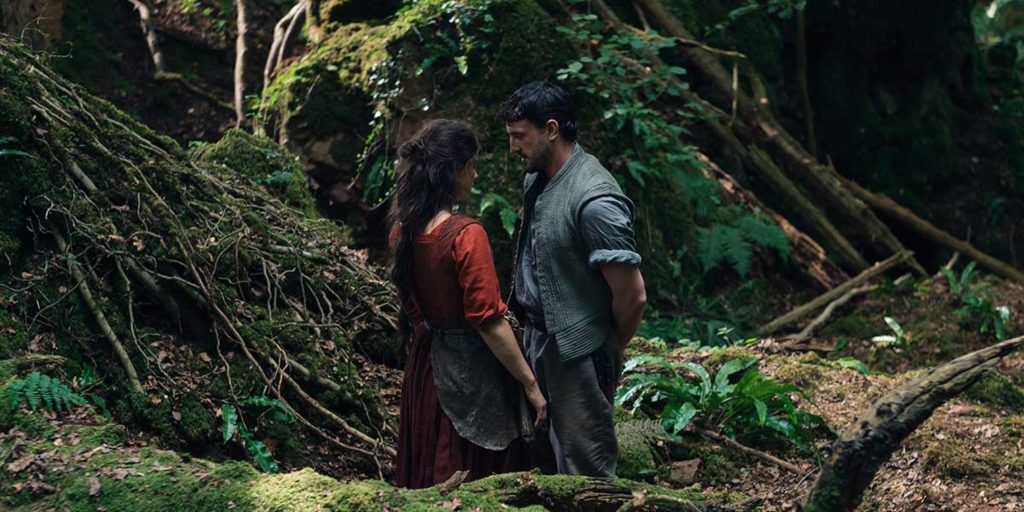
Zhao says it’s important for audiences to feel the weight that Agnes experiences in moments like this one. “Seeing and being seen are two of the most important things in the world and sometimes it’s harder to allow yourself to be fully seen than try to see the other person,” says Zhao. “To me, actors have the sacred duty because they are the images that we get to mirror ourselves to. And they have the sacred duty to allow themselves to be seen fully, authentically. And that is why, to me, vanity is the greatest killer of authenticity. Jessie doesn’t do that.”
The pressure mounts as the camera holds on Buckley and one feels the sense of abandonment that swells within Agnes. “There was so much energy that was polarized in that space until the [camera] swing and it doesn’t get resolved, really,” adds Buckley. “There’s no resolution in that scene. Chloé is very sensitive to the energy that she’s trying to create in every sense with the camera, with the cast, with what the sound is in the room before we start a take. [Zhao often sets the mood for before a shot with music or breathing exercises.] There’s a simmering down to the exact potency of the energy that’s required for everybody to live in this moment. Camera, actors, sound engineers, we’re all simmering down to that place. The whole space is a live organism that’s trying to feel something together.”
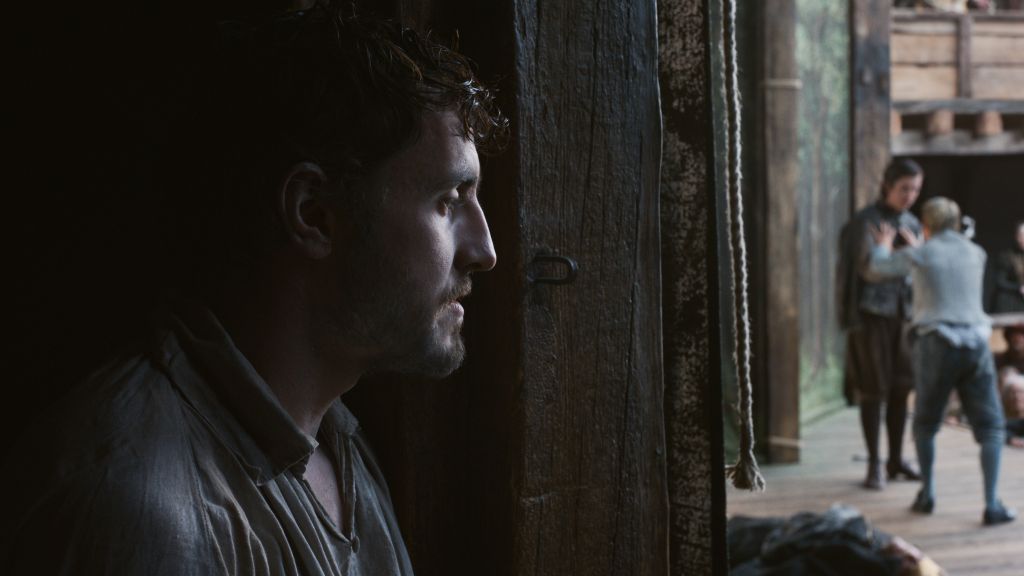
For Shakespeare, though, Hamnet builds a different pressure cooker when he leaves London to lose himself in his work following his son’s death. He channels his grief into Hamlet, unbeknownst to Agnes, and Hamnet in turn invites a fascinating consideration of the ethics of creating art from life. Mescal says that it’s always a balance for an actor to decide how much of himself he puts into a performance as one sees Shakespeare do the same as he directs actors and takes the stage himself.
“I think the longer I do this job, the more that my favourite thing is that there’s deeply personal parts of me, like events that I can relate to, that I put in to Hamnet. Then there’s other parts that are totally imagined and I’m never telling an audience which, so you get to keep the privacy of your life, but you get to place it in a very public setting,” Mescal observes. “It’s a very exciting dichotomy to strike. There are definitely personal feelings or personal events that correlate with things that Will’s gone through, and then there’s other parts that are totally imagined.”
These two elements, the play on art and life and Zhao’s interest in creating synergy between the actors and other creative elements of the production, brings Hamnet to the incredible catharsis of its final act. The film ends with a radical interpretation of Hamlet that stresses the emotional capacity of Shakespeare’s play, whereas many adaptations favour intellectual readings. The explosive outpouring of emotion the ending inspires, for example, shook Toronto’s Roy Thompson Hall during Hamnet’s TIFF Gala with 2000 festivalgoers collectively weeping.
The film builds to this emotional payoff as Agnes learns about Shakespeare’s play that bears her son’s name. Feeling betrayed, she travels to the Globe Theatre in London to see it. Agnes’s surprise at the story of the Danish prince runs the gamut of emotions as she watches intently from the audience.
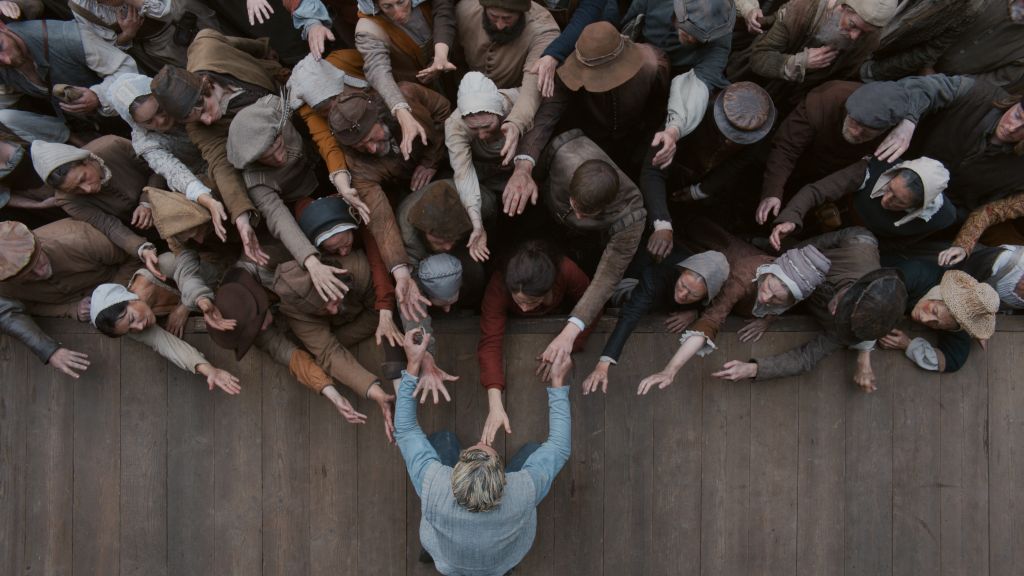
However, the play captivates Agnes and she eventually recognizes the beauty of her husband’s effort to let Hamnet live on through verse. In a masterful stroke, Agnes reaches out to the actor playing Hamlet (Noah Jupe) in the final scene. The audience, feeling the weight of her arm as it extends to the actor, joins in. The gesture forms a surrogate for the audience in the cinema as the crowd shares Agnes’s palpable catharsis while the score by Max Richter swells and she finds closure.
Zhao reveals that the moment with the audience reaching out wasn’t originally in the script, but was conceived during final shooting. “We discovered that a week before we finished shooting. In the script, Hamlet dies painfully on the stage and Agnes reacts. We shot that and I knew that didn’t work. Neither of us did,” admits Zhao, as Buckley nods in agreement.
“We both felt that lost two days [of shooting], and then, four days before we wrapped, on the morning at set, [a colleague] sent me Max Richter’s ‘Earth,’ which is the song based on ‘The Nature of Daylight’,” Zhao explains. The music cue from “The Nature of Daylight” now accompanies the scene. “I listened to that. It just became so clear to me that that music gave me a feeling of oneness,” says Zhao. “That’s what Max Richter does, or great musicians do: they work on the vibrational level.”
“As an actor, it’s a terrifying thing to feel lost, especially when you’re in the end scene and you go, ‘I really don’t know where to go,’ which is also half of what Agnes is experiencing in that moment,” adds Buckley. “I remember recognizing it would be very brave to be seen to be lost here. I had to let myself be seen to be lost.”
Buckley says that joining Zhao in listening to Richter’s music helped her find the right vibration for the scene. “This piece of music, it gave me permission to surrender to the things that were around me, to the people that were around me. Sometimes as actors, you’re kept separate from the body of 300 incredible human beings, not extras, but the human beings that are standing beside you. All you have to do is look into their eyes to recognize that you’re just the same.”
Zhao explains how communing with Richter’s music and letting it wash through her heart, body, and mind ultimately put her in the headspace shared by Agnes in the audience, Hamlet on the stage, and young Hamnet in the wings as he finds himself in limbo waiting to move to the afterlife. “For some reason, listening to that music and being in a very difficult place myself that morning, including not knowing what I was doing and being so lost, suddenly I felt this awakening. Everything was, like, ‘I’m one. There’s no fear,’” says Zhao. “I realized that that’s what that boy needed on the stage. And he’s so afraid. He’s dying of poison in his body and he’s so afraid to go towards that void because we don’t know where it goes. It was their pain, separation, loneliness.”
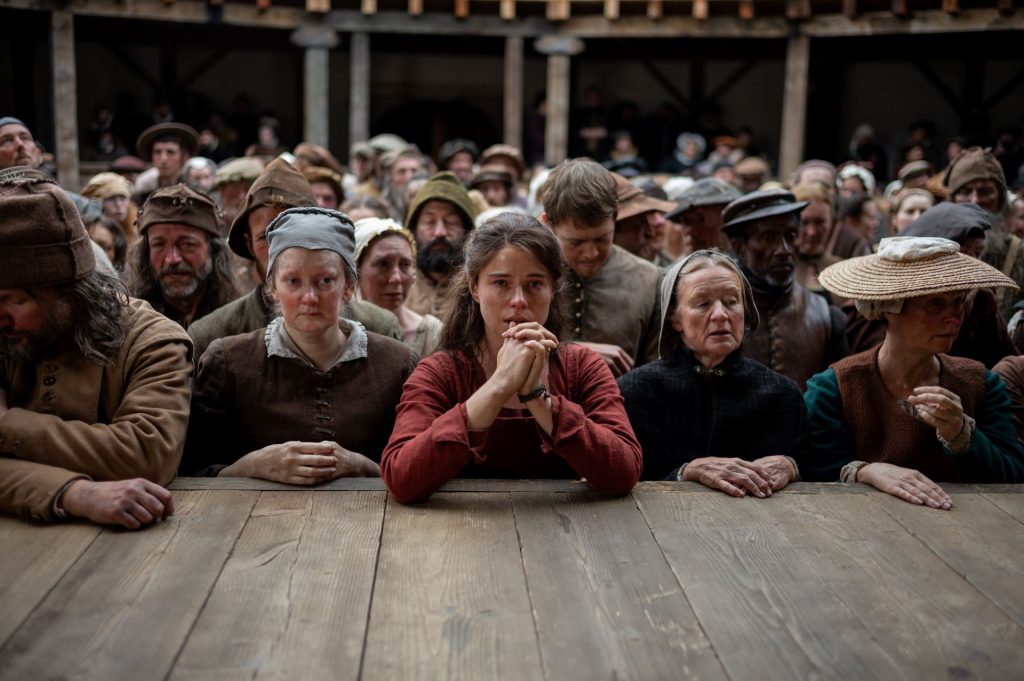
The director adds that by holding onto that one collective gesture, Hamnet finds closure for the multiple threads of grief without uttering a word. “He needed Agnes and the rest of the audience to say, ‘Separation is an illusion. Look: we’re one. You’re safe to go.’ And that allowed him to silently leave and that allowed Agnes to let her boy go on the edge of that threshold,” says Zhao. “So, thank God that idea came to us!”
For Mescal, the extraordinarily moving finale makes Hamnet another heartbreaker in his filmography, yet he can’t help but laugh when asked what it is about this oeuvre that evokes the power of a good cry. “I tend to be at the scene of the crime in films where there is upsetting material,” he admits. “There’s a lot of joy in this film too. I think that’s also true of a film like All of Us Strangers and a film like Aftersun. Obviously the feeling that you’re left with at the end is one of catharsis and upset, but I think if we take a step back from these films, the reason that these films are making people cry is because there’s joy in them too.”
Buckley echoes that sentiment when asked about how the power of Hamnet’s ending moved her. She credits the process of finding the right closure for the film an empowering experience that reflects why we shouldn’t shy away from big emotions, but instead embrace them.
“It was one of the most extraordinary experiences I’ve ever had,” says Buckley. “I was standing at the lip of the stage and behind me was the tsunami: everybody’s hearts came ricocheting through me. Maybe what’s happening now that it’s been put out into the world. In some ways, we’ve forgotten to need each other. We become so scared to need and hold each other off that it’s become this vibration that we’ve needed.”