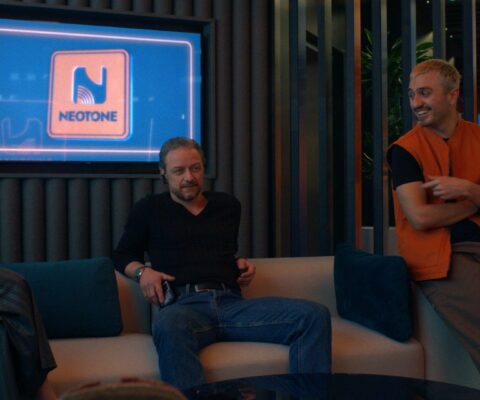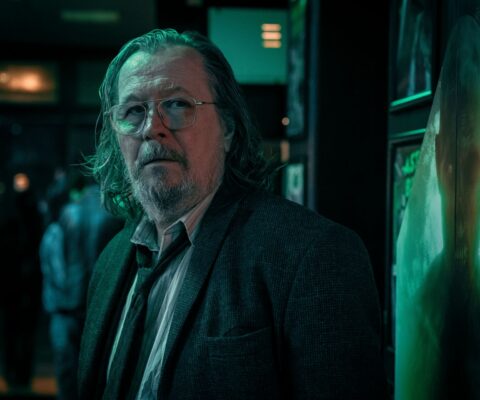


On January 24, 1975, musician Keith Jarrett gave a jazz piano concert in Cologne, Germany. Entirely improvised, the audio recording of the show, The Köln Concert, would go on to become the best-selling jazz solo and piano solo album of all time. In the film Köln 75 , writer/director Ido Funk brings the true story of how this performance came to be, thanks to a young concert promoter named Vera Brandes.
Screening at the Windsor International Film Festival , the quirky and spirited Köln 75 is an homage to youthful exuberance and jazz. Opening at Brandes’ 50th birthday party, she addresses the camera directly as she conjures memories of her youthful beginnings.
Using her charm to talk her way into becoming first a concert promoter for the Ronnie Scott Trio, Brandes begins branching out to booking more of the jazz performers young Germans couldn’t get enough of in the 1970s. Played with boldness by Mala Emde from age 16 through her 20s, the teenage Brandes capitalizes on her jazz fandom and the smitten Scott to quickly become a full-fledged businesswoman brokering deals with touring musicians and famous nightclubs. Portrayed as a no-nonsense woman full of youthful persistence, the powers that be seem unable to resist her youth and charm, all of which she deftly exercises in her favour.
For all her self-made success, she just can’t quite seem to penetrate the gruff exterior of her dentist father (Ulrich Tukur) and mean-spirited brother (Leo Meier). As we see at her 50th birthday, her father is still as cruel and harsh to Brandes as he was when she was a teenager. More than 30 years on from when we first meet her, he is still expressing his disappointment in his daughter. By being the stubborn patriarchal foil to Brandes, it’s easy for the audience to align themselves with her retro “girl power” pizzazz throughout Funk’s fast-paced and brightly-coloured narrative. Much like the nature of jazz, Funk riffs on the narrative to come up with a compelling story centred on Brandes.
Intercut with Brandes’ story, we meet a music critic (Michael Chernus), who breaks the fourth wall to deliver lessons in jazz and build us up to Jarrett’s genius. When we eventually meet Jarrett (John Magaro), we’re introduced to a man whose musical direction is in question.
Cashing in his plane ticket so he and his manager can drive 500km from a gig in Switzerland to Cologne in the hopes of sustaining his European tour, Jarrett’s sound has become commercially questionable in the eyes of his record label. When they eventually arrive in Cologne, Jarrett is faced with a broken-down piano that can’t possibly meet his exacting standards. Enter Brandes, who, using her well-developed persuasion skills to speak to Jarrett’s ego and convince him that when faced with an instrument far more limited than he was used to playing, he could truly create something spectacular. And so, he did, and the legendary Köln concert would prove to be a performance for the ages.
To enjoy Köln 75 , one doesn’t necessarily have to be a Keith Jarrett fan or even a jazz fan. The zippy (mostly) German dialogue and quick edits imbue the film with life. Although the rallying make-or-break moment of getting Jarrett to goon stage is the inevitable climax of the film, how Funk gets his characters and viewers there is as engaging as it is entertaining. In celebrating Brandes’ audacity, Funk captures the improvisational spirit of jazz itself: bold, unpredictable, and brimming with life.
Credit for the film’s energy lays in Emde’s performance. Although she’s a bit too old for the younger teenage scenes of Brandes life, she really comes into her own as the character moves into her 20s. Played with an infectious spirit, Emde’s performance aligns with that of Susanne Wolff’s portrayal of Brandes at age 50, which bookends the film nicely. Magaro, too, is great as the temperamental musician, but though this might be the story of one of the greatest jazz concerts of all time, Köln 75 firmly states that this is really Vera Brandes’ story.
Like jazz itself, K̦ln 75 thrives on improvisation, bold choices, and fearless energy, reminding us that sometimes the most memorable performances happen offstage. Like any great jazz solo, it ends on a high note Рunexpected, exuberant, and entirely its own.