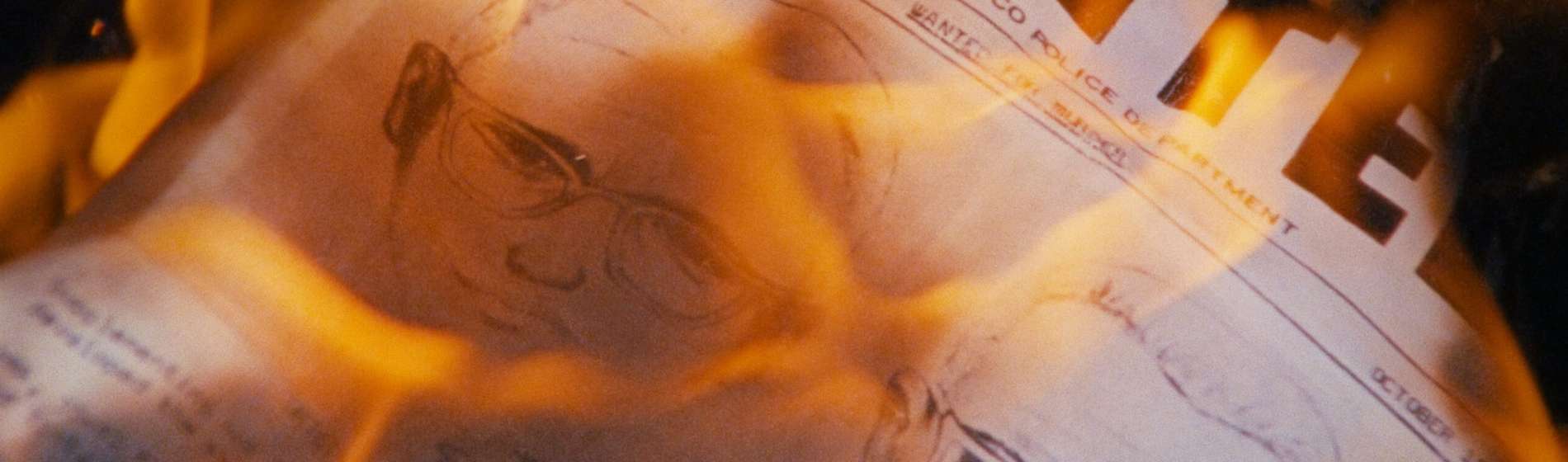


Some failed film projects reach legendary status without ever shooting a single frame of film. From Jodorowsky’s Dune to Tim Burton’s Superman Lives, films that never got off the ground for one reason or another have been endlessly analyzed, speculated about, and wished for by film fans and critics alike. For documentary filmmaker Charlie Shackleton, his unrealized look at the Zodiac Killer led him down an even more creative and unique path in Zodiac Killer Project.
Shackleton tried – and failed – to make a documentary about the infamous Zodiac Killer, the pseudonym of an unidentified serial killer active in the San Francisco Bay area between 1968 and 1969. One of the most notorious unsolved murder cases, the identity of the Zodiac Killer has been a fixture in pop culture for decades and a natural subject for a documentary to capitalize on our seemingly inexhaustible true crime obsession. Unfortunately for Shackleton, his well-thought-out doc would not come to fruition.
He intended to tell the Zodiac Killer story from the perspective of California Highway Patrolman Lyndon E. Lafferty, as chronicled in the book, The Zodiac Killer Cover-Up: The Silenced Badge. The proposed film would have explored Lafferty’s belief that his attempts to bring suspect George Russell Tucker to justice were obstructed. Despite initial development and location scouting, the project was ultimately halted when Lafferty’s family withdrew the rights to his story at the last minute.
Although a major blow for Shackleton, this ultimately proved fortuitous for the filmmaker, who remained committed to chronicling the Zodiac Killer’s tale – now, through his own experiences.
Instead of a straightforward true crime doc, Shackleton delivers an innovative critique on the ethics, aesthetics, and appetite that drives our true crime fixation in Zodiac Killer Project. It is, essentially, a documentary about the documentary he would have made if he had been granted the rights to Lafferty’s story. Consequently, Zodiac Killer Project becomes a story that’s not just about Lafferty’s account, but a critique of the true crime genre itself.
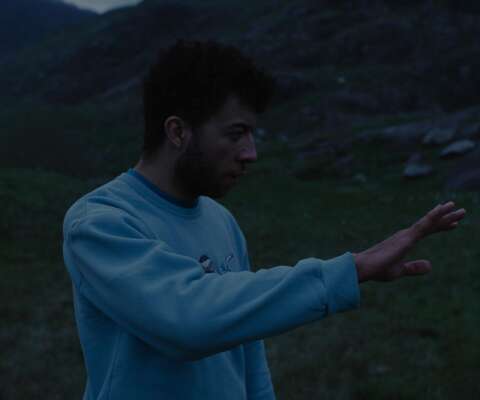
Shackleton’s affable and droll narration, delivered over static shots of the California landscape, explains how the intended documentary would unfold. The film feels like a casual conversation with friends over a pint as Shackleton enthusiastically details his vision for Lafferty’s story. Shackleton proves to be a charismatic and excellent storyteller, his casual tone perfectly complementing the unassuming visuals.
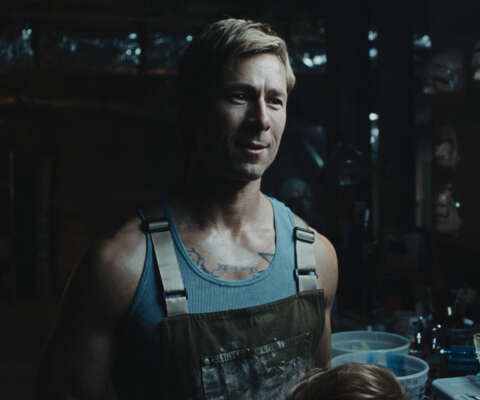
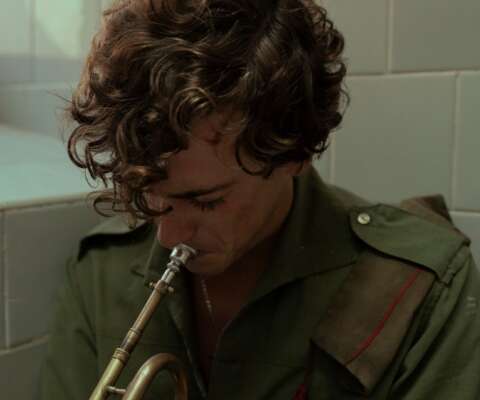
As he explains his shot choices for the original concept, he ends up delivering a deconstructed take on tired tropes and clichés of the genre. Using examples of both non-fiction and dramatic films and series from The Jinx and Making a Murderer to Monster: The Jeffrey Dahmer Story and I’ll Be Gone in the Dark, Shackleton shows just how contrived and formulaic true crime can be.
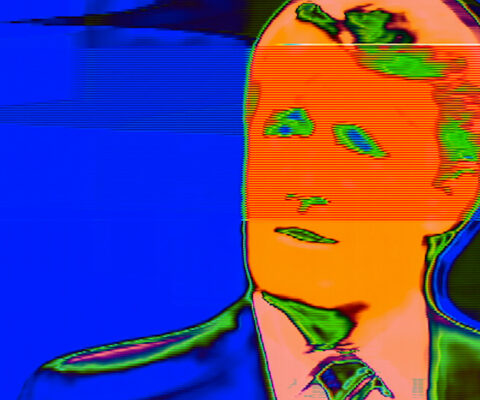
Describing the opening credits scene of his unrealized project and contrasting it with the introductory sequences of existing docuseries is just one example that illustrates how uninspired and formulaic true crime has become. Shackleton punctuates his points with examples throughout Zodiac Killer Project, coming as somewhat of an eye-opener for true crime fans to be shown just how many well-reviewed series rely so heavily on by-the-numbers formats.
But he dissects more than the genre’s visual checklist. He also inspects society’s obsession with true crime stories, including his own, all while utilizing the same genre tactics in Zodiac Killer Project. Shackleton admits that he would have exaggerated some of the events and visuals for storytelling purposes, ranging from the innocent substitution of a public library facade as a police station to sidestep the need gain permission to film at such an institution, to not showing Zodiac suspect Tucker’s home because it wasn’t creepy enough.
However, Shackleton stops short of calling out his or our interest in grisly murders. Instead, he points the finger at the very genre he wants to be a part of for building the mechanisms of entertainment into brutal stories, specifically singling out Ryan Murphy’s Monster series on Netflix (which just released a new season about Ed Gein). As long as viewers keep seeking these stories out, Hollywood will keep cranking out grisly content for us to consume.
In transforming his own failure into the feature itself, Shackleton does what the best documentarians do: find the story hiding in plain sight. Zodiac Killer Project is self-aware, sharp, critical, and unexpectedly comforting. It is proof that even a dead end can lead somewhere extraordinary.
Zodiac Killer Project screens at festivals and select theatres this fall, including Hot Docs Ted Rogers Cinema starting November 21.