

A late-night knock at the door opens Krux . A carefully wrapped human heart is delivered with trepidation to a young woman named Greta (Jella Haase). It is not a welcome sight, although it is expected. With an oppressive air and a heaviness you can feel on screen, writer-director Tony Vahl’s debut feature opens with an incredible atmospheric impact that she masterfully sustains.
Based on true events during the final days of World War II, Krux is a deeply affecting look at a people in an isolated East German village and a nation on the brink of collapse. Stuck between the front lines and the advancing Red Army, with nowhere to flee, there are no soldiers here, and this isn’t a story of retreat. Instead, this is a quiet and stark look at what those final days were like among villagers literally caught in the middle, torn by duty to their country and one another, and what happens when society begins to collapse morally, ethically, and physically.
Greta and her fellow washerwoman Anni (Frida-Lovisa Hamann) are among the remaining villagers whose young and able men have been sent to fight Hitler’s war. Used to bad news and whispered rumours of defeat, there are no delusions about how this war will end for them and for Germany. Together with the elderly and men deemed unfit for service, including the mayor (Lukas Miko), school headmaster Fritz (Clemens Schick), and the village’s priest (Martin Wuttke), the remaining adults attempt to hold on to some semblance of normalcy. But when the consequences of defeat begin washing up in the river, the village finds itself faced with the final, chilling command: leave no one alive for the Russians to find. They are, quite literally as the film’s title implies, at the crux of this war.
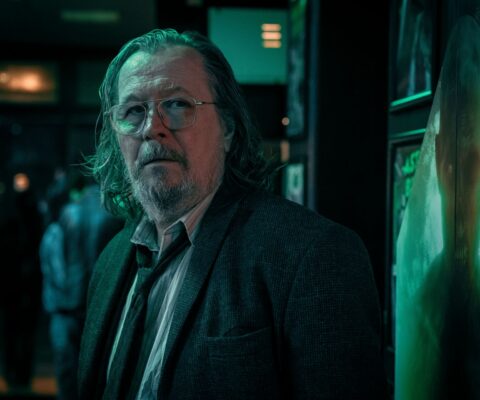
Krux is an incredibly dark tale, but one that is starkly beautiful. Stunning visuals by director of photography Piotr SobociÅ„ski Jr. give the film a cold yet luscious look. Scenes around a dinner table, as the mayor discusses the plan to have his villagers take their own lives, look like a Baroque painting. Consistent in its vision and tone throughout, every scene of Krux conveys the mounting futility of what’s to come as the end of the war creeps nearer.
This is not the Germany of The Zone of Interest . While the rich Nazis in that film revelled in sun-soaked backyards and idyllic riverfronts, these are regular Germans who aren’t profiting from war or cruelty. They have remained untouched by the decisions made in Munich until the bitter end.
Many obvious parallels exist between this story and the current era. Society is divided between those who gobble up every word and directive from faraway leaders with no insight into their daily lives and those who choose not to question bold commandments from men who bear none of the consequences of their actions. They constantly remind us that these are ordinary people who must endure. They possess an almost childlike dissociation between the cause and effect of decisions made by parties hundreds of miles away. The ideas presented to them infiltrate the village, something Krux shows on screen in perhaps too literal a display of snakes winding their way through a miniature village. Though not wholly necessary, the symbolism is apt, and the scenes serve to break up the narrative as the ominous collapse deepens.
The cast truly gels as an ensemble, with Schick, Miko, and Haase each deeply committed to their roles. Not big on action pieces, the mounting dread is palpable whenever they are on screen. Krux works because of those subdued performances. Where it could go big and showy, it relies instead on the quiet and understated, allowing tension to build to a boiling point that is as affecting as it is restrained.
That restraint is ultimately what makes Krux so effective. Vahl doesn’t need spectacle to convey the horror of a society collapsing around people with nowhere left to go. The dread is already there in the silences, the faces, and the knowledge that the end is approaching. By focusing on ordinary people caught in an extraordinary and devastating moment, Krux makes the final days of the war feel both distant and disturbingly immediate.