


There’s a particular kind of vertigo that comes with being told, out of nowhere, that you once mattered. Late Fame , Kent Jones’ quiet, deceptively sharp adaptation of Arthur Schnitzler’s century-old novella, builds its entire emotional architecture around that vertigo, and around Willem Dafoe ‘s extraordinary ability to let it play across his face without ever overplaying a single beat.
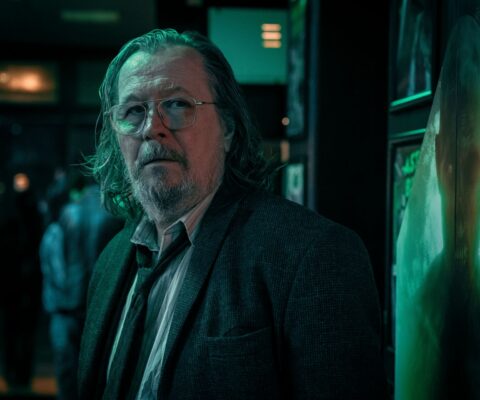
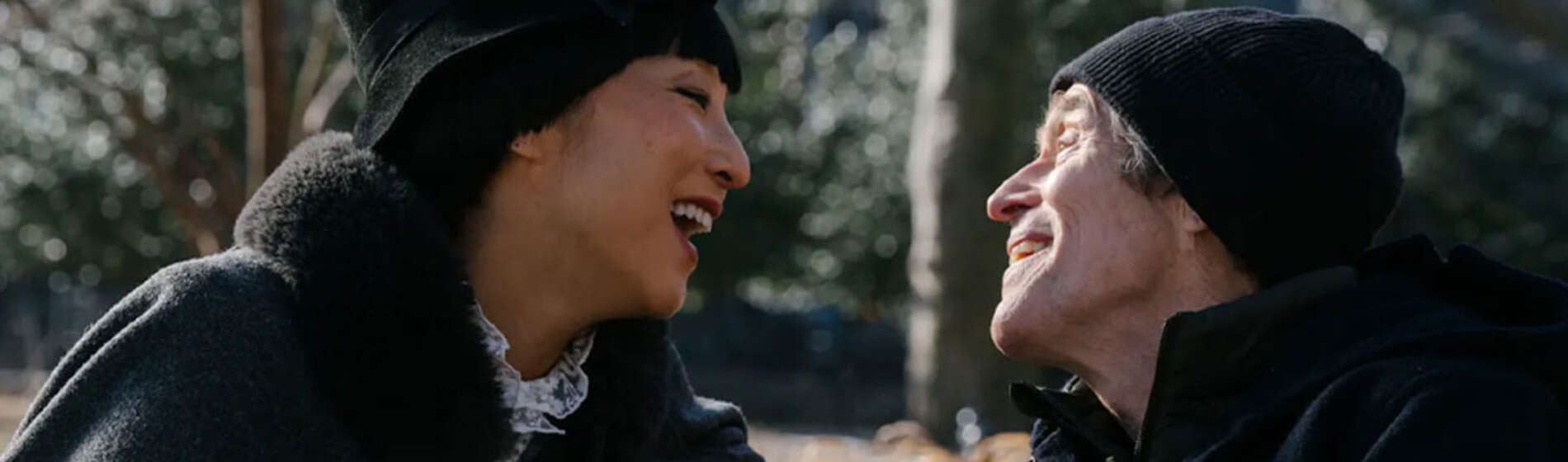
Dafoe stars as Ed Saxberger, a former downtown poet who published one slim, half-remembered book in the late ’70s and has spent the decades since sorting mail for the USPS. He lives alone, keeps a modest apartment stacked with his favourite literature, and unwinds most nights at a neighbourhood bar with friends who have known him forever and couldn’t care less about his literary past. It’s a small life, but a full one, until Wilson Myers (Edmund Donovan), a self-serious young admirer, tracks him down to say his one book is beloved by an entire circle of poets, essayists, and artists half his age.
What follows is a slow, funny, quietly devastating study of what happens when someone starved for relevance suddenly gets fed. Saxberger is folded into Myers’ group, an insular cluster of twenty-somethings with trust funds, gallery-worthy apartments, and a performative disdain for anything with a screen. They call each other by their last names. They speak about analog living like it’s a moral position. On paper, the group reads as almost too broad, practically cartoonish against the cozy, handheld naturalism Jones establishes everywhere else in the film. That friction becomes the point. The longer Late Fame spends with Myers and his circle, the more their affectations reveal themselves as costumes, worn by people who have never had to be anything else. It’s a sly bit of thematic sleight of hand, using performance to interrogate performance, and it rewards paying attention to how differently people behave once they think no one important is watching.
Nowhere is that gap between persona and person more striking than with Gloria ( Greta Lee ), the group’s resident actress, all outsized gestures and a transatlantic lilt until the film catches her without an audience, and without the accent. Lee plays both versions as fully real, which is a harder trick than it sounds, and the distance between them says as much about the film’s idea of authenticity as anything in the script.
The dialogue throughout has that same lived-in quality: characters interrupt each other, trail off mid-thought, stumble over their own sentences. It gives Late Fame a documentary hum that’s rare in films about writers, who are so often written like they speak in polished paragraphs.
That’s really what the film is chewing on beneath its gentle comedy: the difference between being celebrated and being known. Saxberger’s new admirers shower him with a kind of praise that flatters the giver as much as the receiver — proof that they have good taste, that they found him first, that proximity to a “rediscovery” makes them interesting, too. Whether any of them have actually sat with his poems is a different question, and the film is patient enough to let that question curdle. A terrific, quietly cutting scene with a literary agent (Jake Lacy), eager to package Saxberger’s life story for sale before anyone has asked whether Saxberger wants to sell it, captures the same transactional warmth in a different key.
Dafoe holds all of it together with one of his most restrained performances in years, doing more with a pause than most actors manage with a monologue, and never letting Saxberger fall into either pure victim or easy fool. The one thread that could have used more room to breathe is Saxberger’s estrangement from his ailing brother, which surfaces in a couple of phone calls and then recedes; a little more weight there would have deepened the loneliness the rest of the film handles so precisely.
Mostly, though, Late Fame is a film about the ordinary, mundane texture of a life that looks unremarkable from the outside and turns out to be worth defending. Saxberger already has people who love him for reasons that have nothing to do with a book he wrote when Carter was president. Watching him rediscover that is the quiet, satisfying pleasure at the centre of the whole film.
Late Fame opens in select cinemas (like TIFF Lightbox ) on Friday, August 21.