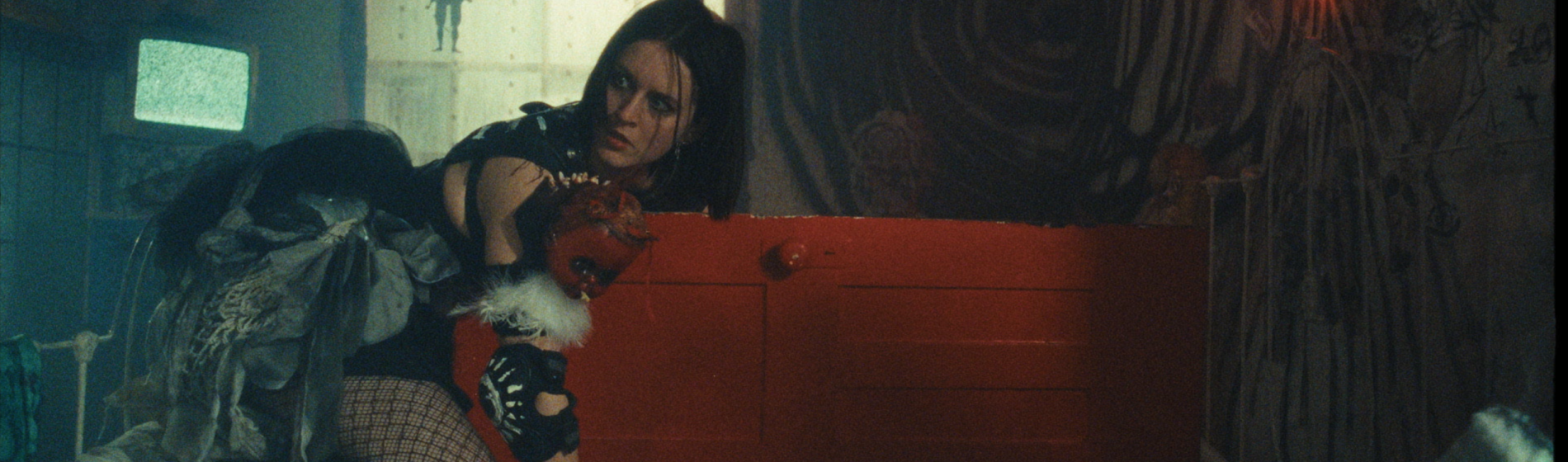


From the get-go, it’s clear that the indie film Lucid takes place in the gritty, grungy and messy 1990s’ art scene. The movie opens with a harsh and raw punk song; the vocals are whiny, backed by a loud, distorted guitar. A woman jumps into frame donning smudged eyeliner, a tattoo choker, fishnet stockings under a schoolgirl skirt, and a bulky leather jacket. She’s rushing somewhere. The woman throws a poorly-wrapped, painted canvas on the back of her bike and starts pedalling fast along a quay. As the opening credits roll, her movement is spliced with lo-fi old-school scenery shots edited to look like they were captured on an old, scratched-up film reel with the movie’s edges rounded like film stock.
The frantic bike rider’s name is Mia (a fantastic Caitlin Acken Taylor), and the story follows her through an artistic block. In an attempt to become inspired – and to avoid flunking out of art school – Mia seeks a local psychic who sells mysterious, personalized drugs. When Mia receives her ‘‘prescription’ and begins consuming it regularly, it forces her to look deep into her forgotten past.
Although the auditory elements aren’t vital to the story, they build Lucid ’s punk aesthetic. Taste is subjective, but regardless, it’s clear the soundtrack wanted to take the audience back to the grunge-punk era. Music supervisor and composer Marta Jaciubek-McKeever (who sadly passed away in October of 2025) successfully mimics the sound of the 1990s’. Her curated picks feature punk and rock artists ranging from 1970s’ acts like The Dishrags to contemporary alt bands like Bonnie Doon and K-CAR, and her composed numbers are appropriately compressed and synth-heavy.
Cast-members-slash-musicians Vi Gaffney, Ayla Tesler-Mabe (Calpurnia), Elaine Thrash, Amber Dandelion, and Bobby Cleveland perform songs that Jaciubek-McKeever wrote, and do so with vigor. Björk’s music director, Matt Robertson, worked on the final mixes, adding his dreamy, electronic touch to them.
Lucid is filmed on 35 mm stock to recreate that grainy and high and vibrant colour-contrast look that characterized ’90s’ cinema. Super 8 is used too, mostly in transitional scenes and flashbacks to Mia’s childhood in the 1970s, which adds a touch of realism.
Cinematographer/director Ramsey Fendall incorporates shaky hand-held video recording in between scenes which adds good tension and an eerie horror element to Lucid . The cinematographer clearly takes pride in his work – every shot type is used with purpose. Fendall uses wide shots to show (not tell) when there’s little dialogue to go on and the detailed scenery gives the audience little nuggets of exposition.
An unnerving atmosphere is created through medium shots that inspire intense eye contact with the camera, occasionally flitting but more often than not, long and blatant. It’s delightfully unnerving; reminiscent maybe of Johnathan Demme’s same technique in Silence of the Lambs . Close-ups are tense and alluring, sometimes even uncomfortably titillating. E.g., Mia’s first bite of the dream-inducing drug focuses on her mouth as she tentatively licks what looks like a heart-shaped Smartie, then nibbles its edge delicately.
The set design is superb too. Lucid’s rooms feel real, lived-in, properly imperfect – and most importantly, period-accurate. For an indie movie made with a shoestring budget, the special effects aren’t half bad, either. The blood is bright but not overly so, as the filmmakers’ use of red, black, and white frequently sharpen Lucid ’s loud, dark, and disorienting nature. Mia’s inner demon is properly off-putting in both its movements and look as it creeps along Mia’s subconscious and in her bedroom.
It’s quite impressive how eerie and sinister the creature is considering the indie nature of the film. To add to the punk element of Lucid , Canada’s Drag Race star Vivian Vanderpuss plays Mia’s inner demon. She does it so well that it’s hard to tell there’s a person underneath the monster’s unearthly, grey limbs and nail-stabbed eyes.
Fendall and fellow director Deanna Milligan often does well at teasing the audience with alluring plot points. But sometimes the movie is trying too hard in the artsy department and gets lost in its own creative stirrings. The story drifts – especially in the middle act – when the visual allure that tiptoes around the meat of the narrative takes precedence.
Regardless, there are deep and nuanced themes that emerge throughout Lucid . Constantly, the film satirizes the art scene and shows how abstract artists can over-complicate and over-critique their creations. After a second attempt at her self-portrait, Mia’s teacher (John Luna) frustratedly brushes off her efforts, calling the work contrived and clichéd. Mia bites back, saying, “You don’t understand this because this isn’t for you. I’m not making this for you.”
Lucid makes a lot of these arguments, but one of the most pertinent points is also quite subtle. Mia is a young, tortured artist in the ’90s. She’s part of a generation that grew up with messy parents with chaotic lives. That world wasn’t ready to accept the ugly truth that came with that. It was the ’70s. People today fondly remember that time for its continuation of the ’60s cultural zeitgeist. The spreading of peace, the abounding love, natural living, and the spiritually driven drug use. But underneath that image is a dark, ugly underbelly.
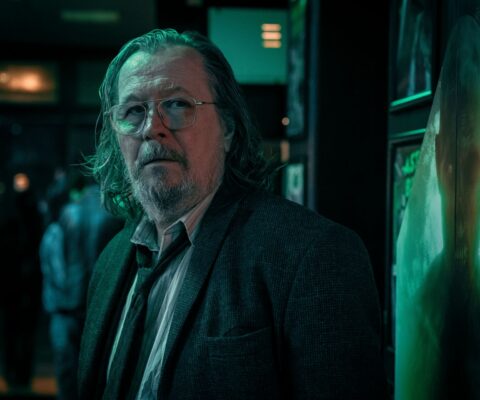
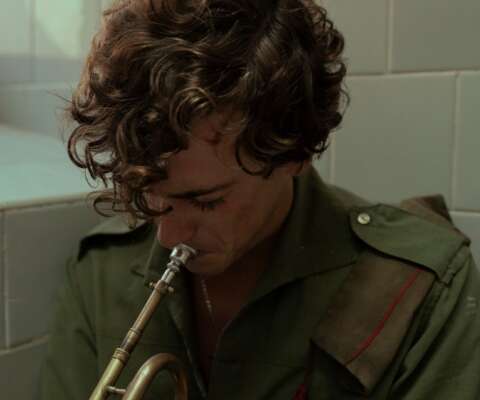
Lucid really captures that. Mia’s parents don long, wild hair, flowy cotton clothes and groovy jewelry. Yet, they are clearly struggling to survive – as most people were during what is considered North America’s economically harshest decade. Mia’s father strums on a guitar in fleeting flashbacks, and her mother dances in lush, green grass. But other flashbacks conjure up memories of fighting, knives, hypnosis, and isolation from conventional society. Meanwhile, Mia’s grandmother, Ethel (Jo Barnes), offers a warm presence that reflects the peace and love from the era. The performances by Barnes and Luna are highlights in capturing these generational divides. Like Acken Taylor, they carry the real weight of the film by offering characters that feel genuine and fleshed out.
These characters help develop the film’s themes, like generational trauma, identity and discovery, and the exploratory nature of art. However, there are also themes that are specific, niche, and require some cultural context or lived experience. These elements add a level of nuance that is easy to miss but great to see.
Lucid is an enjoyably strange, often intentionally uncomfortable film. It appeals to a hyper-specific, more experimental demographic. For the laypeople who venture into it, be warned that it is no ordinary, conventional piece of cinema – but that’s part of the point. “How about making something ugly for a change? Ugly and honest,” Mia’s grandmother says. That’s exactly the kind of art that Lucid wants to be.