Hope and cautious optimism colour Lyana Patrick’s documentary across more than just the film’s title. In Nechako: It Will Be a Big River Again , she turns her camera to the ongoing fight of the Saik’uz and Stellat’en First Nations to restore the British Columbia river and the way of life it once housed and supported. Once a prosperous river system, the introduction of the Kenney Dam in the 1950s completely devastated the natural ecosystem. Built with permission by the Canadian government by Rio Tinto Alcan, the dam was created to divert water to their aluminum smelting plant.
The dam inflicted devastating environmental and cultural consequences. Millennia-old local ecosystems were destroyed, and vital salmon habitats, crucial for both humans and wildlife, were decimated. Moose and other animal populations became scarce. The Saik’uz and Stellat’en First Nations experienced fundamental changes to their livelihood, and yet, 75 years later, they hopefully fight on.
Patrick’s new film seeks to amplify the voices of the community dedicated to preserving the Nechako River for future generations. This community, living along the river, has witnessed multiple First Nations generations lose not only access to the waters but also their spiritual connection to the Nechako.
After opening the 2025 Planet In Focus Film Festival in Toronto, Nechako screens as part of the Windsor International Film Festival.
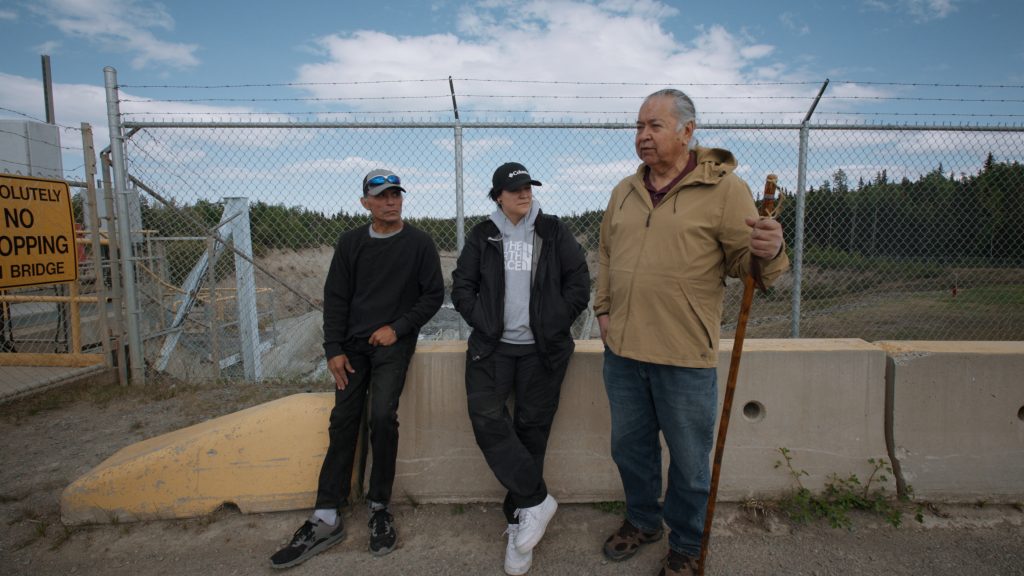
Key to Patrick’s film is the idea of land stewardship – the need to act as a caretaker of natural resources for both current and future generations. Community elders and leaders are taking up the charge to bring the Nechako back to life, including Patrick’s father, Archie, former Chief of the Stellat’en First Nation; environmental monitors who warn of what pillaging the land for its natural resources will bring; and Saik’uz First Nation Councillor Lead, Jasmine Thomas.
The ongoing legal dispute among the First Nations, Rio Tinto Alcan, and the Canadian government has spanned more than a decade. The film summarizes the legal battle, while also making it accessible and human. Despite this enduring struggle, daily life persists. Patrick captures Thomas carrying her child during an interview, underscoring how deeply this fight is woven into the community’s everyday existence. It also serves as a powerful reminder of who they are fighting for.
Cinematographer Sean Stiller captures the river’s natural beauty alongside the industrial interventions that have scarred the landscape and diverted its flow. Like the river itself, Patrick’s approach to the film is reflective, allowing moments of stillness and reflection. Also used to great effect is archival footage that shows how prosperous the river once was. Visuals show women preparing a bounty of salmon from the same rivers that are now bare. We hear from the current generation telling tales of their ancestors for whom the river was a lifeblood, now worried about what – beyond a fight – will be left for the next generation.
A human-centred story about persistence, Nechako: It Will Be A Big River Again reminds us that resilience runs deep. As Thomas says in the film, “They hope they’ll bleed us out, we’re gonna do what it takes.”
Nechako: It Will Be A Big River Again screens as part of the Windsor International Film Festival on November 1.