


In Canada, we have an ongoing crisis of missing and murdered Indigenous women. According to research done by Statistics Canada, women of First Nations, Métis, and Inuit descent are six times more likely to be murdered than their non-Indigenous counterparts. They also face assault, both physical and sexual, at disproportionately higher rates, and the perpetrators are caught less frequently. If none of this information was bad enough, there’s also the fact that this violence is rooted in systemic oppression by a settler colonial state, and that the RCMP are complicit in, and in some cases perpetrate, these acts.
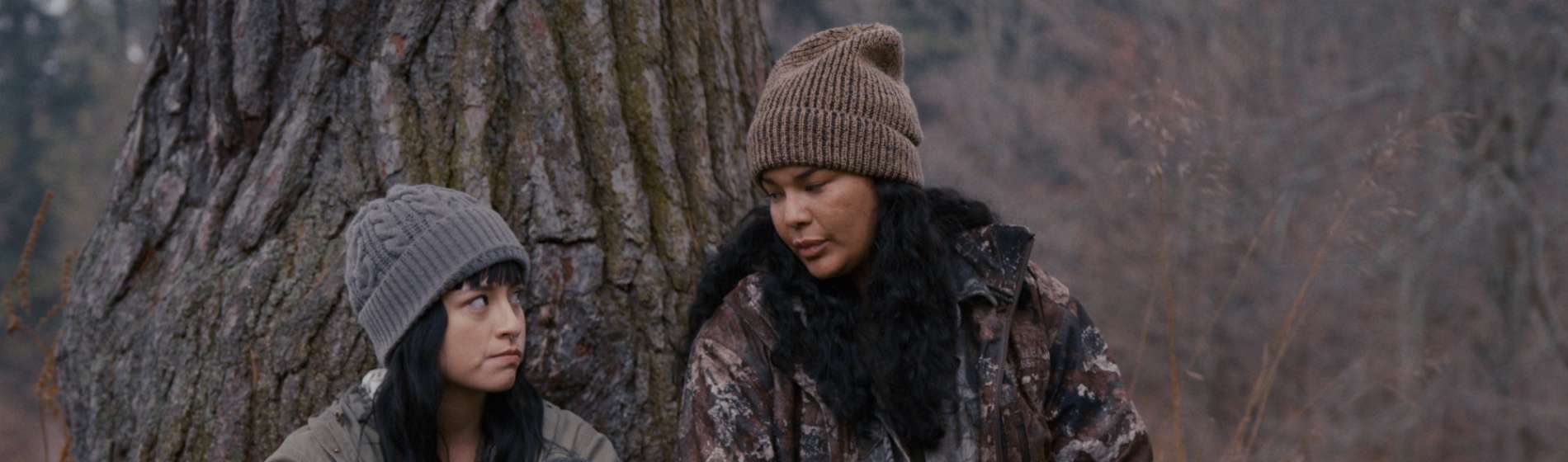
These statistics remain shocking, no matter how many times they’re published, and while steps have been taken, we are still a long way away from resolving this black mark on our nation’s past and present. This is the culture in which Nika & Madison was born. It’s the story of a young woman, Madison (Star Slade), who, after a night on the town, is sexually assaulted by a police officer. Her childhood friend Nika (Ellyn Jade) manages to intervene, but in the process, hits the officer on the head and sends him into a coma. Despite acting in defence, Nika and Madison realize that the most likely outcome of what happened is the police railroading them rather than serving justice to one of their own. Their only choice is to run.
At the same time, a newly partnered pair of detectives, Timmins and Warhurst, played by Amanda Brugel and Shawn Doyle, respectively, are assigned to the case. They fit into two stereotypical roles, with Timmins being the sympathetic one willing to slow down and actually investigate, while Warhust doesn’t really care what may have happened. He simply wants to find and incarcerate the women for assault and hold the so-called thin blue line.
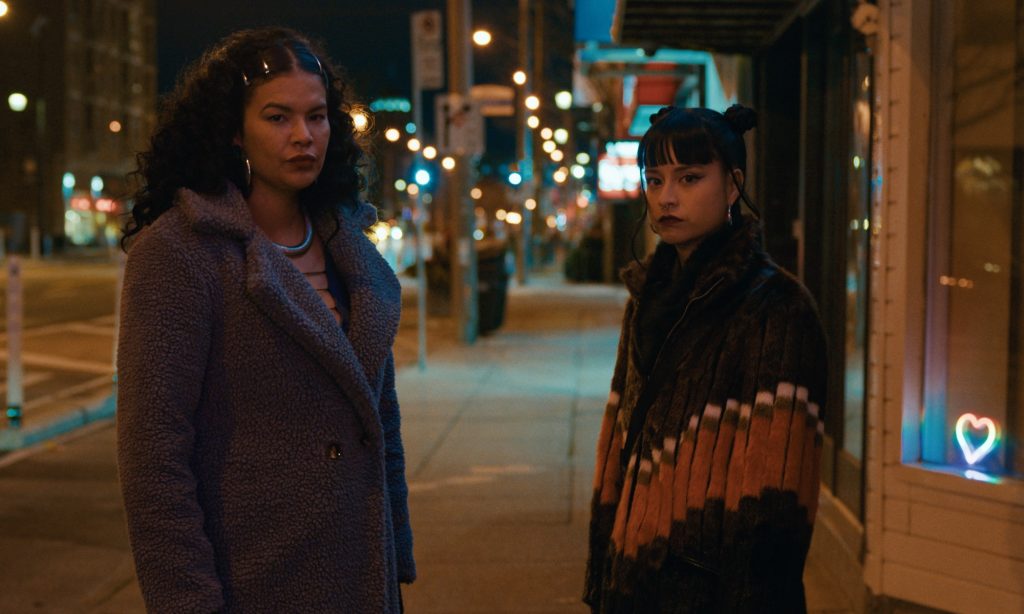
Nika & Madison is, in a word, unsubtle. This is a film that wears its message on its sleeve for all to see. First, as the women flee, it deals with not only the terror of being hunted by the police but Akzo the plight of the two women –estranged by their circumstances– reconnecting with both each other and the culture writ large. On the other side, the journey of the detectives–in particular of Warhurst, the white male cop with racist preconceptions of First Nations people–follows a predictable arc towards doing some semblance of the right thing.
This may sound like a negative, but it is, in fact, a necessary story for both our time and our nation. The statistics that began this review are just that: statistics. And while this film is fiction, it is also based in the stories of countless women like Nika and Madison and it gives them a face and voice that we can relate to. It is blunt for sure, but that is the point. Director Eva Thomas ensures that there’s no misinterpreting the narrative here, and while it does end on a slightly ambiguous note, it’s up to you to decide whether it is hopeful or not.