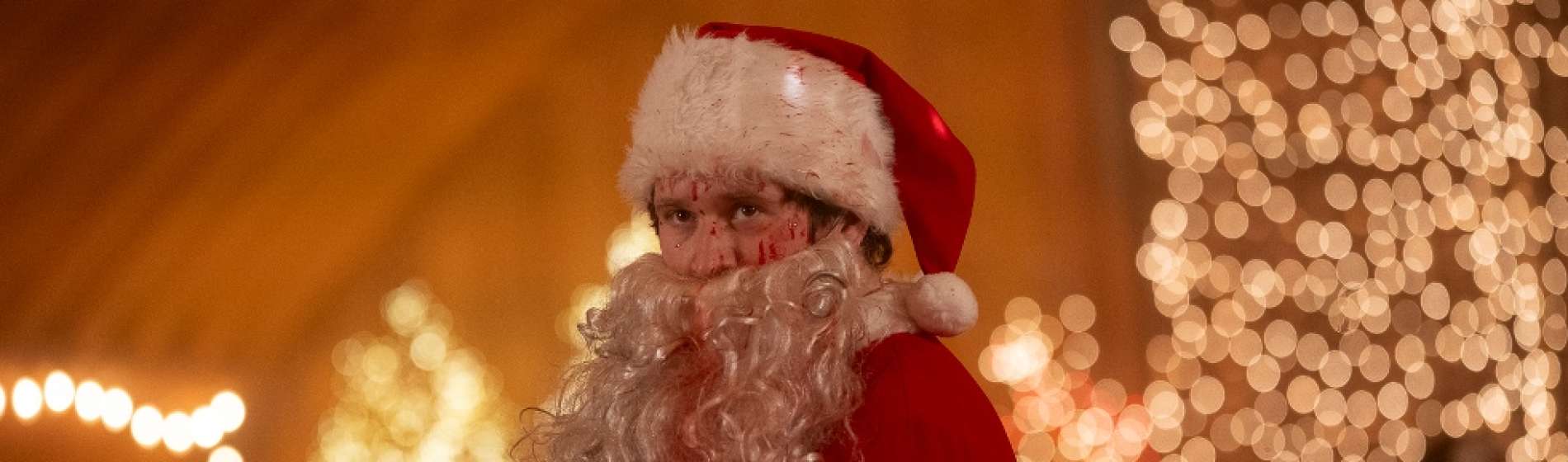



The holidays are a time for cheerful decorations, delicious food and spending time with loved ones. But it’s also one of the deadliest times of year, particularly in cinema. Movie serial killers have their own way of celebrating Christmas, painting the walls red with blood and merrily stringing intestines around the room. Special occasions often inspire murder-y feelings, but it’s a select few that actually act on them. In Silent Night, Deadly Night, killing is a holiday tradition passed on from one St. Nick to another.
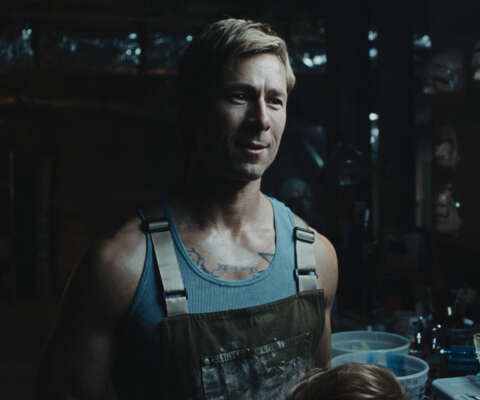
When Billy was a child, a man dressed as Santa Claus slew his parents on the side of a road. Now, in his twenties, Billy (Rohan Campbell) is racking up his own body count. Every December, he goes on a Santa-clad murder spree — one kill for every day in the Advent calendar. The voice (Mark Acheson) in Billy’s head selects his victims and helps the socially awkward young man navigate the world. But everything changes when he meets Pam (Ruby Modine). By day, he stocks shelves alongside her at her father’s (David Lawrence Brown) Christmas store. By night, he satisfies his need to kill by dispatching naughty townsfolk.
This is a remake of the 1984 slasher film of the same name. The boy in that movie has a similar childhood experience, but a nun at his orphanage compounded his trauma. Consequently, his adult urge to kill stems from a firm sense of morality beaten into him by Mother Superior.
The Billy in this film also kills people on the bad list, but they’ve potentially done more than have sex before marriage. When Billy dons his Santa suit, he becomes a Christmas vigilante. The voice convinces him he’s preventing future tragedy by permanently stopping these strangers. And it’s hard to argue when he decides to take down a room full of Nazis. Unfortunately, falling for Pam distracts him and makes him a bit reckless — much to the voice’s chagrin.
Like many good, low budget horror pictures, most violent acts occur off screen or at a distance. But there is still plenty of blood spray to repeatedly stain Billy’s white suit trim, as well as a couple of gory on-screen kills. Notably, other people’s crimes are far crueller and more gruesome. Nonetheless, what it lacks in gore, it makes up for in style. A flashy title treatment precedes each murder, setting the stage for what’s about to come. It’s a simple addition, but it gives the film character and further differentiates it from its predecessors.
Despite appearing to be a nice guy, Billy is adept at killing and avoiding authorities. Most slashers feature killers on an insatiable quest for revenge or with an inescapable compulsion to punish. In either case, the urge to murder is personal — even when it stems from a traumatic event. But here, Billy’s motives are different. Putting on the Santa suit is akin to Pavlov’s bell, stimulating his dormant bloodlust. But it’s an impulse he can control. He doesn’t murder indiscriminately — the voice recommends each victim and gives Billy a reason to slaughter them.
Billy’s gravelly imaginary friend has a surprisingly likable personality, even though he’s instructing Billy to murder. One can almost imagine the bearded sage speaking just off-frame; his vocal performance is that charismatic. He may not be a model fatherly figure, but he guides poor orphaned Billy through some significant life events.
Overall, this film is an improvement on the original. It replaces the standard slasher fare with a more complex story that forces audiences to reserve their judgment. It also adds some flair to the narrative by giving the killer a more interesting motive and a new definition for “seeing red.”
Silent Night, Deadly Night opens in theatres on December 12.