


Carol Kane said that the morning after you lose an Academy Award is a silence that resounds for miles, as the previous two months of non-stop phone calls and events come to a jarring, abrupt halt. (Listen to her interview on Marc Maron’s WTF podcast for a lovely story about Jack Nicholson’s kindness to her the day after she lost the Best Actress Oscar of 1976.)
For a movie that has campaigned hard and made it to the final group of nominees, a Best Picture loss is a disappointment, but winning at least one category throughout the night helps soothe the pain. Going home completely empty-handed, however, has to be a much bigger sorrow, and while being named one of the top five (or ten) movies of the year is a rare privilege, losing every single category probably makes for a long night when you finally get to the big show. For example, Mike Leigh arrived at the 1997 after-party and the first thing he said into a microphone was to point out that his film, Secrets & Lies, was the only Best Picture nominee not to win anything, so the experience is clearly a notable one.
The Oscar nominations have come out for this year , and with the increase in nominees in the Best Picture category since 2010, there are so many more films that win nothing despite being cited among the year’s best. I was initially going to do a Top Ten list of Best Picture winners this month to celebrate the end of awards season, but I thought it would be worth looking back and choosing the cream of the empty-handed crop–the Best Picture nominees that didn’t take a single win.
10. THE REMAINS OF THE DAY
James Ivory, 1993
Only a year after their masterpiece, Howards End , won three Oscars, the Merchant Ivory team came back with the film that rivals it as their all-time best, a project they took over from Mike Nichols after his planned reteaming of Meryl Streep and Jeremy Irons (with their French Lieutenant’s Woman writer Harold Pinter) fell apart. Anthony Hopkins plays Stevens, the head butler of an English country manor who, on a drive to the West Country to meet with the woman who formerly worked as housekeeper during World War II, flashes back to the years that he and Miss Kenton (Emma Thompson) worked together (the film moves this up to the war years, from the 1930s setting of the novel). Stevens saw his life of service as a calling, blinding himself not only to his feelings for this vibrant and endearing woman but also the activities of his Oswald Mosley-esque employer (played by James Fox). The result is a work so fine-tuned to its every element, visually and emotionally, that its most devastating qualities are barely louder than a whisper.
How many nominations did it have : Eight: Best Picture, Best Actor (Anthony Hopkins), Best Actress (Emma Thompson), Best Art Direction, Best Costume Design, Best Directing (Ivory), Best Music (Original Score), Best Writing (Screenplay Based on Material Previously Produced or Published)
What should it have won : Nothing was going to beat Schindler’s List in the major categories this year, and Hopkins having won two years earlier made it unlikely he would take a second prize so soon, but I’d have happily chosen him for the finest performance of his career over Tom Hanks in Philadelphia (who, to prove my theory wrong, won a second Oscar a year later).
9. THE CONVERSATION
Francis Ford Coppola, 1974
This is one of the first films that comes to mind when you think of the glory days of seventies filmmaking, made by Coppola the same year as his unforgettable Godfather Part II . Gene Hackman stars as a wire tap expert who, while surveying a woman (Cindy Williams) who may be cheating on her husband, discovers that she might be in fear of actually being murdered. The script plays with preconceived conventions of storytelling expectations and brilliantly uses them to its advantage in the last third, and captures the paranoia and cynicism of the post-Watergate era with style and intelligence.
How many nominations did it have : Three: Best Picture, Best Writing (Original Screenplay); Best Sound
What should it have won : Coppola won two of these categories for another film, and I suppose The Towering Inferno deserved the prize for being so loud. If nothing else, let’s just remember a time when a film like this even had a shot in the Best Picture category
8. SECRETS & LIES
Mike Leigh, 1996
Cynthia (Brenda Blethyn), an aging, working-class white woman is found by Hortense (Marianne Jean-Baptiste), the Black daughter she gave up for adoption at birth years before, and the ripple effects of their reunion cause both trouble and joy in the lives of those around them. Working from a script Leigh wrote, as is his usual format, based on his performers’ improvisational work in rehearsals, this one has warmth, talent and beauty to the nth degree, climaxing in an all-stops-out, tear-inducing dinner scene in the third act.
How many nominations did it have : Five: Best Picture, Best Actress (Brenda Blethyn), Best Supporting Actress (Marianne Jean-Baptiste), Best Director (Mike Leigh), Best Screenplay (Written Directly For the Screen)
What should it have won : This was my favourite movie of that year, but I don’t begrudge The English Patient , which is also very beloved to me, a single prize, nor do I regret that the Academy went for comedy in the choice of Fargo’ s star and script. This many years later, all three films still shine bright, so let it just remain a tragedy that there couldn’t have been any ties that night.
7. BROADCAST NEWS
James L. Brooks, 1987
A picture-perfect but intellectually slight anchorman (William Hurt), his brilliant but awkward colleague (Albert Brooks) and a sharp news producer (Holly Hunter) with an impractically high moral code are the three main characters of this fantastic film set in the world of television news. The balance it gets exactly right, and one that Brooks has never replicated, is how beautifully it explores the rich interplay of its characters and their personalities while also providing a detailed, wholly convincing view of a workplace that includes such delightful idiosyncrasies as Hunter’s character taking “crying breaks.” That it predicts the undercutting of news media by personality cults also makes it the most prophetic movie of 1987 (alongside Robocop ), and its cynical ending, for which Brooks took a lot of heat when the film was first released, has contributed a great deal to how well it has aged.
How many nominations did it have : Seven: Best Picture, Best Actor (Hurt), Best Actress (Hunter), Best Supporting Actor (Brooks), Best Cinematography, Best Film Editing, Best Writing (Screenplay Written Directly For The Screen)
What should it have won : I’m not sorry that any of the actors went home empty-handed, Hurt already had one, Hunter would have her victory tour six years later and I’m really glad Sean Connery had an Oscar. I can’t argue The Last Emperor ‘s taking an award for cinematography over this, and I love Moonstruck getting the award for writing, but Brooks should have been nominated for Best Director and taken both that and Best Picture. Bertolucci’s film, while a rare case of an exotic-lands eighties film that avoids white saviour tropes, is his usual flavour of shallow aesthetics. He doesn’t emphasize its darker themes of ideological hypocrisy as well as, say, Chen Kaige would with Farewell My Concubine , and The Last Emperor many years later feels like an Oscar-bait joke.
6. FOUR WEDDINGS AND A FUNERAL
Mike Newell, 1994
Charming Hugh Grant and his many friends experience the titular events while trying to survive their own relationship landmines in the process. At the first wedding, Grant meets an American visitor (Andie MacDowell, whose timing isn’t always spot-on) with whom he is immediately smitten; unfortunately, the third wedding in the story is hers. This hysterical comedy hit from England launched the careers of most of the performers involved, and is still the best that Richard Curtis ever gave to the cinema.
How many nominations did it have : Two: Best Picture, Best Original Screenplay
What should it have won : Pulp Fiction was the film of the year and, of course, it only makes sense that it won the writing category, but if the Academy didn’t want to go so dark with the top prize, this would have made a fabulous choice. Nothing was going to beat Forrest Gump that year, but it hasn’t aged nearly as well as Four Weddings (or Pulp Fiction, for that matter) and isn’t rewatched with the same frequency.
5. TÃR
Todd Field, 2022
A world-famous orchestral conductor has the sum of her edgiest parts catch up with her formidable career when a conflict of her past resurfaces to devastating effect. Field’s cool colours and calm but effectively punctuated soundtrack are the deceptive mask for a sense of dread humming throughout the core of this masterpiece, boldly condemning the relish with which we cancel those who are more successful than us but designing a three-dimensional protagonist who isn’t a pure victim either, caught as she is in the grey area between her ego and her passionate drive for perfection.
How many nominations did it have : Six: Best Picture, Best Actress (Cate Blanchett), Best Cinematography, Best Directing (Field), Best Film Editing, Best Writing (Original Screenplay)
What should it have won : If we’re going purely on merit I don’t see how any award for acting could have gone to anyone but Blanchett this year, but awards, and particularly Oscars, often involve a narrative. If the Academy decided that Blanchett was already celebrated enough (she won for The Aviator and Blue Jasmine ) and wanted to focus on the brilliant Michelle Yeoh, I have no argument to make against it, as I’m not in the least bit sorry to see an actress I love that much celebrated. A higher than usual number of heavy hitters went home empty-handed that night thanks to the sweeps by Best Picture winner Everything Everywhere All At Once and technical favourite All Quiet on the Western Front , including The Banshees of Inisherin , Elvis , and The Fabelmans , but Tár was my favourite movie of the year and without question the one I would have picked for writing and directing as well.
4. FIVE EASY PIECES
Bob Rafelson, 1970
Jack Nicholson plays a pianist who has dropped his once promising career to roam the forgotten landscapes of America doing odd jobs as a manual labourer. His father is dying and now wants his whole family to be near him before he goes, forcing Nicholson to confront both the relatives and the middle class life he left behind. The diner scene where Nicholson flips out on a curt waitress is now movie history, but it’s a rare moment of overt comedy that is incorrectly used as a marker of this film’s spirit: a melancholy portrait of youth struggling to mature in a world that has lost its meaning, it features Nicholson’s most powerful, subtle work and is a film that touches the soul.
How many nominations did it have : Four: Best Picture, Best Actor (Jack Nicholson), Best Supporting Actress (Karen Black), Best Writing (Story and Screenplay–based on factual material or material not previously published or produced)
What should it have won : Even in the heavenly heyday of incisive and intelligent American cinema, I wouldn’t expect a low-key character piece like this to win over a war epic like Patton , but fifty-plus years later, this is by far my favourite movie of the year and my favourite performance by Nicholson.
3. TAXI DRIVER
Martin Scorsese, 1976
A New York City cab driver and Vietnam veteran is frustrated with a world he can observe but never really get to know, attempting to brighten things up through a relationship with a beautiful campaign worker (Cybill Shepherd) and help heal the world by befriending an underage sex worker (Jodie Foster). The failures of both drive him to the dark side of sanity and into a realm of disturbing violence in Paul Schrader’s gritty screenplay, an exquisite counterpoint to Scorsese’s elegant direction that explores New York City’s seedy underbelly while filming it like a big-budget Hollywood musical. This movie’s impact on cinema cannot be overstated (including a real-life presidential assassination attempt by a fan obsessed with Foster’s character), and is, for my money, Scorsese’s masterpiece.
How many nominations did it have : Four: Best Picture, Best Actor (Robert De Niro), Best Supporting Actress (Jodie Foster), Best Music (Original Score)
What should it have won : Admittedly I haven’t seen Rocky since I was a teenager, but it’s hard to imagine a 1976 film whose audacious hardness has aged better, and while I admire Peter Finch’s rants in Network , William Holden was the better performance in that film and neither come close to the iconic influence (for better or worse) of the one and only Travis Bickle.
2. THE EMIGRANTS
Utvandrarna
Jan Troell, 1971
A poor Swedish farmer (Max von Sydow) and his wife (Liv Ullmann) take over his father’s farm, have children and live through good and bad crops until they have too many bad seasons and decide to take the chance on America. Traveling that far is never without its discomforts and dangers, and arriving on American shores is only the beginning of another journey across the country towards their Minnesota destination. Despite so harsh and depressing a description, Troell’s masterful first of two adaptations of a series of novels by Vilhelm Moberg is never dour or weighed down by grimness. There’s a sense of life’s possibilities embedded in every moment of risk, an appreciation for the joys briefly experienced in all the sorrow, and casting big stars in the leads does not take away from the documentary-like feeling of Troell’s remarkable direction.
How many nominations did it have : Five: Best Picture, Best Actress (Liv Ullmann), Best Directing (Troell), Best Writing (Screenplay-Based On Material From Another Medium) (all 1972), Best Foreign Language Film (1971)
What should it have won : The Emigrants was a Best Foreign Language Film nominee the year before it opened in North American theatres and, as often happened back then, was nominated at two separate ceremonies. I like it far more than the film which won over it in 1971, De Sica’s The Garden of the Finzi-Continis, but when it came back for competition in the major categories a year later, it was up against The Godfather and Bob Fosse’s Cabaret , and who am I to argue with that inevitable history? At that ceremony, The Emigrants ‘ sequel, The New Land , was also up for Best Foreign Language Film, and lost to Buñuel’s discreet charms.
1. AUNTIE MAME
Morton DaCosta, 1958
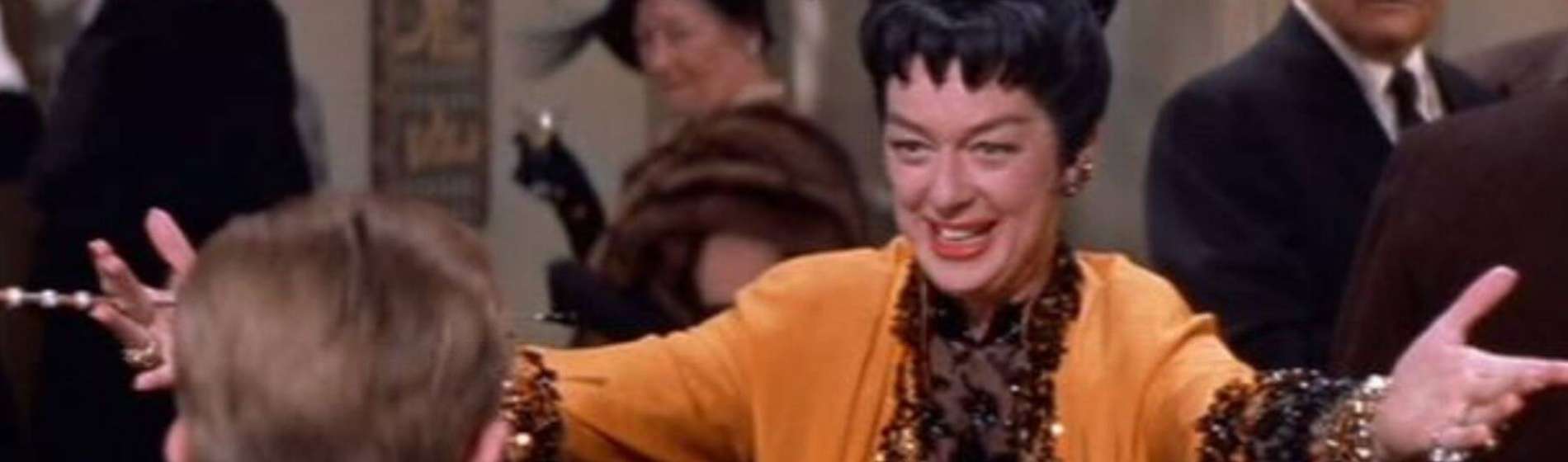
Rosalind Russell gives the signature performance of her career, recreating her Broadway triumph as the free-wheeling, liberally-minded society dame who takes in her recently orphaned nephew Patrick and raises him in a privileged, bohemian wonderland. When he grows up and brings home an obnoxious bore of a WASPy nightmare, she makes it her mission to save him from the kind of conformity she has been fighting against her entire life. On the surface it’s a breezy laugh fest, but you don’t have to look too deep to find the many ways in which Betty Comden and Adolph Green’s witty screenplay, based on the first of many slightly embellished memoirs by Patrick Dennis, rightly criticizes the racism and class snobbery masked as aspirational suburban living that deluded Americans in the years of post-war prosperity (and which MAGA still sells as a reality). The message isn’t delivered as a lesson, however, and audiences responded enthusiastically, making it the top moneymaker at the box office for 1958. It was later turned into one of Broadway’s most enduring musical hits, the film version of which, starring Lucille Ball, is as bad as this one is good.
How many nominations did it have : Six: Best Picture, Best Actress (Rosalind Russell), Best Supporting Actress (Peggy Cass), Best Art Direction, Best Cinematography-Color; Best Film Editing
What should it have won : This many years later do we really care that much about Gigi , the movie about grooming a teenage girl to be a sex worker that has all the beauty and depth of a Fabergé egg? Mame is definitely the better choice for Best Picture even if Minnelli’s film could keep its awards for plushness, but there’s no doubt in my mind that the Best Actress award should have gone to Russell’s tour-de-force work. I mean no disrespect to Susan Hayward, who was nominated for a series of Woman Suffering pictures that culminated in her winning for the very Oscar-baiting material of Robert Wise’s I Want to Live, but it’s depressing to think that she only had the edge on Russell because everyone thinks drama is so much harder than great comedy.