

After crossing the magic $1B box-office barrier, Zootopia went on to win the Academy Award for Best Animated Film at the 2017 Oscars. A sequel, of course, was all-but-inevitable, but when a year turned into two and two years turned into five or six, a second entry in a potential franchise started to feel, if not like an impossibility, then an increasingly unlikely prospect.
Based on the overall results, honing the screenplay as close as possible to its Platonic ideal before the start of production was the best of all possible decisions–for audiences and shareholders alike–although one or two impatient Zootopia fans might be less forgiving.
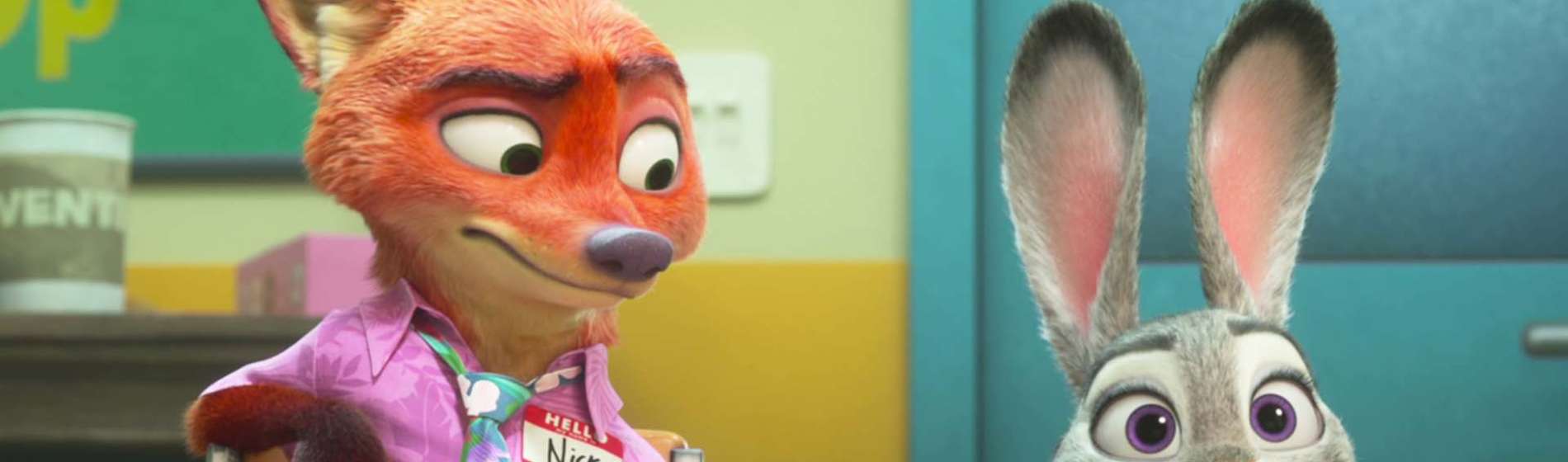
The sequel picks up almost immediately where Zootopia ended . Erstwhile partners Judy Hopps (voiced by Ginnifer Goodwin), an idealistic rabbit turned rookie cop, and Nick Wilde (Jason Bateman), an outsider and hustler, saved the title city-state from a nefarious plot to manipulate the general population into turning against the predator species who, at least until then, peacefully cohabited with their former prey, restoring what had become the new normal.
Despite their collective success, or in Nick’s case, leaving his law-skirting ways behind and following Judy into law enforcement, their superior, Chief Bogo (Idris Elba), sees their “win” as a fluke and their partnership doomed to an early, premature end. This perception turns into apparent reality when Judy and Nick, taking the initiative after being relegated to traffic duty, bungle a high-speed chase against mischief-minded criminals, leading to the destruction of property in the hundreds of thousands to even millions of dollars.
Sent to group therapy for cops with problematic partners, Judy and Nick meet their “emotional support therapist,” Dr. Fuzzby (Quinta Brunson), and motley members of Zootopia’s Police Department (ZPD), facing similar partnership issues. Easily one of the funniest scenes in the entire film, it cleverly lays out the character-centred conflict (e,g, trust, reciprocity, etc.) that will determine the endpoint both for Judy and Nick’s relationship and the film’s final moments.
This time out, the plot turns on a different kind of injurious prejudice: Mammals vs. reptiles. A century earlier, reptiles faced expulsion from Zootopia after claims were made about crimes against Zootopia’s mammal population. As before, of course, received knowledge or conventional wisdom turns out to be something else altogether: propaganda specifically created by Zootopia’s elites to maintain an us/them divide, generate fear and panic among the mammalian population, and to eventually justify territorial expansion.
Co-writer and co-director Jared Bush and director Byron Howard aren’t afraid to weave serious, even provocative ideas into an otherwise kid-friendly, animated adventure. The meta sight gags, cleverer-than-clever verbal puns, and, of course, exhilarating set pieces remain, but this Zootopia furthers the pro-diversity, pro-equity, pro-inclusion message of the first film . It’s a welcome plea for an openness and compassion, especially towards those we’ve been indoctrinated to dislike or even hate.
Nine years ago, that wasn’t a provocative message, let alone a controversial one. Far from it, but given the rightward, reactionary turn in American politics since the first Zootopia , it feels positively radical, especially for a multinational corporation like Disney that has repeatedly found itself in the crosshairs for non-compliance with the current occupant of the White House and his mercurial demands.