

If a tree gets horny in the woods, can you feel it? Hungarian filmmaker Ildikó Enyedi explores the fine line between passion and biorhythms in the sensuously strange drama Silent Friend. She centres three loosely interconnected love stories on a ginkgo biloba tree that serves as the centrepiece in the botanical garden of a German university. Cross-pollination between the three love stories allows something beautiful to emerge from Enyedi’s truly bizarre cinematic garden, although it’s two-thirds of a great movie with one of three storylines more akin to a pesky weed that overtakes a bed of annuals. But the two stories that work are a well-matched set that blossom into a refreshingly Zen film experience.
Be bold and embrace the strange with Silent Friend, as one is wont to do with any Enyedi film. Let’s not forget that her career-best work includes 2017’s Oscar nominee On Body and Soul—one of the best and most original films at TIFF in recent memory—which centered on two strangers working at the same slaughterhouse who fall in love in the dream world…as deer.
After conquering the love lives of fauna, Enyedi explores the tender hearts of flora. As a thematically complementary companion to On Body and Soul, Silent Friend invites audiences to expand their hearts and minds by navigating the interconnectedness of all beings in a shared ecosystem. It’s a journey both scientific and philosophical that asks how love blossoms through the unsaid harmony created between any two living things on this Earth.
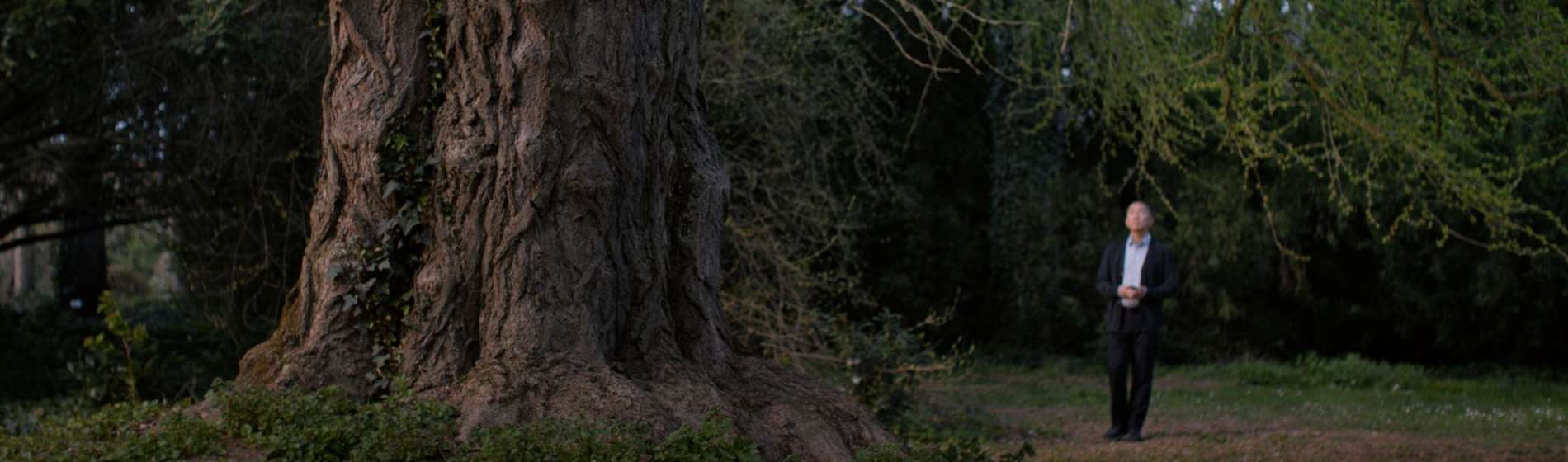
These questions fuel the research by neurologist Tony Wong (Tony Leung Chiu-Wai), a professor who arrives at the university in 2020. His research explores the brain activity in infants to understand emotional intelligence in humankind’s earliest stages. But when the COVID-19 pandemic closes his classes and forces him to stay in isolation on campus, his restlessness invites him to consider the brainwaves of plants. His attention turns to the beautiful ginkgo biloba tree that he worries is becoming lonely. Some help with a researcher abroad (Léa Seydoux) informs him of the sex lives and neuro systems of plants. The male and female researchers engage in some academic cross-pollination over Zoom.
Dialing back the clock to 1908, headstrong academic Grete (Luna Wedler) successfully becomes the first woman admitted to the school’s botany department. However, like the tree and Tony, she’s an odd one out. She faces sexism and suspicion, constantly having to prove that she’s really interested in a PhD and not a Mrs. degree.
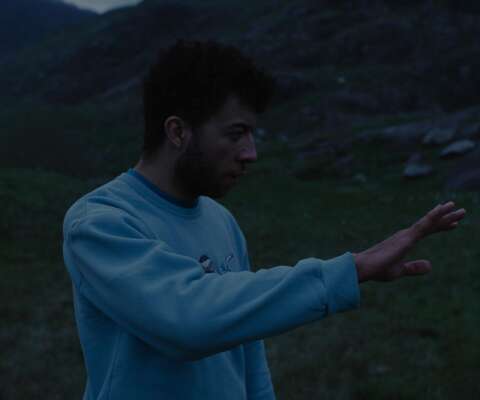
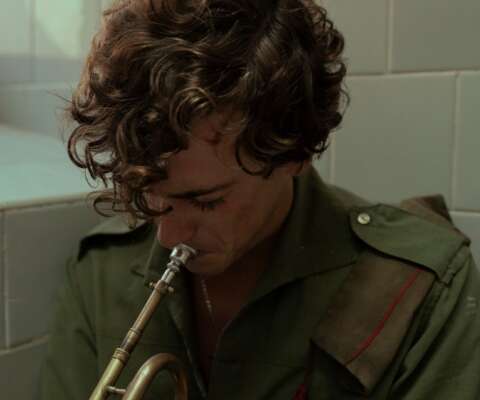
Bridging the gap in terms of social and scientific progress are Gundula (Marlene Burow) and Hannes (Enzo Brumm), two classmates at the same department in 1972. The electric sexual tension between the students manifests itself in an odd form: the DTF mojo emitted by a geranium that informs Gundula’s research. Gundula ditches campus, though, and leaves the antisocial Hannes to stay in her dorm room and observe the readings recorded by the contraption hooked up to the flower. As Hannes bonds with the flower and learns its responsiveness, he develops a peculiar friendship much in the way that Tony builds a rapport with the lonely tree over time.
The threads in 2020 and 1972 play off one another beautifully with tangible narrative, thematic, and aesthetic parallels. Enyedi and cinematographer Gergely Pálos find distinct and complementary designs for each period with the 2020 scenes shot digitally and the 1972 thread shot on sun-kissed 16mm. The latter acts like photosynthesis on a viewer’s soul. These scenes feature blossoming explorations of empathy and connection as Enyedi digs into notions of masculinity and male-bonding in addition to the scientific and romantic brainwaves that make the stories so enigmatically rich.
In 2020, moreover, Tony finds himself stuck with a silent friend of his own in the form of a cantankerous janitor (Sylvester Goth), who projects the pervasive anti-Asian racism of the COVID years onto the professor, distrusting his research and tai chi with equal measure. As the only humans on campus, though, the two men must find a common language, much like Hannes teaches himself how to communicate with the geranium over time. Leung and Goth conjure a balletic relationship of non-verbal communication as inquisitiveness and suspicion grow into earnest camaraderie as the colleagues learn to share space and feel each other’s rhythms, much like Hannes finds a shared brainwave with the flower.
The 1908 narrative, however, generally brings the film to a grinding halt, although it’s absolutely gorgeous to look at. Shot on monochrome 35mm, Grete’s story evokes Enyedi’s formative films like My Twentieth Century with rich and dense compositions. But this thread proves staid and stiff with few pieces of connective tissue to enrich or inform (or be informed by) the other storylines. Enyedi seems to lose interest in this thread too, and all but abandons it as the film goes on. Inadvertently, the more the film trims Grete’s branches, the richer it gets.
Silent Friend offers a surreal odyssey and an ambitious, richly layered work from one of cinema’s most fearlessly original talents. As with all experiments, Silent Friend features a fair degree of trial and error. But when it succeeds with its formula, it unearths a film of great emotional intelligence. It moves the heart and gets one’s synapses firing. There’s a double entendre there somewhere.