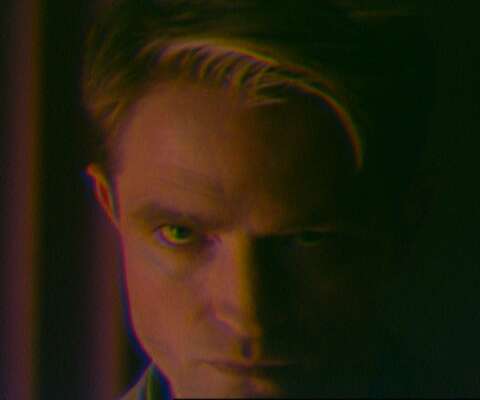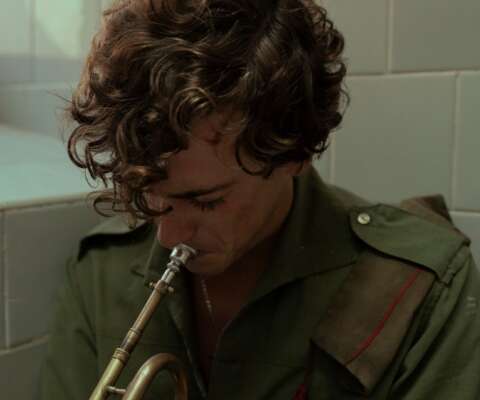


It’s been said that you can’t make a conventional biopic about Bob Dylan . There are literally several films partly conceived with this premise. Take Todd Haynes ’ dazzlingly idiosyncratic portrait I’m Not There , for example. Several actors, including Cate Blanchett and Ben Whishaw, play facets of Dylan’s persona during various stages of his life. It takes an ensemble to capture the many different Dylans that supposedly exist whereas one personal can usually play Marilyn Monroe and win a boatload of awards.
Alternatively, look at Martin Scorsese ’s rollicking documentary Rolling Thunder Revue , his most recent and maybe best Dylan movie. It plays fast and loose with facts and fiction to give something like a biographical snapshot of Dylan’s life. It acknowledges that myth plays a key role in a Dylan story.
Perhaps the best Bob Dylan movie, Inside Llewyn Davis , isn’t about Bob Dylan at all. Or it’s at least only about him in a roundabout way as it tells the story of a complete unknown who played before Dylan at some dump in Greenwich Village just before he became famous.
Each of these films tackles Dylan—or, the many Dylans—through a deft consideration of the sights and sound of an era. Dylan—the poet, the musician, the myth, and the madman—is an icon because his music harnessed the hunger for change in the wind of the 1960s. To therefore make a movie about Dylan, one has to make a film about an entire era, so to speak. And Martin Scorsese can only tell the same story so many times.
Which brings us, finally, to A Complete Unknown. It’s a straightforward biopic conventionally and handsomely told. Writer-director James Mangold ( Walk the Line ) and co-writer Jay Cocks deliver a sturdy drama that hits every beat from the biopic school of filmmaking . In a way, they’ve done the impossible.
Making a Dylan movie like A Complete Unknown sounds as daunting and foolhardy a task as re-imagining Rashômon with a linear narrative from one perspective. But it works just beautifully. It’s a solid slice of classical Hollywood cinema with a truly transformative performance by Timothée Chalamet that just might convince anyone feeling cynical towards these award season staples.
The film, moreover, doesn’t give Bob Dylan the full cradle to grave saga. For one, he’s not yet dead. On the other hand, as Mangold and Cocks focus on the formative days of the folk singer’s career. They capture the unease blowing in the wind that helped Dylan’s music resonate with so many people worldwide and use about five years to nod to the bigger picture.
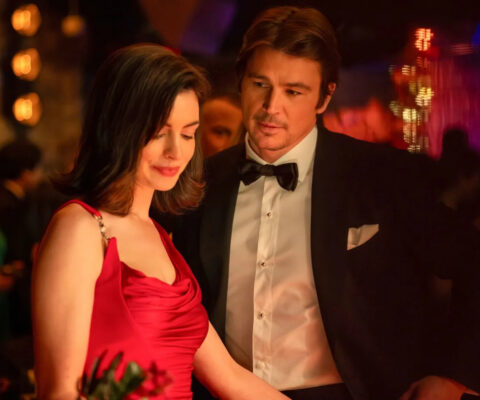
A Complete Unknown follows Dylan as he waltzes into New York City with his guitar in ’61, an era strikingly realised by production designer François Audouy. Dylan makes a pitstop to visit Woody Guthrie (Scott NcNairy) in the hospital, strums a few tunes, and impresses Peter Seegar ( Edward Norton ) along the way. He plays in coffee bars and dumpy clubs, the kind of places where Llewyn Davis would earn a buck. He flirts with Joan Baez (Monica Barbaro in one of the year’s breakout performances) and starts shacking up with politically minded artist Sylvie (Elle Fanning).
Baez is obviously real, while Sylvie offers a stand-in for Dylan’s real-life love Suze Rotolo. Why one aspect of Dylan’s biography overtly gets a fictional twist isn’t clear, but it’s an early clue for audiences that they shouldn’t concern themselves with fact-checking this movie too fastidiously. A Complete Unknown captures the essence of an artist with a ballad hummed from the heart. People who want the facts can watch the many, many Dylan documentaries. Many of which are just as playful with the “facts,” too.
What is clear about Dylan’s relationship with Suze, though, is that he treats women pretty poorly for a man who preaches peace with his guitar. The tempestuous relationship with Suze, strained by the on-again, off-again flings with Baez, hit many a good biopic beats. There’s juicy material for Chalamet, Fanning, and Barbaro, all of whom are serious awards contenders this season in good musical biopic fashion.
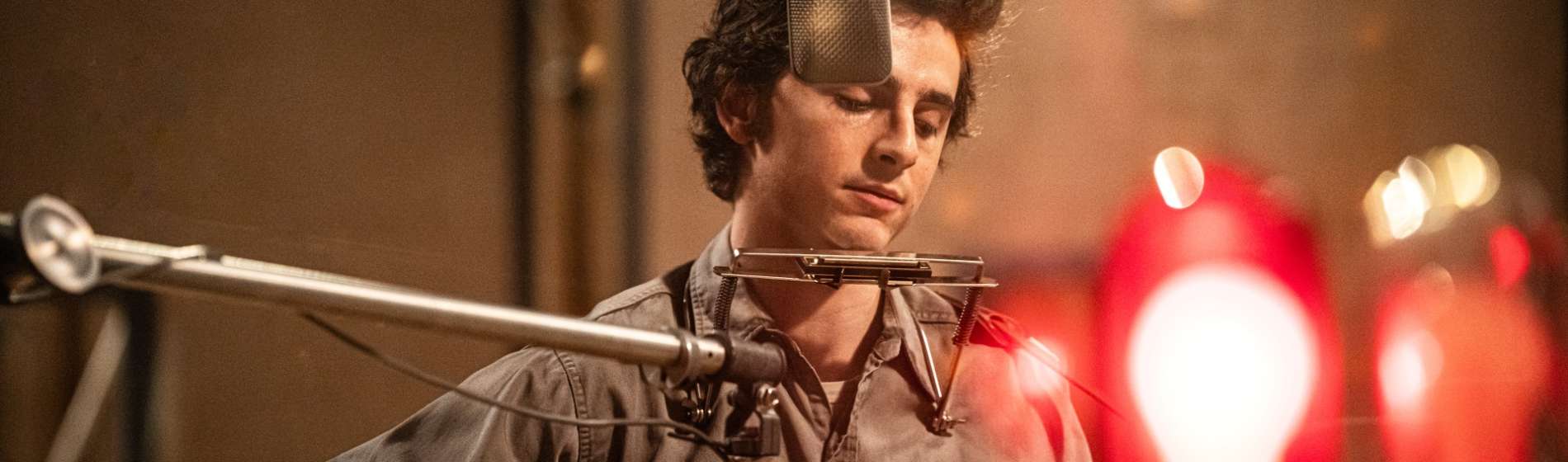
Chalamet especially defines himself anew as an actor. His Dylan gives Cate Blanchett a run for her money. This is a soulful performance, but also not a reverential one. Chalamet captures Dylan’s voice, manner, and gait, but also the musician’s arrogance and coldness. His Dylan offers a founding member of the Tortured Poets Department, so to speak, in contemporary terms. His callousness and cruelty towards women, Sylvie especially, doesn’t make him an easily endearing artist.
It helps, too, that people love Dylan for his lyrics and poetry, but not necessarily his singing voice. Chalamet totally nails Dylan’s raspy and nasally vocals as the bluesman croaks out one song after another. Aside from lacking Dylan’s grasp for phrasing, one could easily confuse Chalamet’s covers with the real deal.
The actor pours himself into this character and his effort makes A Complete Unknown sing. Chalamet deftly performs the songs as dramatic performances, particularly the film’s standout number in which Dylan and Baez offer a climactic duet of “It Ain’t Me Babe.” The stars’ chemistry is so electric that Dylan’s ensuing choice to plug in his guitar only feels like a natural turn of events.
The film, which adapts Elijah Wald’s book Dylan Goes Electric!: Newport, Seeger, Dylan, and the Night That Split the Sixties , inevitably culminates with the 1965 Newport Folk Festival that rocked the world. But the dramatic turn of Dylan supposedly betraying the fans and the forum that helped him launch his career provides a brilliant commentary about the need for artistic reinvention. For all the folk heroes like Pete Seegar and the old guard on the festival’s board preach about progress, they’re awfully resistant to it. A Complete Unknown suggests that Dylan’s gamble of bridging the old and the new, of connecting the music of the past with the sounds of the present, made him the icon he remains today. There’s something wonderfully ironic about saying that with such an unabashedly conventional feat.