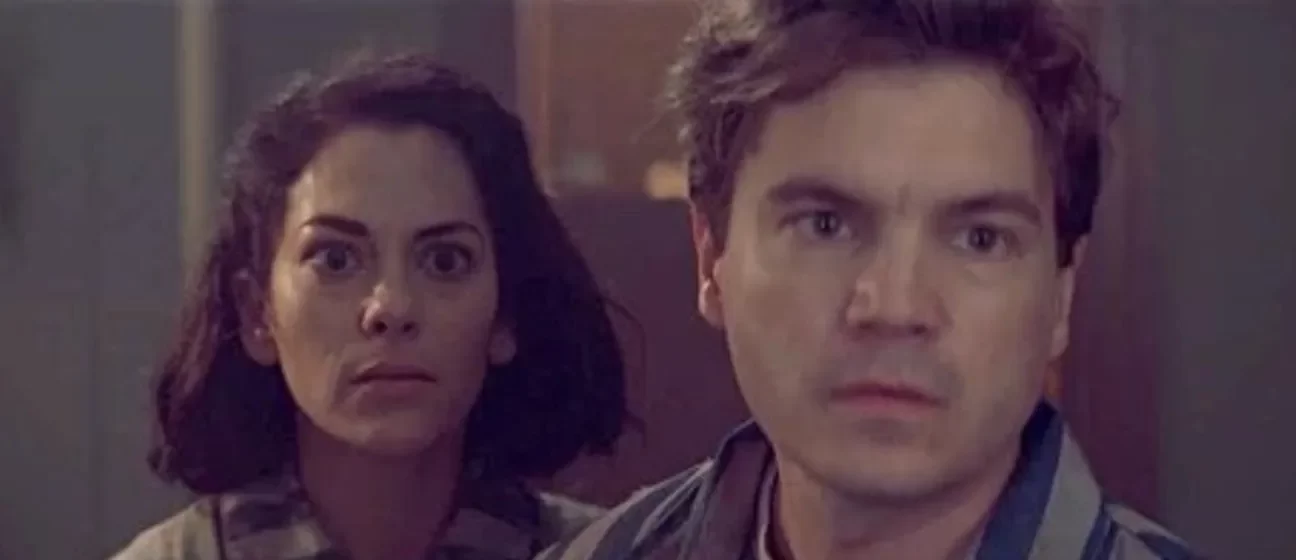


Bau, Artist at War is a film with its heart in the right place.
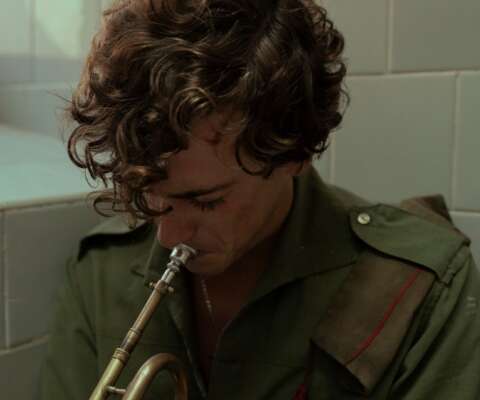
It is based on the life of Joseph Bau, a Holocaust survivor and artist. Emile Hirsch, a once-thrilling actor, portrays Bau simply, attaching a plausible-at-best accent and equally unflattering hairpiece to a life that ultimately deserves far more than this.
Audiences are introduced to Bau as German forces round him up, along with thousands of others, during the horrific 1942 crackdown on the Polish Jewish population in the Kraków Ghetto. Bau is then sent to Kraków-PÅ‚aszów, an SS-run concentration camp in German-occupied Poland. He meets another prisoner, Rebecca (Inbar Lavi), an empathetic woman with whom he feels an instant connection. She represents a bright moment in the darkest period of his life. This film primarily follows his day-to-day in the camp, the pair’s blossoming relationship, and even includes a few brief flash-forwards.
Familiar faces — or at the very least names — such as Oskar Schindler pop up, and it is unfortunate by way of unplanned comparison that a minor character here is a main character in a far better, culturally important film on the same subject. In fact, Bau and Rebecca’s wedding, held in secret due to German prohibition, was actually dramatized in a scene in Steven Spielberg’s Best Picture-winning film. Bau even appears in the film as himself, placing a stone on Oskar Schindler’s grave in Jerusalem alongside his wife Rebecca, during the film’s moving epilogue.
The ingredients for a good film are undoubtedly here. Emile Hirsch is capable of lending real humanity to his characters. Lavi, as Rebecca Tennenbaum, is capable of producing real emotion, and she holds her own against the former’s decades of consistent screen experiences. But the one thing the film cannot escape is that it feels like only the fictionalized parts of a well-made documentary. Despite being real people, they, as characters, are not fleshed out enough. They receive only the broadest strokes and it’s not enough to hold things together in an effective enough way. It makes perfect sense that in addition to this biopic, the team created a documentary entitled ‘Artist at War’ as a companion piece.
It is possible it is a conscious choice by director Sean McNamara ( Reagan , Even Stevens ). He could be heightening each dramatic scene into melodrama and levels of obvious symbolism, to match the all-encompassing sense one has when they remember a particularly dramatic moment in their life. Do overhanging lights really swing and glower so menacingly? Were all the faces really so shadowy? Once a person is left to revisit their past just via memory, the reality of the experience begins to shift and change as the mind imposes new and amplified elements. It is possible. But that is really giving the benefit of the doubt.
Respectfully though, it seems as though the creators of the feature and the documentary would have been better served by merging their projects. Giving the best of each to create a really moving documentary with star power and emotion — something rare, outside of guest narrators.
At the risk of sounding cold-hearted, Bau, Artist at War is frankly too maudlin in its presentation, and too fast and loose with its back-and-forth narrative style to really leave an impression, other than the bad one that lingers after seeing the wig Hirsch dutifully wears when he plays the elder Bau. At its best, Bau, Artist at War brings a moving story, worth telling, closer to the mainstream consciousness. In doing so, let’s hope that someone may discover this amazing true story and give it the treatment it deserves.
Bau, Artist at War is in theatres September 26, 2025.