

Politics is a touchy subject nowadays. The word alone puts people on edge. Thirty years ago, that wasn’t exactly the case, but people gradually lost faith in our systems. Discussing anything related to current governments is uncomfortable; it almost always creates tension in the room. So it’s unsurprising that we also no longer look up to politicians as paragons in our society. It’s become depressingly obvious that there’s no visible future with total equality or equity. We know proper legislation is a pipe dream, and corruption runs rampant at all levels. At times like these, we hope for political dramas that speak to where things stand — cinematic looks at how the systems we once trusted slowly crumbled, spurring resentment instead. This is why Ella McCay falls so flat.
James L. Brooks‘ (Broadcast News, As Good As It Gets) latest is presented as a political drama-comedy. The problem is that it glazes over anything actually political. Instead, Ella McCay spends nearly two hours lollygagging through meaningless interpersonal relationships that fail to deliver on the promise of both drama and comedy.
Our protagonist, Ella McCay (Emma Mackey, Sex Education, Emily), is a 34-year-old goody-two-shoes who becomes the governor of an unnamed U.S. state. While she tries to enact policies that help the lives of her voters, her marriage and family issues interfere and complicate her every day. The movie starts just as Ella’s boss and current governor, Bill (Albert Brooks, Taxi Driver, Defending Your Life), is stepping down to join the Obama Administration, leaving Ella to be the new governor. How Ella rose so quickly through the ranks of local government and managed to become governor at 34 – which is the political equivalent of 20 – remains mysterious.
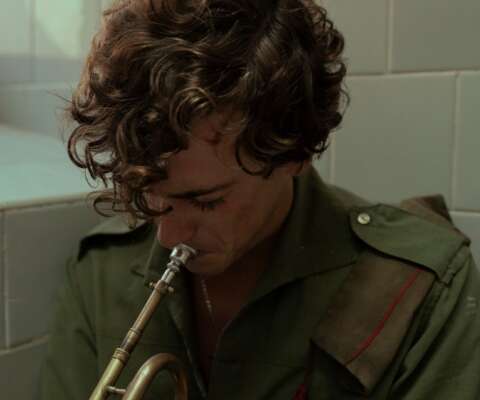
It’s important to note that the story takes place in 2008. Since period pieces are generally period pieces for a reason, you would expect that the “why” of Ella McCay’s specific placement in time would become obvious through the storytelling. But the film says very little about the political atmosphere that plagued the U.S in the late 2000s – most notably the 2008 financial crisis — even though it focuses on Ella’s governance during that very chaotic moment in time. The lack of attention to this particular detail is hard to ignore. Characters drive modern cars and wear modern clothes. Ella’s 20-something brother Casey (Spike Fern, Alien: Romulus) makes $2 million a year doing sports betting data analysis on a slick, thin modern desktop. The only thing that reminds you this movie is set in 2008 is someone pulling out their BlackBerry.
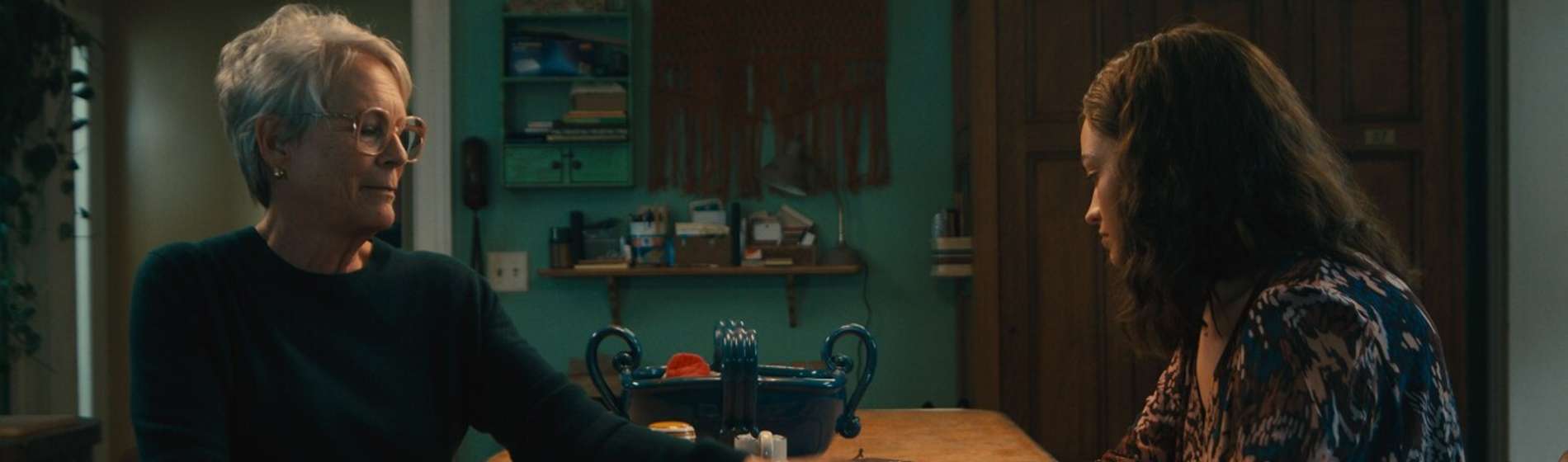
In a frustrating, implausible way, everyone also seems to be obscenely rich. Ella’s aunt Helen (Jamie Lee Curtis, Halloween, True Lies) and Ella’s husband (Jack Lowden, Dunkirk) own not only their own homes, but their own businesses, too.
Ella genuinely wants to be a force for good. One of her passions is promoting a program called Tooth Tutors, which helps young children improve their dental hygiene through pro bono dentist visits and free dental kits. In an unintentional way, that plot point makes her seem more realistic. As a governor who directs resources toward a short-term solution rather than tackling the deeper, more systemic root of the problem, she resembles the real-world politicians we see all the time. Politicians who ignore the current, blaring, political and economic strife and pour resources into a positive but skimpy policy to give themselves a pat on the back and shout ‘we did it!’ is no foreign concept. But when Ella does just that, packaged in her Mary Sue persona, it comes off as cartoonishly missing the point rather than a purposeful statement on the state of politics.
And that’s the fundamental problem with Ella McCay. How can a political comedy be funny if it completely sanitizes the topic and fails to say anything of note? Ella’s boss, Bill, speaks one of the few scripted lines that rings true: “To get anything done, you need dumb people to feel less dumb.” But it’s almost like a harsh, dividing line separates the humour and the politics, forbidding them from intersecting or elevating anything.
That our protagonist is just a do-gooder who wants to do good for its own sake feels, unfortunately, like an antiquated or far too simple notion. As a kid, you grow up believing people like Ella exist. Then you get older; you live through multiple elections, see the local paper rotate through this politician’s fraud or that politician’s allegations. You move cities or provinces or states, and you see that those types of headlines pop up there, too. You realize it’s the same everywhere, and learn over time that people like Ella don’t actually exist. Because at the end of the day, being a politician is a career, and being in politics is a business like any other. People like Ella can’t exist. Ella’s old boss tells her at one point something along those lines, and he’s not wrong. But Ella McCay — the movie, not the character—is stubborn and doesn’t want to accept that harsh, ugly truth, and, in turn, it lacks the humour that could expose it.
It’s why they push aside the actual political work Ella does. Instead, we get a sob story about Ella’s traumatic upbringing and the inner workings of her closest relationships. The film focuses on the brother’s agoraphobia, her father’s (Woody Harrelson) sexual allegations, and her husband’s betrayal. All are dramatic subplots that could maybe rouse some interesting moments, but none of them come across as particularly deep or multifaceted. And both the characters and the actors seem all too aware of that fact.
Ella McCay could have been a fascinating story of someone wanting to do good in a system actively working against them. A film that recognizes that the prevailing feeling around politicians right now is mistrust and works with that in mind. Either speaking to or about how things got that way. But instead, the storytelling — from the script to the acting — makes the audience feel like a kid whose parents are lying to them about a world and people that no longer exist.
Ella McCay opens in theatres on Friday, December 12.