

Death is one of the few certainties in life, and something every person experiences through the loss of loved ones. Many films choose to portray death and grief realistically, showing people crying, struggling to move on, and dealing with absence. But every once in a while, something comes along that shows the lighter side of the subject. The classic black comedy Beetlejuice and the Emmy-nominated series The Good Place not only sanitize the gruesomeness of dying but also explore the idea of an afterlife. Now, Eternity can be added to that list.
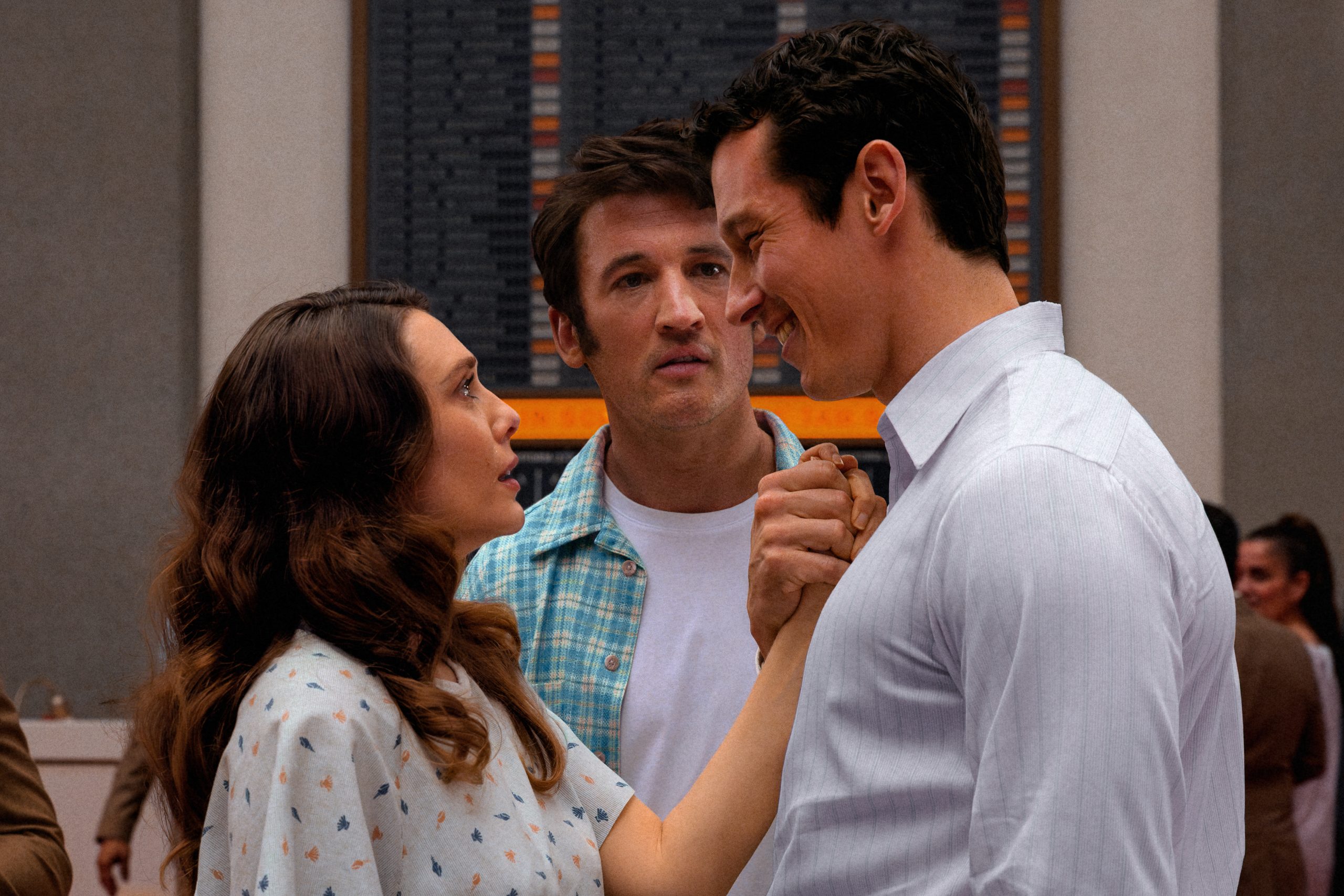
When Larry (Miles Teller) suddenly passes away and finds himself in the afterlife, he patiently waits for his wife, Joan (Elizabeth Olsen), to join him so they can spend eternity together. The only problem? Joan’s first husband, Luke (Callum Turner), has been waiting for her for over 60 years after his untimely death. Given just one week to decide who she’ll spend the rest of her afterlife with, Joan must choose between someone she has built her life with and someone she never got the chance to.
Much like Beetlejuice and The Good Place , Eternity approaches the afterlife in a comedic fashion, shedding light on its heavy themes. The film is filled with background jokes in the background of scenes that are not acknowledged by the characters, but the audience will laugh once noticed, such as eternities that have been discontinued (“Marxist”) or are full (“No men”). These details help maintain the film’s momentum, as it unpacks the world’s lore. Da’Vine Joy Randolph and John Early, playing afterlife coordinators, bring much-needed comedy relief to what is a very serious dilemma for our main characters. Their personal involvement, with each rooting for a different husband, and their romantic history, give them more at stake than just their job.
Both Luke and Larry make compelling arguments as to why they deserve to spend eternity with Joan. One is her life partner, while the other found himself lost in time. Each puts understandable pressure on her, doing everything they can to convince her to choose them, such as reminiscing, pleading, and rekindling old feelings. Both are flawed in their approach, but their actions feel justified with a literal lifelong decision on the line. No matter which one she chooses, it needs to make sense for Joan.
Where Eternity stumbles is in the third act, when Joan finally makes her decision. While the decision makes logical sense, the route to get there is overly convoluted. It feels as though writer Pat Cunnane wanted to include every idea as an excuse to spend more time in this world. The result is a film that feels bloated with unnecessary scenes–ones that could have been trimmed or cut out altogether, allowing for a more streamlined narrative and more satisfying ending.
Even though it doesn’t quite stick the landing, Eternity stands out thanks to its unique perspective on death, grief, and love. It’s bolstered by an energetic cast headlined by Teller, Turner, and Olsen, who have fantastic chemistry and deliver on both laughs and emotion. It’s one of the biggest surprises of TIFF, and will likely be listed as one of the best films of the year.
Eternity screened as part of the 2025 Toronto International Film Festival. It hits theatres on November 28 .
Head here to get all our That Shelf TIFF coverage .