

Franz Kafka was a sensitive, observant, and painfully anxious young man who, above all else, wanted to make his father proud. That turned out to be, at best, a bittersweet pursuit. He never fully succeeded, and it robbed him of the confidence he needed to really take his writing talent and run with it. Thankfully, his peers, who lacked his talent but had confidence in spades, saw to it that Kafka would be celebrated, both in his life and long after his death.
Kafka experienced small celebrations here and there from those who knew him best — those who recognized in him a reservoir of impactful thoughts, and the brains, discipline, and artistry to express them plainly and in metaphor.
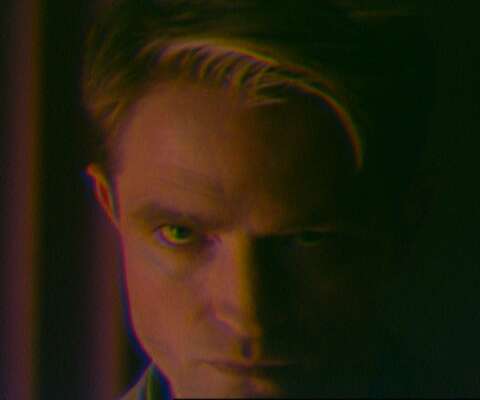
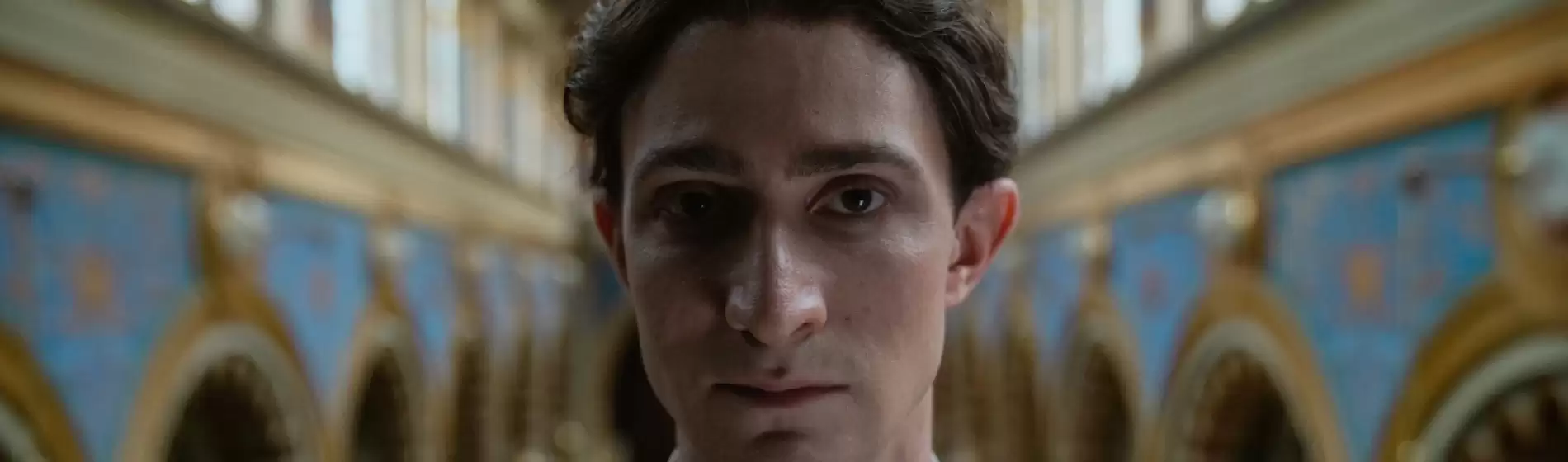
Agnieszka Holland, the director of this magnificent, atypical biopic, takes every opportunity to extend a hand to the audience and invite them into Franz’s way of thinking. The characters frequently break the fourth wall. Franz often stares directly at us, imploring us to save him from his father’s wrath or to sympathize after a particularly cruel brow-beating from an authority. There’s a magical realism at play here, intertwined with ultra-realism.
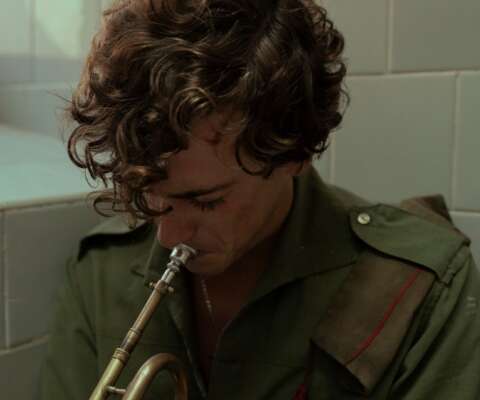
Yes, Franz is a biopic that follows Kafka from his early life through to his death, yet it also — sometimes in the same scene or even the same shot — shows us what Kafka means in the present. As Franz walks down a path or swims in a river, it’s not uncommon to see a modern 2025 tour group parade through the frame, snapping photos just to have a souvenir of where the great thinker once stood or swam.
In this way, it is reminiscent of the immensely moving The Zone of Interest, which reminds its audience not only what happened (the operation of concentration and death camps), but also what will happen (those same sites now preserved as museums).
Franz is much more frenetic than The Zone of Interest, as it should be, because it is not just about Kafka, it is the experience of Kafka. Memories rush into the present, override it, and then just as quickly dissipate, leaving Franz in an uncanny liminal space. This turns him into a social oddity, but it also fuels his most inventive fiction and thought processes.
Idan Veiss, as the titular Franz, is so perfectly cast — appearance-wise and in performance — that it feels like watching the famed photograph of Kafka come to life. The intense, penetrating gaze, the slight figure, the way the mouth meets the nose; it’s all there.
That might be enough to make the film compelling, but Veiss wields these inherited visual gifts with striking skill. Franz asks a lot of him: he must make thinking look exciting, he must make writing look exciting. No easy task, yet he does it, supported by the skilled ensemble.
Sebastian Schwarz as Franz’s greatest believer, and Peter Kurth as his overbearing father, are two of the film’s standout surprises. It would be impossible to steal a scene from Veiss’s Franz, but Schwarz, Kurth, and Katharina Stark (as Ottla Kafka, Franz’s sister) provide depth that makes this an unmissable biopic for anyone with even the faintest interest in Kafka.
Despite Franz centering on one man, at times the film feels like a two-hander: one hand is Veiss, and the other is the camera, with its ingenious, playful visual inventions. Franz is a must-see for fans of director Agnieszka Holland, modern classic literature, German history, biopics, and historical dramas.
Franz had its world premiere on September 5 as part of the 2025 Toronto International Film Festival. Head here to get all our That Shelf TIFF coverage.