


On the eve of the Hot Docs premiere of her debut documentary feature, The Sandbox , Indo-Kenyan-Canadian filmmaker Kenya-Jade Pinto ( Scarborough , Not Yet Home ) sits down to discuss her exploration of the intersection of technology, migration and human rights. Pinto has previously participated in the Hot Docs Accelerator, Hot Docs Netflix Incubator, Hot Docs Forum, and Hot Docs Deal Maker programs and has received funding from the Hot Docs Ted Rogers Fund, Hot Docs Crosscurrents Fund, and Hot Docs First Look Prize. Given that pedigree and history, it feels like there’s no better place for the film to make its North American debut than the long-running Toronto-based festival.
Trained as a lawyer specializing in refugee and international law, and with a background as a documentary photographer, Pinto brings a unique perspective to this sprawling global investigation spanning North America, Europe, and the Global South. In this conversation with That Shelf Managing Editor Emma Badame, the filmmaker reflects on how a personal family story sparked an ambitious project, the ethical challenges of documenting surveillance while making a film about it, and what audiences can do to engage with these urgent questions about power, AI, and human dignity.
That Shelf (TS): I’m really curious about what caught your attention or how you came across this story of the intersection of technology and migration. Was there one thing you saw and went, “This could be really interesting as my debut feature,” or did it kind of build up into an issue you wanted to learn more about over time?
 Kenya-Jade Pinto (KJP): (laughs) If I knew how broad and expansive and challenging and difficult it was going to be, I’m not sure I would have selected it as my debut feature. As it always is in life, you never fully know what you’re getting into, but you have to follow what feels right to you.
I trained as a lawyer at the University of Ottawa, focusing on refugee and international law, and I also worked as a documentary photographer. And I knew that I wanted those two skill sets to live together in some way. I just didn’t know exactly what that would look like for me in my career. But as I was finishing up the bar, I learned that in Canada, we began outsourcing a particular immigration application to algorithms as part of a pilot program. These are called Humanitarian and Compassionate Grounds Applications. They’re very discretionary. They’re the kinds of applications you want someone to take a bit of extra time with. They allow for extenuating circumstances, and it’s under one of these applications that my family came to Canada when I was a child.
So I started to think about what would have happened or what could have happened if our circumstances were different. If [our application] had been outsourced to an algorithm. And that was the first rock I looked under. It was the first thing I became curious about. And then I started looking under bigger rocks and following people who were just doing this work in Canada, but their work was becoming more expensive, and so too did mine. So it kind of grew from there, and it felt important to think of it as a bit of a more global story. So that’s where it started.
TS: It’s a really ambitious story to continue with, once you realize how far-reaching it is in its scope–not just from a storytelling perspective but with the logistical and geographical things that come along with that. There are so many moving parts. What did you find the most challenging piece of pulling the film together, given that there are different realities for filmmakers in so many different places?
KJP: We had to kind of scale up and scale down depending on what we were shooting and where we were. And much of what we shot and hoped to get isn’t even in the film. I think when you’re trying to do something like this, understanding the limitations and knowing that though you might have gained access, you don’t have [real permission to use things] until it’s in the can, you know, you don’t have ‘access’ until it’s in the actual edit suite. So challenges, I think, become even more real when you’re working on a film like this. It was just a matter of being flexible. Also, for me, it was about building a shooter’s skill set, since I inevitably had to shoot quite a few scenes myself, given the access we had. It was challenging, but also fun, and it allowed me to grow as a storyteller in a new way.
TS: You manage to really balance the bleak stories you’re telling about how AI and technology are being used, with showcasing people who are trying to make a difference or expose what’s going on to the world. Was that something you set out to do, to give audiences that light out of the dark, or was that something you realized you wanted to include once the heaviness of the issues at the heart of the doc really became clear?
KJP: It’s such a delicate balance, right? Because on the one hand, you don’t necessarily want to build something that has this traditional “and in the end it’s all going to be okay if you just do this” sort of thing, because that’s also not quite honest or true. But on the other hand, you know, you want to [show] the people who are doing this work, who are these sort of Davids versus the Goliaths, these oases in the desert. I think it’s important to remember the resiliency of the human spirit. These are the kinds of people we need to seek out and champion, not just in this particular landscape, but, I think, generally in life and in the world we’re living in.
TS: You also dig into the kind of mindset of the people behind the technology, the people who are in power. So many of them are men, and in the majority of roles, white men. We see it at the border in the U.S., in the E.U., and even into the Global South. Was that reflective of what you were seeing everywhere? And what kind of role were women playing in those spaces, if they had one at all?
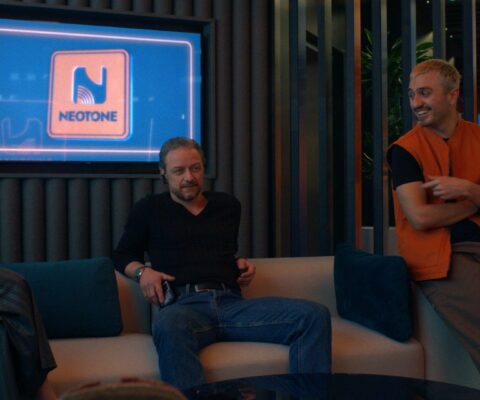
KJP: It’s a really interesting question. I was really curious about the nuances when you go into these spaces. And for sure, there’s this element of boys with their toys, especially when we see it at the [U.S. Tech] Expo. But I felt it was important to understand that, at least in my view, people just aren’t inherently bad. Some are, but most people aren’t. But there’s a story people have to tell themselves to participate in the thing they choose to. There’s a larger context that we sometimes don’t see.
But you’re right that in those specific spaces that are hypermasculine, it’s an added challenge in some ways to be a female filmmaker and a racialized woman. In other ways, much like in many of our other parts of life, it can be beneficial to be severely underestimated. So I understood that kind of paradox that I was working within [those spaces] pretty early. And I was very honest with everybody about what I was trying to make.
We do see women throughout. They may not take up as much space or feel as comfortable taking up space. And we certainly see many women in a lot of the caretaking roles, which we see on the [migrant] ship. It’s a microcosm of what things are like in the real world, too.
TS: You have one data analyst in Kenya discussing the role of youth, the available jobs, and the lack of options for them. How did you see that play out in the Global South, specifically when you were looking at that compared to the kind of systems you were seeing in U.S. Border Patrol or even in the EU? That idea of taking advantage of situations and vulnerabilities.
KJP: Yeah, because in the Global South, we see the rolling out of new systems that limit people’s ability to move, to travel; these new digital ID systems. And at the same time, there’s this very active, burgeoning economy where data analysts are essentially training AI models that are then used to prevent them from moving. Lydia says it perfectly in the film: the idea that the system sustains itself. So it felt important to show what was happening in the Global South, specifically in Africa, in Kenya, as a new, neo-colonial construct.
We know we’ve seen this before. We know what this story looks like, but it’s just got a new mask on it. And I think that’s what our anonymous participant [in Kenya] articulates so well. At the heart of this film is a story about power, and it’s about how we’re reanimating old ideas of power, just in a new way.
TS: So many see AI as futuristic, as brand new, but it’s actually partly reverting to older systems, just with a shiny new face on them, as you say.
KJP: Exactly.
TS: Speaking of AI, it is obviously used in so many different places right now. Filmmaking, for good and bad, has adopted a lot of tech, including drones and similar tools. Were you more cognizant of those elements–of the impact of technology–when you were filming, given the subject matter of the film itself?
KJP: There are kind of two answers in that question. I think there’s one answer: thinking about how we use AI for creativity. Whether or not to do that and in what context. And it’s been really interesting to watch people have that conversation. I don’t know what the answer is. For this film, we didn’t use it creatively. But yes, we’re in a really interesting time for sure.
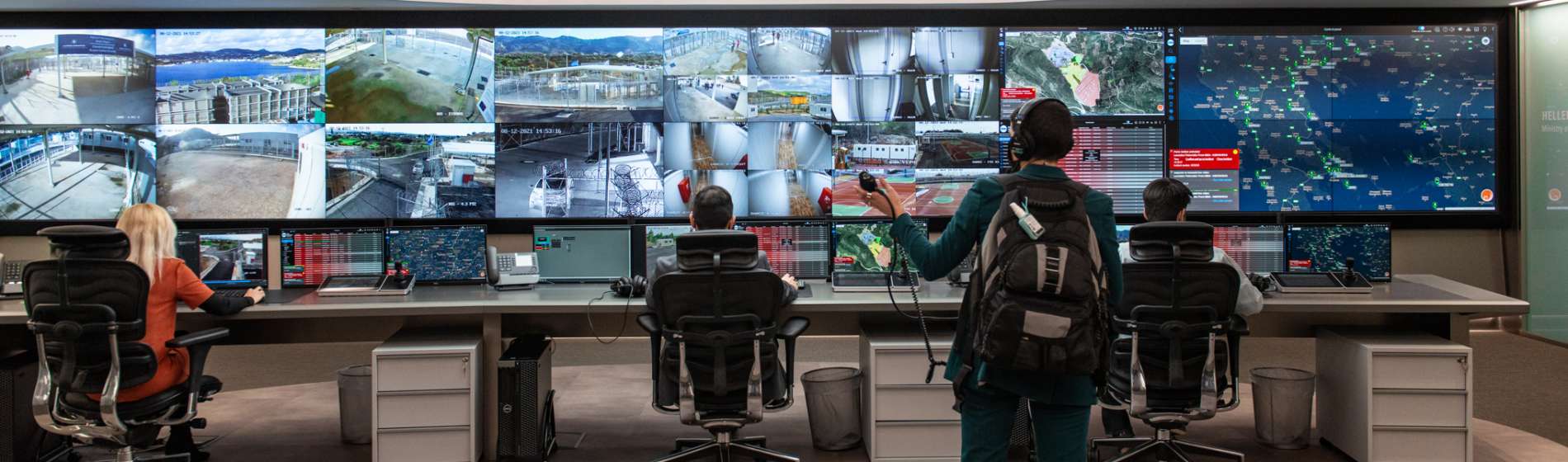
The other part of that question is the idea of using tools, technology, and surveillance as methods of filmmaking. So it was tricky, and it is tricky, to make a film about the impact of surveilling people when you’re participating in that very process by surveilling them. So, really considering choices about when the camera wasn’t turned on was pretty critical, and choosing where to frame it, too. That came from a lot of conversations within and amongst our team. My background as a documentary photographer also helped to inform that.
TS: Migration is making headlines all over the world right now, but this particular side of it isn’t often a part of the stories being told. What would you suggest people do who see the documentary and want to dig deeper into what’s happening? Or who might want to take action in some way?
KJP: Yeah, it’s a really good question, and it’s, it’s a tough one to answer with one line, right? Because the film is expansive and goes to so many different places, what happens is that what matters to you, or to me in Toronto, will be really different from what matters to somebody in Kenya. So what I’m excited about is that the film will become a tool for organizations and for the folks we partnered with along the way, to help tease out more specific ideas about what’s happening in their spaces. For Canadians specifically, you know, I hope that this is an opportunity for us to take a look at what’s happening right now at home, to shine a light on some of the grassroots organizations that are asking questions about our own spending and what we are choosing to do with respect to the most recently passed bills. And I hope that elsewhere, as the film continues to travel, it does the same.
TS: I wanted to wrap up by asking about the film’s world premiere in Europe. What was it like seeing it with an audience for the first time–your debut feature? That must have been a kind of out-of-body experience.
KJP: We were super fortunate to be able to premiere at CPH:DOX , and it was just a lovely festival. For our second screening, they invited several experts to discuss their respective migration policies and to tie the film back to very specific ideas. So as a filmmaker, you can’t really wish for more. It was amazing.
It’s also really interesting to see how different audiences will engage with the film. You know, some folks might come to it with a little bit of an understanding of what’s happening globally and geopolitically. Other folks, maybe not as much, or they’re more dialled into a certain and specific thing. And so I’m excited to hear what our Canadian and North American audiences take away or what resonates with them the most. But I’m happy that the film is starting to resonate with folks in different ways and on different wavelengths, for sure.
See The Sandbox when it screens at the 2026 Hot Docs International Documentary Film Festival on Saturday, April 25 and May 2.
(This interview has been edited for length and clarity.)