

Zamo Mkhwanazi’s gripping family drama Laundry offers a nuanced examination of the mechanisms of oppression. Set in South Africa in 1968, the story focuses on a Black family running a business in a white-only district during apartheid. Mkhwanazi deftly illustrates how oppressive regimes weaponize privilege and status to maintain control over the subjugated. At its heart, Laundry offers a thoughtful and emotionally resonant tale of resistance and the struggle to cling to hope against overwhelming odds.
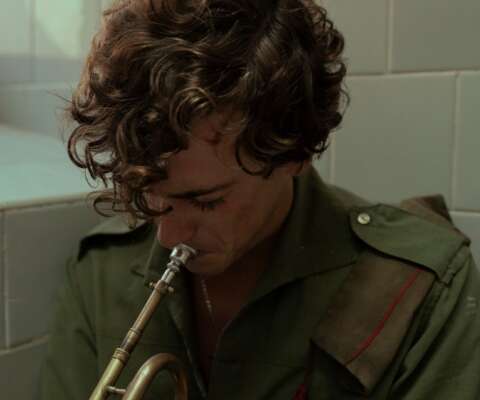
Like most 16-year-olds, Khuthala (Ntobeko Sishi) lives life with his head in the clouds. He’s a musical prodigy, able to play several instruments with a soulfulness beyond his years. He dreams of leaving South Africa to perform in the United States. In reality, he’s stuck in the classroom most of the day and spends his evenings helping operate his family’s successful laundry business. But the boy’s prospects change when he meets a popular local musician (Tracy September) with the means to tour outside the country.
Khuthala’s father, Enoch (Siyabonga Shibe), sees a steadier path forward for his children. With his son about to complete his education, Enoch wants him to take on a larger role in managing the family business. Enoch understands the compromises that come with living under apartheid’s oppressive rule, and wants to shield his children from the danger and heartbreak that come with holding onto dreams. He prefers his son to be realistic about his career prospects, and above all, avoid any activity that may draw the white man’s ire.
Here’s the thing about life under an oppressive regime: you don’t have to go looking for trouble because trouble will find you. When Enoch’s meeting with a government official goes horribly wrong, he ends up in jail. The task of clearing his name becomes a Sisyphean struggle for Khuthala and his mother (Bukamina Cebekhulu). Khuthala’s opportunity to live out his dream slips away as he confronts the reality of a restrictive government system designed to keep Blacks from elevating their status.
Laundry asks the difficult question: how do you dare to hope and dream in a society where your self-agency is systematically denied? The story’s tension comes from the duelling perspectives between father and son. Enoch, the pragmatist, sees the world around him as it truly is. However, Khuthala, a dreamer, imagines life as it could be. Their opposing viewpoints represent the contrast between living and surviving. Enoch survives by navigating the rules of the system he’s locked inside. Khuthala yearns to defy those norms and live a life of joy and satisfaction.
This one family’s struggle serves as a microcosm for how apartheid attempted to siphon the spirit out of generations of South Africans. Technically, it imposed a system of laws and restrictions to keep Blacks from accumulating wealth and status. But more insidiously, apartheid aimed to crush the Black spirit. It’s a system designed to break people’s will and stamp out the desire to conceive of a better life.
We’re living through a dangerous period right now where aggrieved movements seek to revise history — particularly anything relating to white tyranny. The weekly news cycle is awash with blowhard pundits and conservative politicians diminishing the impact of Black history while dismissing the impact of generations of racial injustice.
That makes films like Laundry more vital than ever. The anti-woke crowd treats systems of white supremacy like historical rough patches that were corrected the moment they were “technically” abolished.” Mkhwanazi challenges this revisionist narrative framing apartheid not as a one-time historical atrocity, but as an inciting incident with a long-tail impact.
Laundry screened as part of the 2025 Toronto International Film Festival. Head here to get all our That Shelf TIFF coverage.