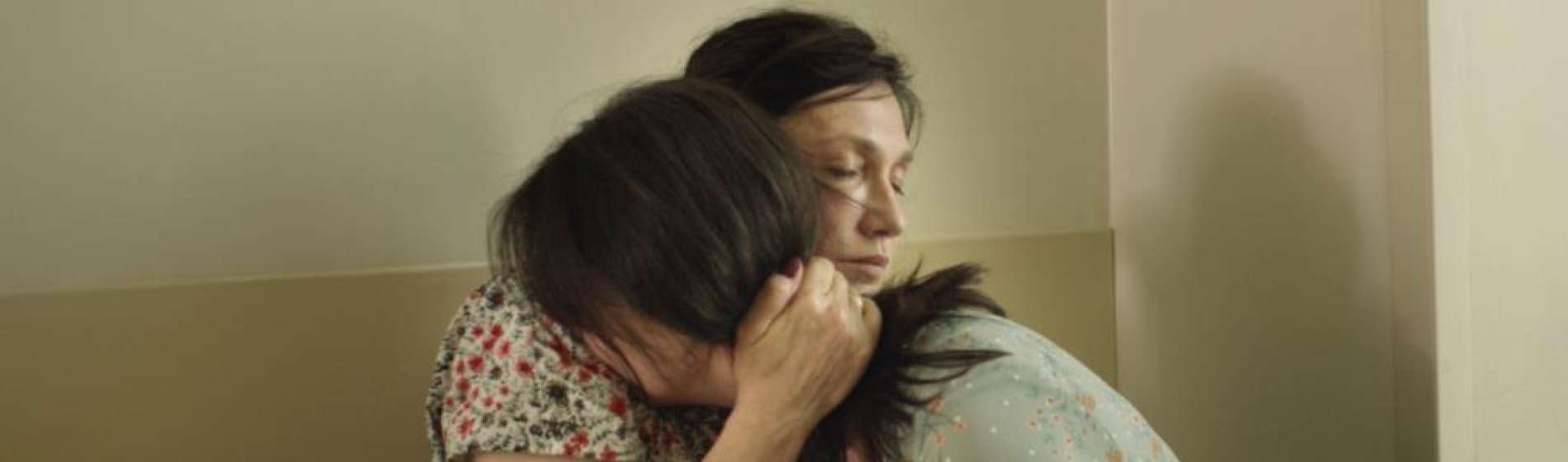



Supporting a family can be very difficult if you can’t find work. In many areas, it’s common to leave the city or even the country for a job. This can mean spending weeks, months or even years away from your loved ones. There’s an irony in this reality that you have to be away from your family to provide for them. Of course, this was even more difficult before video conferencing, since you could go an extended time without ever speaking face-to-face. In Mama , a woman working abroad comes home after an extended absence to find nothing is as she left it.
Mila (Evgenia Dodina) is a Polish housekeeper working in Israel. Her employers are kind, and she is close with the family. She is also in a romantic relationship with the gardener. Mila sends her wages home to her husband and daughter, and is paying to construct a new house for them. However, after an injury, her employers encourage her to go home for an overdue visit. When Mila arrives, she finds that her family hasn’t kept her apprised of the many changes that have happened in her absence. She tries to get everything back on track, but realizes they may not want her to fix things.
While most people are more familiar with stories about men going abroad for work, an increasing number of women are also doing so. Yet, despite the assumed hardships, Mila appears happy with the arrangement. Before she goes home, the audience sees no communication between her and her family. Evidently, when Mila’s employer asks about her daughter, her answer is vague and non-committal. When Mila returns to Poland, there’s an expected uneasiness that casts a shadow over their happy reunion. It gradually becomes clear Mila is the main provider, but her roles as wife and mother are no longer applicable in the traditional sense.
The film rejects melodrama in favour of restrained performances and a nuanced script. The silence is often filled with heavy meaning. For instance, Mila doesn’t create a scene when she finds her husband’s mistress’ belongings in their bedroom. Instead, she wears them in silent opposition. The change in the family’s dynamics is significant, but delicate. Writer-director Or Sinai understands the heart of this story is in the details. Mila is still “mama,” but it’s only a name now. Unable to accept this transition, she imposes her will on her husband and daughter to try to regain her position. Audiences can predict the outcome.
The subtleties give the film its sense of realism. Dodina delivers a layered performance, shrewdly expressing Mila’s pride and pain. Of course, she conceals those emotions by trying to retain control. The ending is a reckoning, but perhaps not the one viewers expect.
Mama screened as part of the 2025 Toronto International Film Festival. Head here to get all our That Shelf TIFF coverage .