


In her latest work, Marie Madeleine, filmmaker Gessica Généus presents a vibrant exploration of connection within a colonial system that breeds intolerance.
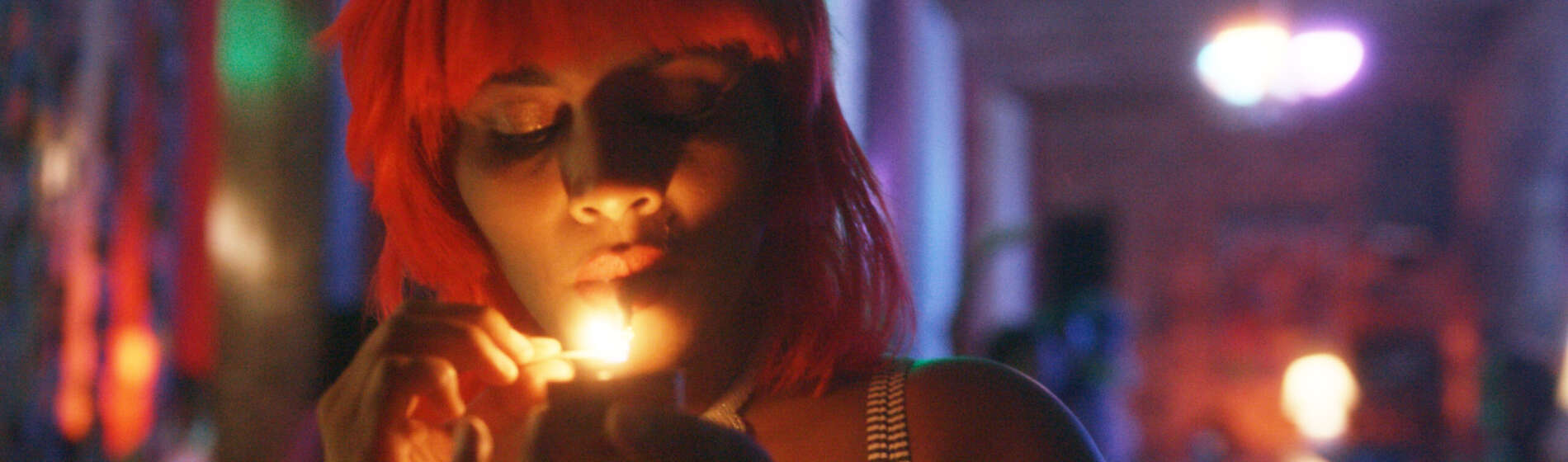
Reimagining the biblical tale of Mary Magdalene and transplanting it into the rich modern soil of Jacmel, Haiti, the film quickly reveals the hypocrisy often found in cultures governed by organized religion. When the audience first meets Marie (Généus in a magnetic performance), a sex worker with a bohemian approach to life, she is in rough shape. Collapsing on the street, she is assisted by Joseph (Béonard Monteau), who races her to the nearest hospital. However, because of her line of work, the nurse refuses her any care or compassion and belittles her.
Refusing to leave her in that state, Joseph makes a point of checking in on Marie the next day to make sure she is okay. Of course, he does not have far to travel since Joseph is the son of a strict preacher who has opened a church directly across the street from the brothel where Marie lives.
As the verbal war of words between perceived saints and sinners takes place in the streets, as the church faithful take to loudly evangelizing to the sex workers who simply want to make a living in peace, Marie and Joseph begin to form a genuine bond of friendship. One that could put Joseph at odds with his religious community, including his girlfriend, whom he hasn’t even kissed yet, as he claims to be saving all of that stuff for marriage.
In observing Joseph’s unquestioned obedience to his father and the bible, and the ways his view slowly begins to expand after getting to know Marie, Généus’s film paints a colourful portrait of a country divided. On one side are the colonial-governed churches and government institutions that care more about punishing those who seemingly go against God’s teachings than those who are keeping all the citizens in a state of impoverishment. The other side features those who embrace the true essence and beliefs of Haitian culture captured in street festivals which celebrate movement and souls over gender laws.
The fascinating thing about Généus’ film is that she shows how both these sides are being crushed by the weight of colonialism. The church-going folks may snub their noses at the sex workers and refuse to help the lower class in their time of need, but they all run to the same government food truck desperately in search of a meal.
Généus ensures the film’s waves of hypocrisy splash the audience as well. Throwing pointed daggers at those, such as Joseph’s dad, who is rumoured to have fathered several kids before becoming a pious man of God, who corrupt faith for their own sense of power, the filmmaker takes aim at the institution of religion rather than faith itself. She forces one to reflect on how they play a role in upholding corrupt societal structures. Généus also challenges the audience to reflect on their own biases toward sex workers, like Marie, who must carry a razor blade in her mouth when with clients, as the laws offer no protection.
Weaving the beautiful thread of culture, poetry, dance, sexuality, faith and more together in a mesmerizing fashion, Généus constructs an invigorating tapestry of emotion for the audience to behold. A confident work filled with wonderful performances by Généus and Monteau, Marie Madeleine is a captivating look at identity that ranks among the year’s best works.
Marie Madeleine premiered at TIFF 2026 on September 15, and has additional screenings on September 16 and September 20.
Head here for all our That Shelf TIFF 2026 coverage.