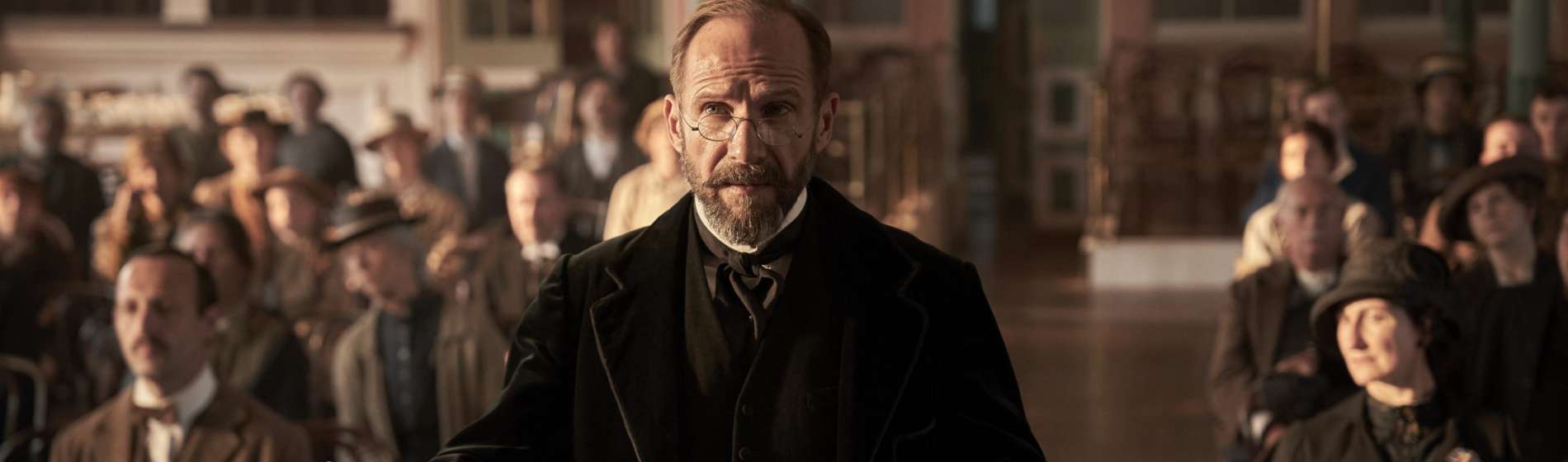



Is it really TIFF if there are no films starring Ralph Fiennes in the lineup? (See also: Colin Farrell) Thankfully, as audiences celebrated the 50th edition of the annual film festival, no one had cause to find out. The reliably talented and charismatic actor’s work was showcased once more, this time in the form of a quintessential English period piece from acclaimed theatre director Nicholas Hytner ( The Madness of King George , The Crucible ). The Choral , co-starring a host of the island’s excellent character actors, may not stand out the way Fiennes’ other recent projects have ( Conclave , anyone?). Still, thanks to a great script by Hyntner’s frequent collaborator Alan Bennett and deft direction from the filmmaker himself, it still holds its own easy charm.
Set in the fictional mill town of Ramsden, Yorkshire, two years into the First World War, The Choral follows the local choral society’s attempt to put on a memorable performance despite losing many of their members to the front or other war work. After their choir master signs up, the board (played with aplomb by Roger Allam, Alun Armstrong, and Ron Cook) has its work cut out finding a replacement leader to guide them through rehearsals for their planned concert of Bach’s “St. Matthew’s Passion.” Against their better judgment, they approach Dr. Guthrie (Fiennes), a talented musician who has spent recent years honing his craft in the music scene in Nuremberg, Germany. This connection to their country’s current foe makes everyone involved uneasy, as does the fact that they know Guthrie to be gay, but they put art above any personal misgivings they might have. His precision and less-than-pleasant attitude ruffle some feathers, but his talent and ideas endear him to both old and new recruits.
In worrying about the background of their leader, though, the board neglects to think through their chosen choral material. After a brick is hurled through the window of their performance space, it becomes clear that locals object to any piece composed by a German. What follows is a fabulously enjoyable back and forth between the masterful core cast as they slowly come to the realization that eliminating “Hun” talent means nixing pretty much the entirety of classical and choral music. Bach, nope. Beethoven, no go. Mozart, same. Mendelssohn and Brahms, they’re off, too. Watching the realization watch over each actor is a treat, but it’s also a great nod to the fact that England found themselves confronted with some uncomfortable truths come The Great War. Not least of which was that their entire royal family were also of German descent. But I digress.
Luckily, Guthrie remembers a piece by Elgar that he saw performed just once, “The Dream of Gerontius”, and he is sure Elgar will permit them to perform it. It doesn’t get much more English than Elgar, so it seems a stroke of genius. But as soldiers return from the war, battered and broken, and more are called up as conscription is introduced, the group feels they may have chosen poorly. So instead of starting back at square one, they decide to update and rearrange the piece to speak to contemporary issues of war, youth, death, and grief. In doing so, the chorus and the film come alive. The old man at the centre of the piece becomes a young soldier, and his guide in the afterlife becomes a nurse.
There isn’t a poor performance among this excellent ensemble, and Fiennes is no doubt perfectly cast as Guthrie. Still, it’s Roger Allam as the mill owner and choral chief that proves the backbone of The Choral . His only son was killed in the trenches before the start of the film, so he knows more than most the terrible price of the war. At first, he seems like an officious upper-classman and a bit of a stick in the mud, but at heart, he is a man who is using his devotion to music to get him through each day. Unfortunately, he is also a mediocre tenor whose passion exceeds his talent. That leads to some amusing moments but also a bigger, selfless one later on. For those who know Allam from his other work, be it Endeavour or the excellent BBC Radio comedy Cabin Pressure , it should come as no surprise that he handles both wit and drama equally well. There is irony here, too, as Allam has had his fair share of musical roles, including originating the role of Javert in the West End production of Les Misérables . So when it comes to actual singing talent, he is a sight better than okay in real life.
Fiennes’ character doesn’t have that much of an arc, but there is plenty of bombast and quiet emotion to sustain him. The most impressive moments come when we, as an audience, and a select few characters, understand that his continued interest in Germany and, in particular, its naval battles, comes not from a desire to spy on his homeland but of worry for the man he loves–a German who signed up as soon as the war began. So as the townspeople celebrate victories, on the battlefield and on the seas, he retreats to the shadows. It’s a testament to Fiennes’ charisma that no matter what else is happening in those busier scenes, your eyes remain glued to him throughout.
Another standout performance comes from Simon Russell Beale as the famous Elgar. Although the actor earns above-the-title billing, he appears in only one scene. But what a scene. He sweeps in and out like a whirlwind, leaving a lasting impression on the audience and a supreme sense of awe in the assembled characters. A stalwart of the London theatre scene, Beale is a welcome addition to any cast, and he understood his assignment here perfectly.
There are smaller stories amid the choristers, particularly among the young women and men. Each one covers a different aspect of the home front: relationships beginning and ending in the face of life and death, soldiers returning to life having moved on, young men awaiting their call-up, young people coming to terms with their sexuality, and more. All are well done, but none stand out. But perhaps they’re not meant to. This is ordinary, everyday life in extraordinary times.
There are no ground-breaking flourishes from the camera to be found here, either, because they’re not necessary. Hyntner knows it is the performances that will make or break this film, and he has cast accordingly, from the biggest to the smallest roles. Add to that a typically erudite script by Bennett, and you have all the ingredients for a worthwhile cinematic endeavour, reminiscent of films such as Tea With Mussolini and Their Finest .
The Choral ’s story is deceptively simple. A small English town’s music society wants to put on a memorable performance, and then does so. But it’s all about the timing here. Audiences walk alongside the townspeople as they aim to restore some sense of normalcy during the largest war the world has ever seen. It shows music as something transcendent. Something that connects us all when words fail. Something beautiful when the world itself is ugly. At a time when our own world seems harsh and cruel, this is precisely the kind of film to give us space to reflect on the power of the things that most connect us. And thank goodness for that.
The Choral screened as part of the 2025 Toronto International Film Festival.
Head here to get all our That Shelf TIFF coverage .
It is scheduled to hit theatres on January 9, courtesy of Mongrel Media.