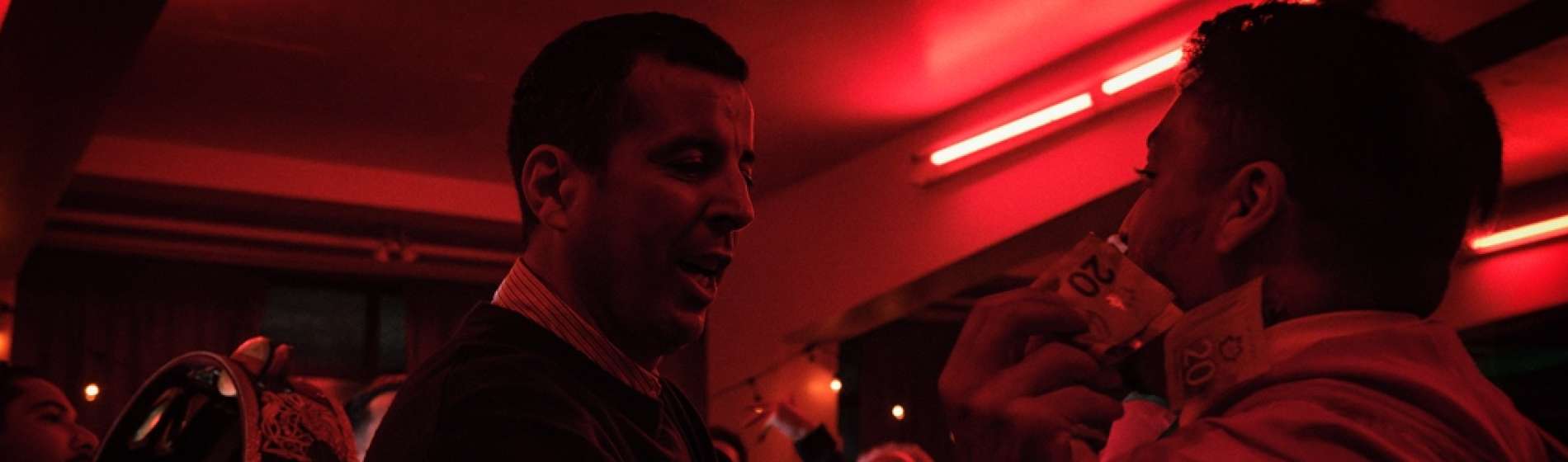



The Cost of Heaven follows one man’s attempts to achieve his dreams of a better life, even though the one he has is already enviable.
Being satisfied with what one has is a critical life skill. This doesn’t mean you have to lack ambition or a desire for improvement. It’s about avoiding the trap of thinking the grass is always greener on the other side. Wanting what someone else has can only lead to unhappiness, and comparing your lot with another person’s ignores so many factors on both sides. Unrealistic goals and expectations can have significant negative impacts on your decision-making. In The Cost of Heaven , a man is convinced he can follow in the footsteps of another self-made man, no matter how many times he fails.
Nacer (Samir Guesmi) has a corporate job, a loving wife, and three wonderful children. They live in a nice house, and the kids attend a private school. They want for nothing, but it’s not enough for Nacer. He wants more money, a nicer car and prestige.
He obsesses over anything entrepreneur Ben Novak (Crixus Lapointe) has ever said or written. Believing they have similar pasts, Nacer is convinced he can achieve a similar lifestyle — if only he could find the right path. Meanwhile, he’s falling behind on bill payments, investing money he doesn’t have, and resorting to dishonest means of hiding it all from his friends and family.
The film opens in a Lexus dealership, where a salesperson walks Nacer through the latest model’s luxury features. He doesn’t need a new car – and certainly can’t afford one – but the allure is undeniable. Private school tuition for three children already stretches the family’s finances, yet Nacer craves the prestige it brings and the circles it connects them to. High-risk stock market plays are hardly suited for someone in his position, but because that’s how Novak built his wealth, Nacer is convinced it’s the path to his own fortune.
Unfortunately, his aspirations gradually give way to desperation. The more things go wrong, the more he clings to the idea that he could turn it all around. Like an addict, even when he’s allowed to recover, he only sees a chance to try again. Audiences watch, powerless, as Nacer enters a downward spiral. Every step brings him closer to the edge, where he’ll lose everything — his job, his family and the last remnants of everyone’s respect.
As Nacer’s fallacy turns into delusion, his grip on right and wrong erodes. While the camera views are mostly traditional, there are two key points in the narrative that intentionally stand out. As Nacer goes past the point of no return, the camera rotates to reflect his unstable mental state. Viewers can guess what Nacer going off the deep end will look like, but it’s not exactly as you’d expect. The revolving perspective acts as a turning point in the story.
Guesmi’s performance is inescapably nuanced. When the film begins, his expressions are genuine — especially the happy ones. However, as the story progresses and his failings compound, the cracks begin to show. Notably, his confidence never wavers. It’s an uncanny trait that serves as both a strength and weakness. Sadly, no manner of certainty can change the film’s inevitable outcome.
The Cost of Heaven screened as part of the 2025 Toronto International Film Festival. Head here to get all our That Shelf TIFF coverage .