


Opening his film with James Murphy’s mournful admission that New York is bumming him out serves as a fitting mission statement for writer-director Noah Segan’s The Only Living Pickpocket in New York. Unfortunately, the song choice also hints at the level of subtlety audiences can expect from the film. A ’70s-inspired look at the titular pickpocket whose dependency on five-finger discounts in a world of cryptocurrencies and no-contact payment apps means our protagonist is a man out of place in a city that used to serve him well.
The Only Living Pickpocket in New York puts us squarely in the middle of the action as Harry Lehman (John Turturro) makes his daily visit to old pal Ben’s (Steve Buscemi) pawn shop. We see him hand over stolen ephemera pilfered during his subway rides in exchange for a few hundred dollars, at best. It’s clear that if no one carries cash anymore, he’d better get creative to scrounge up enough scratch to pay rent, grease various palms, and provide the care his catatonic wife, Rosie (Karina Arroyave), needs.
No one better than Turturro
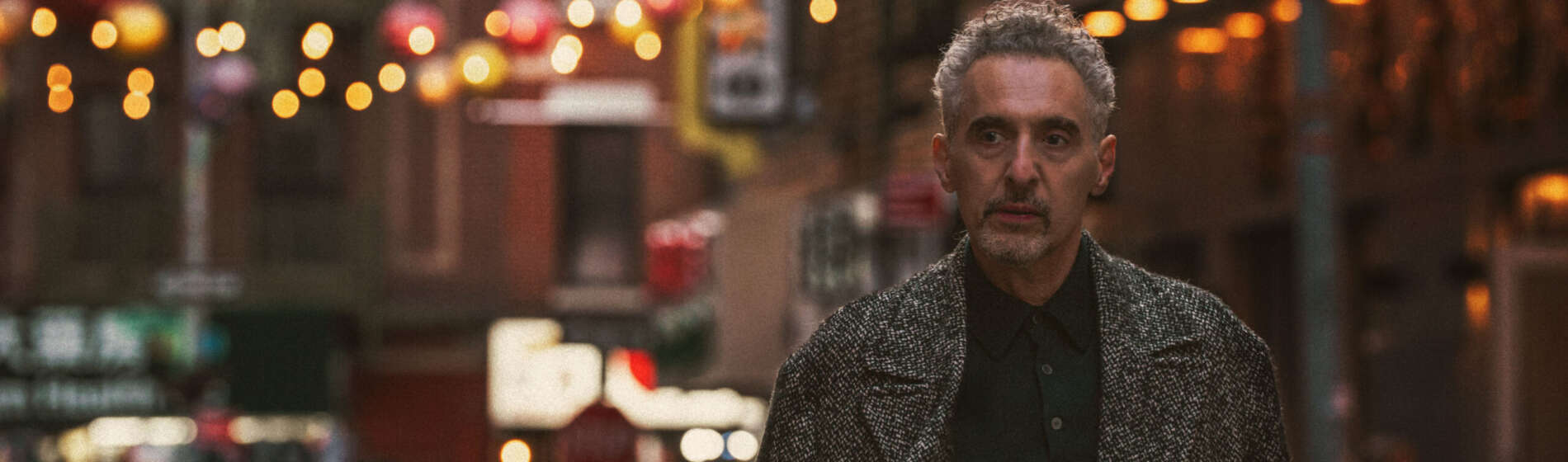
Turturro, a born-and-bred New Yorker, is synonymous with the city itself, appearing in nine Spike Lee joints and countless other projects associated with the Big Apple. Taking on Harry’s complex characterization as a man who takes from others and demands our sympathy is no easy feat for an actor, but Turturro is up for the challenge. After all, we inherently buy him as someone who knows the boroughs like the back of his hand. Someone with local haunts who begrudges that a Yoo-hoo is nearly $3 when it used to cost five cents, never mind that it’s been decades since someone could buy a cold drink with one coin. But Segan’s overly simplistic story telegraphs every plot point before it happens, so there’s little surprise or depth, leaving Turturro’s tender performance adrift in search of a better movie. That said, his very presence elevates proceedings and there’s very little of the tight 88-minute runtime where he’s not onscreen. Harry looks dapper throughout in a marbled, belted coat that gives him an air of sophistication, all a part of his ruse, but the character’s contradictions go frustratingly unexplored.
A USB key and a ticking clock
Yes, the times they are a-changing, and old dogs like Harry and Ben rightfully feel left behind. But the choice of a stand-in for the new generation could not have been more miscast in Will Price, whom Tim Robinson fans will recognize as the teenage son in The Chair Company. (He simply doesn’t have enough menace to feel plausible here.) When Harry clocks the obnoxious “ItsA1969” vanity plate on Dylan Diamond’s (Price) fancy old car, he contrives a run-in and pulls the old penny-in-the-car-handle trick so he can steal what’s in the back—no broken glass, no fingerprints.
This happens while Dylan is drinking at a nearby bar and complaining to his hangers-on that his family—wealthy criminals who are never identified beyond typical markers like expensive restored cars and “a guy who knows a guy” connections—need to “up-level” their game. How? By letting go of a fixation with tactile things when there are so many non-fungible options for money-making schemes. He also says things like “crash out” and “deadass” in case you’ve missed that he’s Gen Z.
When Harry gets back on the subway, he surveys his loot: sneakers, a wallet with actual cash, what an excited Ben will later call the “Rolls Royce” of watches, and a USB key that proves mysterious to the two aging pals. Thwarted by Ben’s ancient computer, which lacks the latest OS and is too old to update, Harry throws out the key, seeing it as junk. Only once Dylan and his crew find Harry, quick work thanks to CCTV footage and that ubiquitous Yoo-hoo bottle, does it set off a ticking clock conceit to locate that invaluable USB.
A thrilling exchange amid a tepid plot

What should infuse the film with a real sense of urgency ultimately feels forced. In reality, there’s no reason why these thugs would give Harry a set number of hours to retrieve the USB key. By himself, no less. So it feels like a plot device that allows him to go on a goodbye/apology tour. He remains an obtuse character with little motivation beyond a sick wife, a plot point seemingly added so that audiences understand he’s really not all that bad. But an abandoned daughter storyline nearly an hour into the movie finally jolts some life into the proceedings. It’s too little, too late by then, but a snarling, wounded performance by Tatiana Maslany matches Turturro’s acting chops, and it’s a wonder to behold. If Segan had found a way to introduce this pairing earlier and give us a stronger foothold into who Harry is, the scene wouldn’t be a five-minute outlier.
It is refreshing to see New York City playing itself here, and it’s always a delight to see the deeply NYC trio of Turturro, Buscemi, and Giancarlo Esposito, who pops up in a glorified cameo to play Harry’s old detective friend who helps him out exactly the way you think. But this paint-by-numbers crime drama often doesn’t feel worthy of its stellar cast. It’s not fair to compare it to contemporary Safdie crime sagas, because clearly those aren’t Segan’s point of reference, but it also never reaches anything close to genre classics like Thief—until its inspired final shot hints at what could have been.
The Only Living Pickpocket in New York opens in Toronto and Vancouver theatres on October 23; additional cities on October 30.