Remember Vice? I guess that’s a rather broad question”¦ depending on your age, you probably have a very specific association with that title. For some, it’s a punk rock magazine that showcased some of the best writing and photography of a generation. To others, it’ll be best known for its online presence, through its hard-hitting video journalism or its sub-brands, such as Noisey and Motherboard. And, of course, to others, it’ll be best known as a giant media conglomerate that evolved into a news outlet, a cable TV network, and an advertising agency. Regardless of how you remember it, there’s no question that it was the voice of a generation, and for a time, it was one of the most successful media brands out there, which was remarkable considering its humble beginnings as a Montreal ‘zine. But then, like many great success stories, it all came crashing down.
But what exactly happened? Where did they go wrong? That’s the question at the heart of Vice is Broke , a new documentary from veteran Vice contributor Eddie Huang, the former chef, restaurateur, author, and creator of the hit ABC series “Fresh Off the Boat”. However, Huang was also the host of a series on Viceland called “Huang’s World,” and because of that, he has a very personal connection to the rise and fall of the empire, as well as a vested interest in trying to figure out how it all happened. Along the way we start to understand why Huang is so invested in this story; it’s not just personal curiosity, or a desire to understand why this thing he admired went up in flames. Huang reveals that prior to it going bankrupt, Vice owed him hundreds of thousands of dollars, and he even suggests he is now broke as a result of what he’s owed. So he has a serious need to solve this puzzle, and openly admits he’s having a hard time letting this all go.
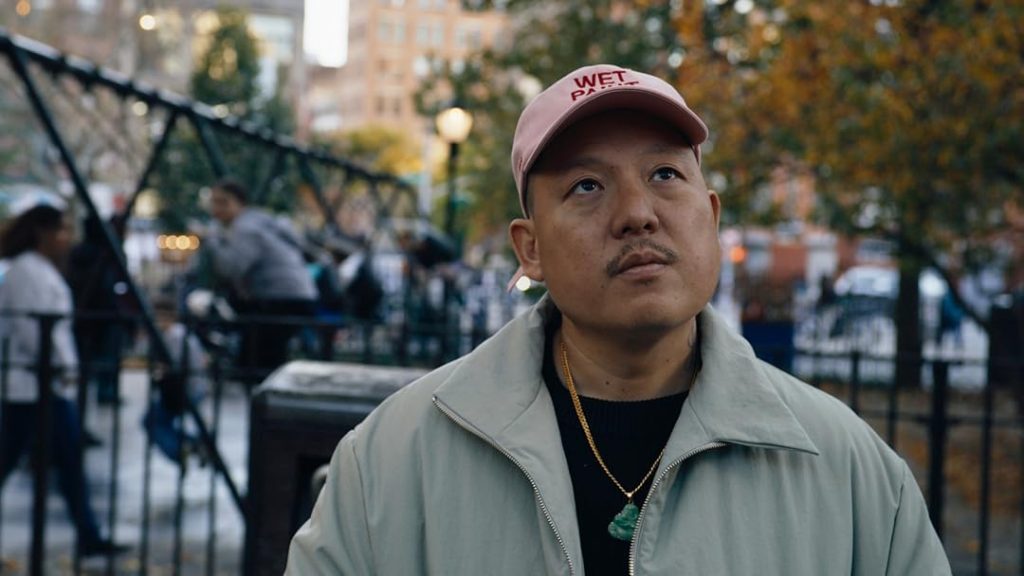
Huang brings that first-person perspective to his documentary, interviewing key Vice figures from the early days like former editor Jesse Pearson and writer Amy Kellner, as well as former contributors like Dave 1 from Chromeo (who wrote a hip-hop column for the magazine in its earliest days), to street artist turned actor David Choe , and later speaking with those in the later period of the org. like former BBC journalist-turned-Vice-contributor Simon Ostrovsky, to try and uncover how this once glorious company lost its way. This is part of what makes the film so successful; Huang is at his core a very entertaining storyteller, and because he comes from that Vice world, he is able to get these interesting people to open up and speak candidly about their time at the company, as well as offer their own suggestions as to what might have happened; how it all went wrong.
But if you know anything about Vice and its founders, you might already have a pretty good idea in your head of who the problem might have been. Early on the film starts to make whispers about the most obvious answer: co-founder, alt-right activist, and notorious shit-disturber (to put it mildly) Gavin McInnes. Yes, the guy who founded The Proud Boys. All throughout the first act of the film, McInnes is spoken about in hushed tones, “like Lord Voldemort” as Huang puts it. McInnes had long left the organization by the time Huang had joined the fold, and as a result, he keeps asking former writers and contributors what McInnes was like in those early days. The general consensus: funny. Edge Lord-y, sure, and every once in a while the guy would do something kind of racist, but he was at least funny! But it’s all hearsay and anecdotes.
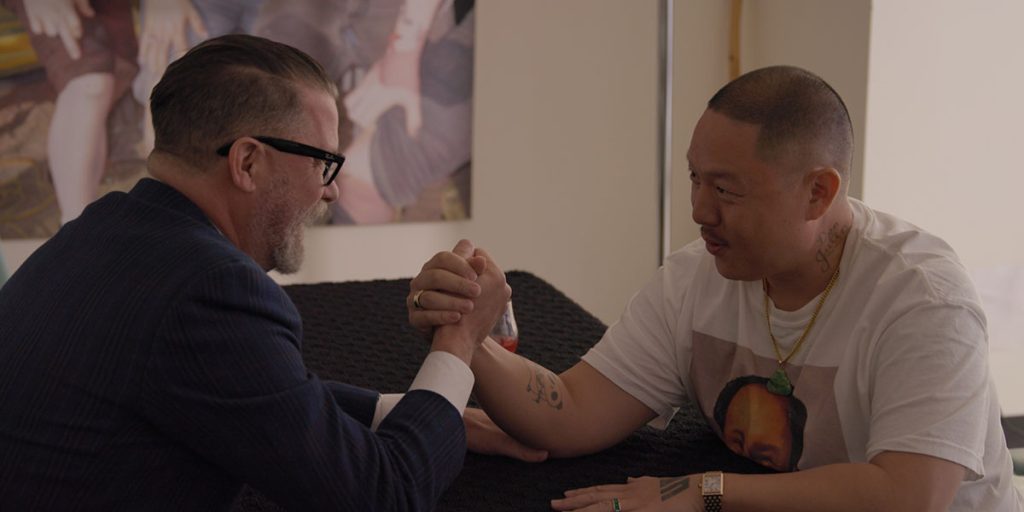
Then the film does something I wasn’t expecting: Huang actually sits down with McInnes, to get his side of the story (before arm wrestling him). Huang presses him on his racist ideology, and posits that McInnes’ whole white supremacy act is exactly that; an act. A facade. A piece of satire taken to the extreme. Of course, McInnes insists it’s not. It’s an interesting and engaging interview, but the soft-ball nature of it does leave a bad taste in one’s mouth (almost as bad as the Gatorade and Jamison concoction Huang makes at McInnes’ faux bar) and it’s clear by the end of it that while the ousting of McInnes certainly marked a turning point for the company, it wasn’t McInnes involvement that broke Vice.
This is when the film begins to unfold its real thesis: that it was in fact co-founder Shane Smith’s desire to move away from the edge lord, punk rock nature of the magazine into a more mainstream, capitalist venture that broke Vice. By (rightfully) ousting one of the key voices of the magazine, he began to steer the company away from the thing that made it so “cool” in the beginning. Put another way, in an attempt to become more “advertiser friendly,” Vice lost the voice that made it special in the first place. And as Huang states, “once the brand became bigger than the people and the stories, it was worthless.” Yes, Smith was able to build the brand to be bigger than it once was, but as it continued grow, it continued to lose what made it special, and ultimately became almost a caricature of what it once was.
Certainly the film does a decent job of positing this to be the case, mostly via Huang’s actual lived experiences, but it should be noted that despite getting a sit down with McInnes, the film lacks anything with Smith, and that feels”¦ weird . The only time we get to hear directly from Smith is via a series of screenshots of Instagram messages exchanged between Smith and Huang regarding the residuals Huang was owed. It does leave the documentary feeling a little one sided, even if it does manage to make a particularly compelling argument, and features smoking guns like leaked whistleblower documents detailing the company’s financials.
All of this is punctuated with lots of great moments of archival photos and videos from the early days of Vice magazine, and plenty of behind the scenes movements from Huang’s Vice series, “Huang’s World”. Huang brings his unique aesthetic and voice to the film, and it gives the film an energy that would otherwise be lost by more “serious” filmmakers. As Huang notes early in the film, “I’m sure there’ll be an Alex Gibney -esque documentary with talking heads sitting on stools cutting the story into bite sized pieces for mouthbreathers like this was WeWork or Enron; but Vice was different” and Huang ensures that with a story that looks, sounds and feels like Vice. Personally, I think I would have probably preferred the Gibney approach; but then again, considering that Vice never purported to be real “journalism” and was more about personality, it’s perhaps fitting that a documentary about its rise and fall would find itself dripping with character, but would feel light on actual journalism. It’s by no means the most insightful documentary you’ll see this year, but admittedly, it sure is a lot of fun.
Vice is Broke is streaming on Mubi beginning August 29.