

In Herman Melville’s over-analyzed and under-read 1851 novel, Moby-Dick, the titular sperm whale, vastly misunderstood and terrifying to any unlucky seafarer who crosses its path, represents any possible number of things, including, but not limited to, an indifferent, godless universe, an unforgivingly cruel natural world, the personification of evil, or, for Captain Ahab and his crew, the ultimate fatal object of a life-long obsession.
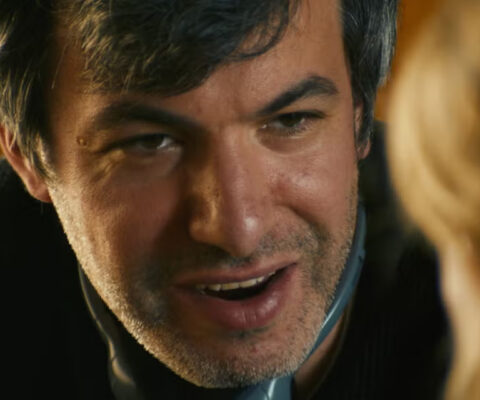
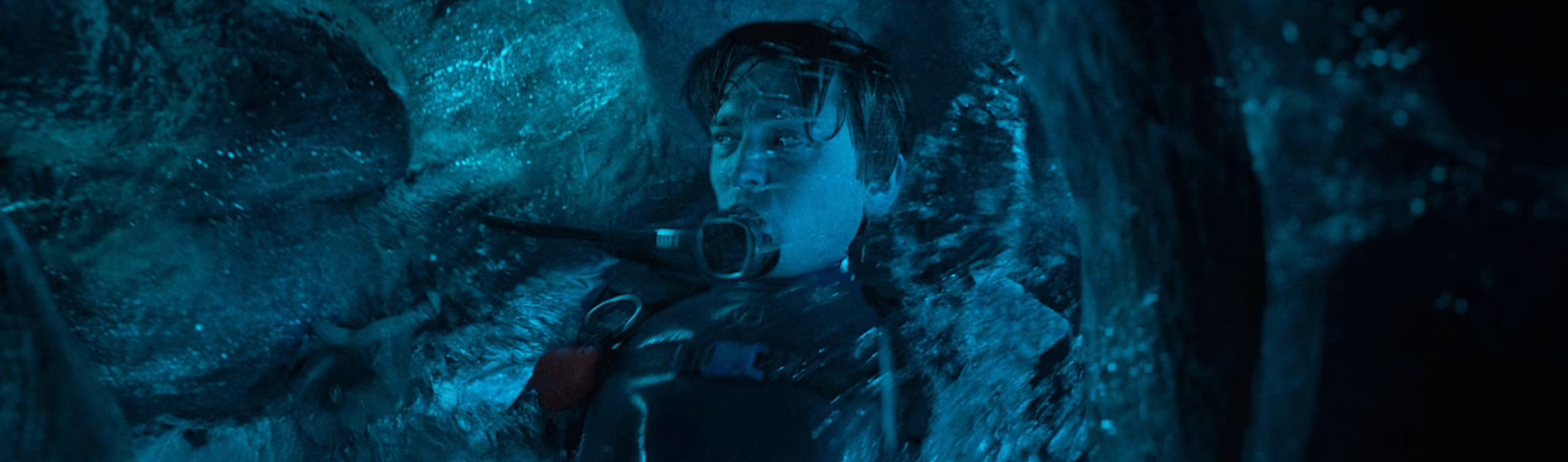
For the unfortunate Jay Gardiner (Austin Abrams), the scuba-diving protagonist in director this film from Brian Duffield (No One Will Save You), the unnamed sperm whale who inadvertently swallows him while feasting on a giant squid represents almost all of the above. Only his quick thinking; his half-remembered scuba-related training, courtesy of his late father, Mitt (Josh Brolin) — a hardened, short-tempered, inflexible man; and an oxygen tank stand between Jay and an unpalatable demise.
Before Jay finds himself trapped inside the belly of the beast, he’s attempting to reconcile himself to unresolved trauma, much of it caused by his fractured relationship with his father–a fisherman, tour guide, and scuba diver who tried to mould Jay into his own image. Facing the prospect of a slow, painful death due to cancer, Mitt chose to end his life in the ocean off the coast of California, leaving an empty casket, unanswered questions, and unhealed wounds behind for his immediate family.
Jay’s return home for the first anniversary of Mitt’s death isn’t borne out of love for his late father, but of an imagined obligation to find Mitt’s resting place and bring back evidence of his remains to his family. Said obligation involves Jay sneaking out of the house in the early morning while his mother, Zara (Elisabeth Shue), and two sisters, Eva (Jane Levy) and Nan (Emily Rudd), remain asleep, getting an oxygen tank filled at a local sporting goods store, evading Mitt’s close friend, Hewey (John Ortiz), and slipping past law enforcement to the sand and beach nearby.
At first, Jay’s excursion yields the obligatory awe and wonder at the underwater sights and sounds he encounters. There’s a welcome clarity and depth to everything Jay sees and hears, albeit the latter in a slightly muffled manner. Before long, of course, a bewildered Jay futilely attempts to evade a deadly hunt between a sperm whale and its latest prey, an elusive, fast-moving giant squid. Ultimately, the whale wins, the squid loses, and Jay, yanked into the sperm whale’s mouth by the its wake, finds himself struggling to survive inside the whale’s digestive system before he runs out of air.
Top-notch technically, if narratively middling and thematically muddled, Whalefall relies upon the cast led by Abrams for its overall effectiveness as part survival thriller and part grief drama. He young actor, recently seen in the Resident Evil reboot, essays a similarly anguished, increasingly distraught performance here. Moreover, Duffield’s straightforward, unobtrusive direction, and the work from behind-the-scenes technicians, led by production designer Ramsey Avery and cinematographer Aaron Morton, create a plausibly pulsating whale. Otherwise, the audience would hear Jay’s struggles, but not actually see them.
Dramatically, Whalefall slips into an all-too-standard, far-too-familiar character arc for Jay: Improbably surviving a harrowing encounter with a sperm whale isn’t enough. Jay also has to speed-run his way through otherwise complicated, contradictory feelings about his father, their deeply dysfunctional relationship, and make some kind of peace with it before he escapes the whale or his oxygen runs out. That plot development requires seriously heavy lifting, much of it done with little subtlety or nuance. Some of it even approaches the risible as an oxygen-deprived Jay hears Mitt talking from beyond the latter’s ocean grave. He cheerleads Jay’s actions even while beginning to hallucinate that Mitt and the whale merge into one creature.