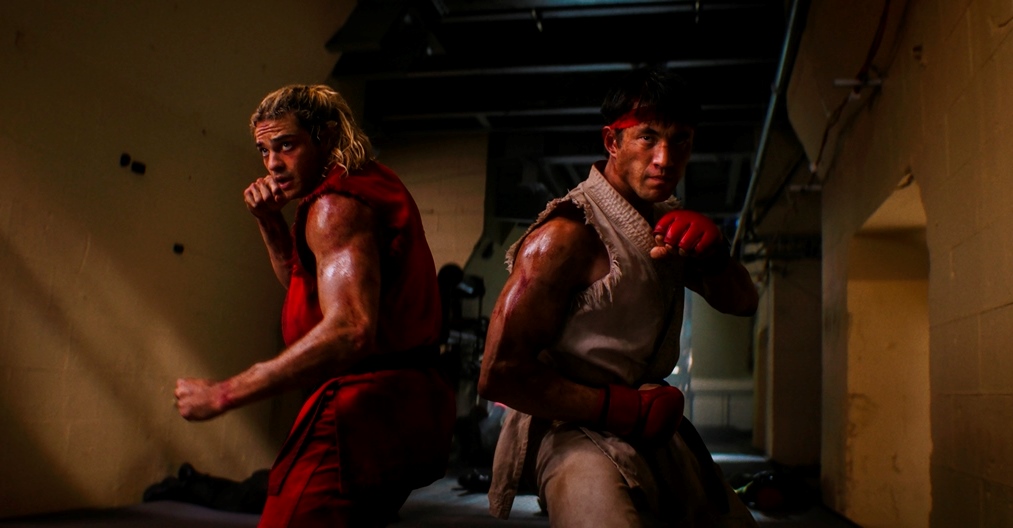



When the first adaptation of a property bombs, studios are usually hesitant to make another attempt. The failure taints the IP, particularly when other similar films do better at the box office. But the good news is that it can only get better. Unfortunately, as far as video game adaptations go, 1994’s Street Fighter never gained the cult following of 1995’s Mortal Kombat. Consequently, it took more than 30 years for the former to make it back to the big screen. The bar was low for the latest live-action version. But Street Fighter (2026) doesn’t just want to be better — it wants to be great.
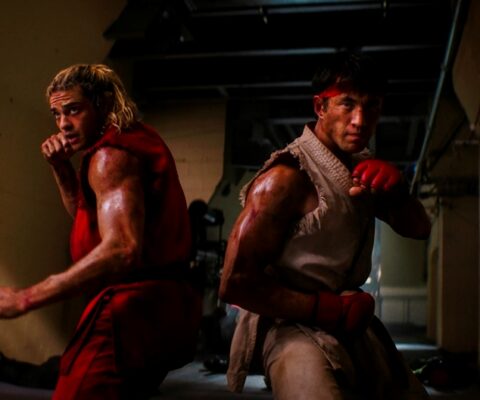
In 1987, Ryu (Andrew Koji) won the first World Warrior Tournament in Thailand with his adopted brother, Ken (Noah Centineo), in his corner. But to do so, he tapped into a dark power. When their master is murdered shortly after, the once inseparable friends part ways. Ryu goes into seclusion, while Ken enters the world of sports entertainment. Six years later, M. Bison (David Dastmalchian) revives the tournament in Metrolao. He employs Chun-Li (Callina Liang) to invite the world’s best fighters, including the estranged brothers. However, Bison has an ulterior motive for gathering all these men in one place. He wants their power and his scientists have figured out how to infuse him with it, putting the fate of the world at stake.
While this film’s approach to the video game is a massive level up, it retains some of the characters’ back stories from its predecessor. Ken and Ryu still share a brotherly bond, having spent most of their lives training together. Bison is still trying to harness energy, although his goal is slightly different. Chun-Li is still seeking revenge for her father’s death, prompting Bison to repeat a variation of one of the few great lines from the earlier film, dismissing her vengeance: “But for me, it was Tuesday.”
Conversely, one of the key differences is that this film incorporates the video game’s competition-style play with the World Warrior Tournament. However, the contest is somewhat of a bust since half the fights are won by forfeit. The narrative also integrates elements explored in the animated movies based on the video game, such as the origin of “Dark Hado.” To that end, the film seamlessly uses animation sequences to depict flashbacks. It’s a clever way to distinguish the timelines, while also recognizing the game’s rich narrative history beyond the ‘90s movie.
There are many Easter eggs from the video game to delight fans. They battle in classic locations, including a sauna, Bison’s temple hideout, a bar and an underground fighting arena. Every character has an opportunity to perform their signature moves, which is especially exciting when many viewers may still have the button combination to achieve the manoeuvre they memorized. But most unexpected and amusing is the reference to the “break car” bonus stage.
The film also treats audiences to an all-out-brawl involving most of the fighters, pitting them against different opponents. It allows them to feature their skills and show some of their individual personalities. They’re all recognizable, but they’re happily not absurd versions of the game characters. Co-writer and director Kitao Sakurai especially does justice to the more unique fighters, like Blanka (Jason Momoa) and Dhalsim (Vidyut Jammwal). The interpretation of their movements and special abilities is exceptional. It’s also nice to see Sakurai mix up some of the game’s villains so they’re not all bad guys in the movie.
This is a film that builds on nostalgia. But unlike its processor, it also features a perfectly matched cast and amusing script. The dialogue isn’t clunky or unintentionally foolish. The jokes are actually laugh-worthy. Moreover, even though the emotions and connections aren’t profound, they’re at least believable and relatable. It also acknowledges the sexualization of Chun-Li to some degree, allowing her to take her revenge on one of her inappropriate admirers.
The 1990s soundtrack similarly takes audiences back the video game’s heyday. Specific songs play at opportune moments, complementing the scene and adding subtle meaning. Notable tracks include, Soundgarden’s “Black Hole Sun,” Montell Jordan’s “This Is How We Do It,” MC Hammer’s “2 Legit 2 Quit,” The Offspring’s “Come Out and Play” and White Zombie’s “More Human Than Human.” In addition, 4 Non Blondes’ “What’s Up?” is a particularly unconventional choice that plays a critical role in the narrative.
Overall, this is a well-choreographed action movie with thrilling fight sequences. The camera stays close to the fray, avoiding annoying edits or blurring. Even though they inherently exaggerate some of the blows, they’re still impressive. And the imitations of the game moves are spot on. Viewers don’t need to be familiar with the video game to enjoy the film, but it definitely enhances the experience. And be sure to stay for the mid-credit peek at a potential sequel.