


Many cultures consider women the inferior gender. There are different reasons for this belief. Some believe they are less capable of and, therefore, less likely to contribute to the physical work that funds a household. That they cannot carry the family name to future generations in a traditional marriage. When they marry, they leave their family to join their husbands’ families and are, therefore, only temporary help. A dowry also means it costs more to marry off a woman. While these ideals may seem archaic, they still exist. In Flana, an Iraqi woman investigates why women are disappearing in her country and how these disappearances are linked to certain cultural beliefs.
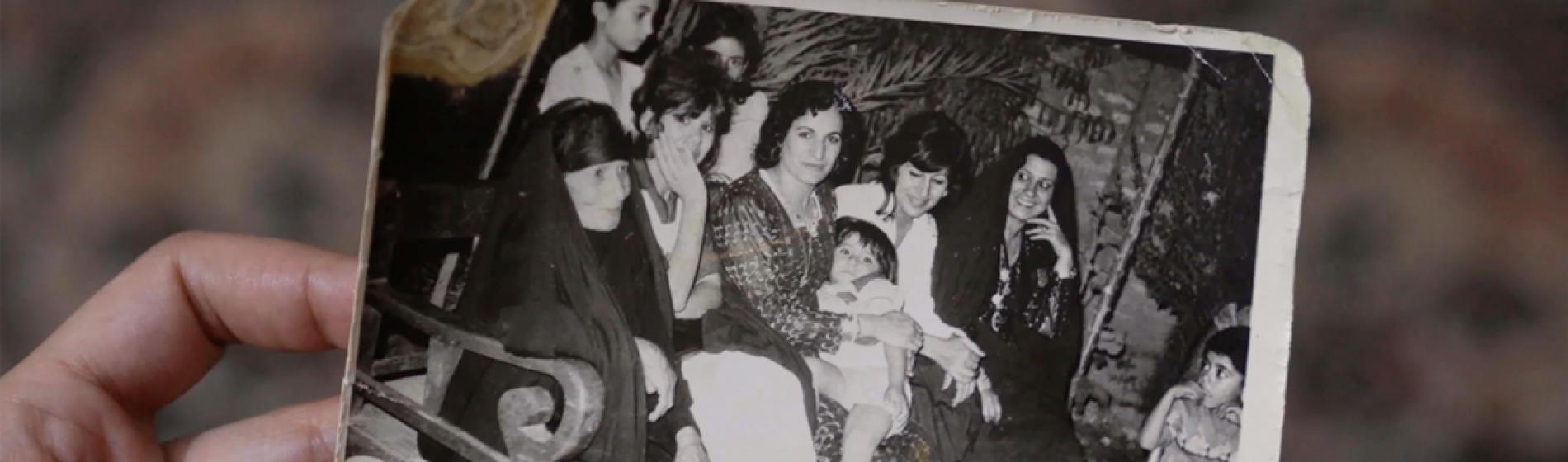
This is a deeply personal story for filmmaker Zahraa Ghandour. When they were 10 years old, her best friend and neighbour, Nour, was dragged off in the middle of the night. She never saw her again. Now, decades later, Ghandour is trying to understand why girls can be so easily erased from the collective consciousness. Since Ghandour doesn’t know Nour’s fate, she explores the narrative through Layla. Layla was abandoned as a child and forced to choose between prison and a shelter for women and girls. The aesthetic didn’t appear much different, nor was their treatment much better, but it was the lesser of two evils at the time.
Despite Ghandour sharing no statistics in the film, there is clearly an epidemic of Iraqi women and girls disappearing or being murdered. It’s one of the many places in the world in which this issue persists. There’s even a cemetery of unmarked graves for women who were the victims of domestic violence or “honour killings.”
The film’s title, “Flana,” is the Iraqi word for forgotten or anonymous women. But the documentary ably illustrates the flaws in the terminology as Nour is far from forgotten. Her memory continues to haunt Ghandour decades later.
We also see Ghandour’s Aunt Hayat acting as a midwife in the community, but the reactions to the birth of a baby boy or girl are substantially different. Ghandour asks her aunt to recall what happened to Nour. The girl’s history is complicated, but the details shed little light on her potential fate. So instead, Layla is the surrogate for Nour’s possible future.
Through the lens of individual stories, Ghandour tries hard to make the problem less abstract. This is a difficult task since so few are willing to discuss the issue or their experiences. Unfortunately, that leads to an imbalance in the storytelling, and consequently the film doesn’t effectively relate these particular accounts to the overarching issue affecting the country. So though moving, the film’s focus feels too small for such a substantial topic.
Flana screened as part of the 2025 Toronto International Film Festival. Head here to get all our That Shelf TIFF coverage.