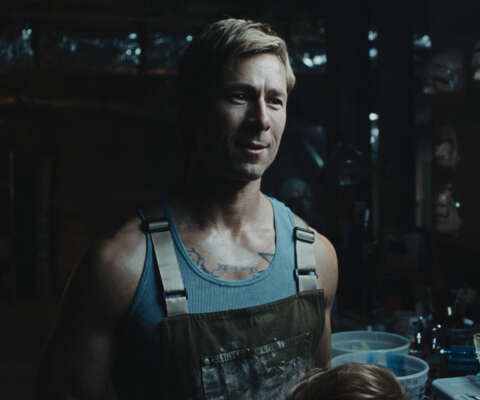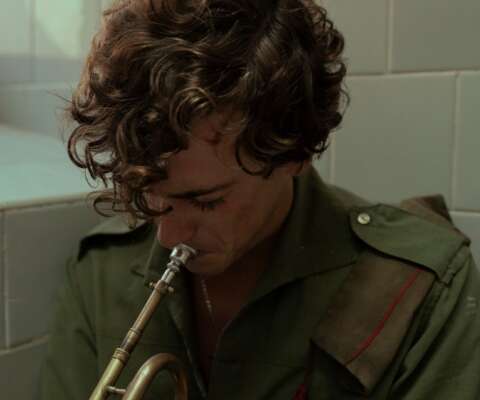
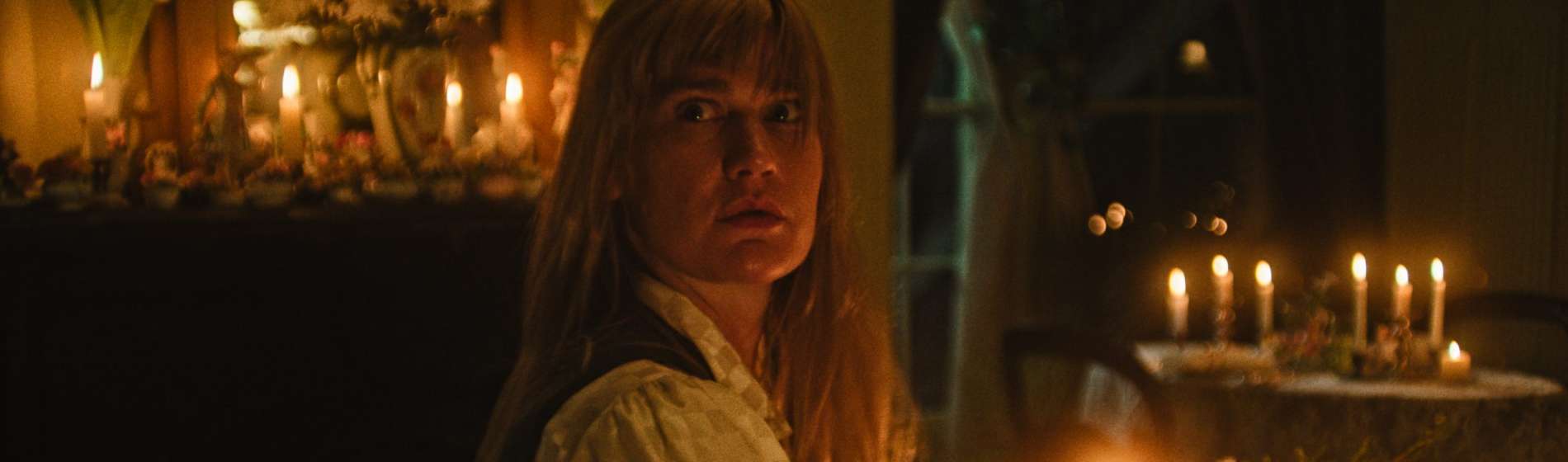



Madeleine Sims-Fewer and Dusty Mancinelli’s genre-bending sophomore effort, Honey Bunch, takes some big, original swings. It doesn’t always connect, but it’s hard not to appreciate the effort. Part thrilling horror and part supernatural sci-fi, it’s a film that defies categorization and deserves your attention, even if every element isn’t exactly a home run.
Nailing the isolated gothic vibes from the get-go, the film follows young couple Diana and Homer as they travel to an isolated treatment centre, ostensibly to help Diana recover from a trauma she cannot remember, and a coma she just barely survived. They’re greeted by the Institute’s facilitator, Farah (Kate Dickie), who takes Diana through some truly unusual treatment sessions—sensory therapies ostensibly designed to help those with memory-related conditions—but ones that seem to be creating more mental confusion, not less.
To give more away would be a disservice to what is a very original story with some solid twists and turns. Added to this is a creep factor dialled up to 11, largely thanks to stellar production design, a perfectly conveyed ’70s vibe, some amazing needle drops, and truly riveting supporting performances from Kate Dickie and Julian Richings as the institute’s mainstays. Honey Bunch conveys genuine feelings of isolation and the fear of the unknown. The directing duo of Sims-Fewer and Mancinelli do a deft job of ratcheting up the tension bit by bit, so that when the story and action explode, it’s a crescendo that feels earned.
Unfortunately, the most necessary piece of the puzzle, our lead couple, doesn’t fit as well as it needs to. Played by real-life couple Grace Glowicki and Ben Petrie, the actors run through the necessary motions but lack any true emotional connection—both to their characters’ situation and to each other. Honey Bunch requires viewers to buy into the idea that this couple is so desperately in love that they will do anything for one another. That the end justifies the means, if love is the driving factor. Though Petrie has some standout moments, his need to be the one who reassemble Diana’s life shines through particularly in the climatic moments of the film, it often feels like the actors are just going through the motions or holding back for a future take. Their relationship is the foundation this intricate story is built on, and without it as a solid basis, every bit of the film’s impact is dulled as a result.
There’s an absorbing sub-plot between another patient, Josephina (India Brown), and her desperate father, Joseph (an excellent Jason Issacs). This is not their first experience with the clinic, but they still hold out hope that it could cure the young woman’s ailment. We’re in the dark about what exactly her issue is, just like with Diana, but this pair seems farther down the same path our lead duo are walking. And it tugs at the heartstrings far more than any other aspect of the film. It works so well that it has the adverse effect of demonstrating how effective the main characters could be, with the right casting and chemistry.
Cinematic originality can feel in short supply in this era of sequels and reboots, so Honey Bunch should be lauded for what it attempts. And if all of the big swings it takes don’t connect, it still gets definite points for trying. It’s perhaps the fact that it does have so much going for it, that the disappointment in that one major piece of execution is so disappointing. But it’s still worth a watch, especially if it means more films like it get greenlit and reach audiences.
Honey Bunch arrives in theatres today, January 23.