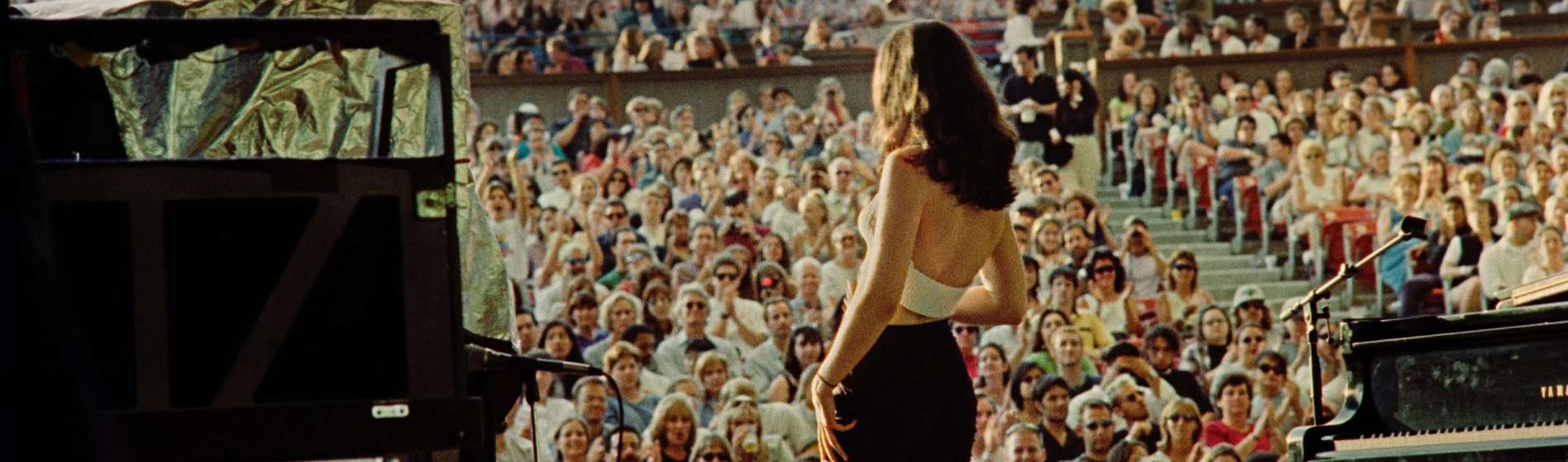


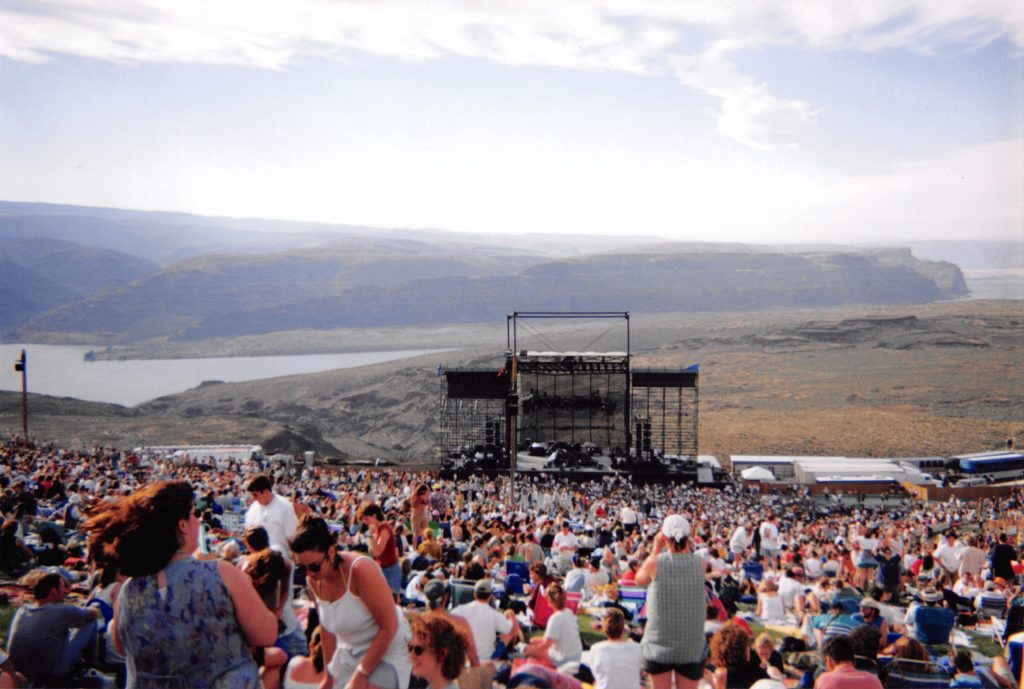
The year was 1997. Songs by female artists couldn’t be played back-to-back on the radio, and it would be rare to find a female musician opening for another woman on tour. Enter Canadian superstar Sarah McLachlan, whose women-led music festival Lilith Fair revolutionized the way the music industry and beyond perceived female musicians.
In her first feature-length documentary, Lilith Fair: Building a Mystery , writer and director Ally Pankiw puts the spotlight back on not only McLachlan’s achievements, but the artists who championed women-led music alongside her. Mixing archival performance footage, media coverage, and new interviews with performers including McLachlan, Paula Cole, Erykah Badu, Sheryl Crow, and more, Pankiw’s story finally gives Lilith Fair the celebration and recognition it has long deserved.
That Shelf’s Rachel West spoke with Pankiw ahead of the film’s world premiere at TIFF.
Rachel West (RW): TIFF has a history of premiering so many great music documentaries, what does it mean for you personally and professionally to open the film here?
Ally Pankiw (AP): TIFF is an incredible festival, but beyond that, this doc very much felt like a return to me and a bit of a healing journey to heal the idea that we were given of ourselves as young women, and for me, as queer people in the 90s and early 2000s. Getting to go back and examine that time with my now mature, adult feminist hindsight was very interesting, and I found it very healing.
A lot of this doc and the process felt like a return to reexamine things. It feels like a nice return to bring it back home to Canada where it all started. I’m from Canada and lived in Toronto for many years.
RW: It’s a great opportunity for Canadians.
AP: All throughout the project, we asked interview subjects, ‘Do you think Sarah was a good leader because she was a woman or because she was Canadian?’ And they were like, ‘It’s equal.’ There’s such an earnest Canadian-ness to this story, too.
RW: It’s been a long time since Lilith Fair. Why is now, in 2025, the right time to bring this story back?
AP: I think it can serve as a bit of a cautionary tale in the moment we’re in right now in pop culture. I think we’re in a very fear-based reactionary period in the entertainment industry to what’s going on in the world and we have slowed down on funding things made by diverse voices and from diverse perspectives.
I don’t think we should let the same thing happen that happened at that turning point of the 90s into the 2000s happen again. I think this doc just dispels the myth that investing in women and investing in diverse artists is not profitable or that that’s like some kind of risk. Lilith was misremembered, I think, as being smaller than it was, but it was like a massive financial and commercial success. Now is a really good time to be having that conversation.
RW: Was it hard to get people on board to talk about Lilith Fair, not just the performers, but some of those music industry people? Or were people kind of excited to talk?
AP: People were really excited to tell the true story and celebrate it properly because it wasn’t in the immediate aftermath of it. I was served a very trivialized, false version of what Lilith was in pop culture when I was a young adult. It’s just being sort of mocked a little bit, or like just brushed off as just some folky thing.
It was just that it was a bit reductive how it was talked about. To be a part of getting to clear that up and put the real story out there was really special.
RW: That’s exactly what I remembered being told as a young teenager when it came out, it was, ‘Oh, this is hippie, folky women doing their thing.’
AP: Yeah, ‘It’s like just lesbians.’ And there were a lot of lesbians, but it wasn’t just lesbians, you know, and not just one genre [of music], and not just women. Men wanted to listen to female artists. To think now that men don’t listen to female artists is such a crazy thing, we wouldn’t even consider that to be true. But at the time, that was a very powerful myth that was being told.
RW: And the way you tied the story back to not playing two female artists back-to-back on the radio, a female opener not opening for another female performer just seems insane now.
AP: Those were the myths being told to some of the biggest artists of that time. That was something that Sheryl Crow was told she wasn’t allowed or Tracy Chapman was told she wasn’t allowed to do. Imagine, even like smaller artists and performers, what they were up against and the lies they were being told. If even these women who were performing at such a high level weren’t allowed to have that control over their tours and their careers, then obviously something needed to change. And it was again untrue that audiences didn’t want to buy those tickets.
RW: Did anything really surprise you in the interviews or in your research?
AP: The constant sort of reminder of that Lilith Fair made so much money and it gave so much money back to charity. Continuously being confronted with that truth was”¦ I mean, surprising is not the right word, but I was always, ‘holy shit’. That number grew, and you realize that they gave over $10 million in those three years in the 90s. That was so much fucking money. It’s that which was surprising.
RW: Do you think if it were to happen today, it would be accepted and talked about differently?
AP: I’m sure it would be talked about in the same way because there are still a bunch of idiots who work in pop culture, but I do think it would be different. I think that would be a very small undercurrent. ( I think most of the conversation around it and the coverage around it would be a lot more truthful and positive.
I do think it could absolutely happen again. Of course people would want to go see amazing female artists, like that’s now predominantly what we listen to on radio, you know? It would have to obviously function a little bit differently, but I think it would be celebrated more immediately, not so retroactively.
RW: I like that you did open the film with some TikToks and talking to younger people who had no idea that this even existed. Why do you think when you look at something like Woodstock and even Woodstock 99 in comparison, that has stayed more in pop culture knowledge?
AP: Because men’s contributions, even if they’re negative, are more likely to be documented and celebrated. If we’re not careful, we can really erase women’s contributions, or anyone ‘other’ from any industry. It doesn’t just happen in the entertainment industry.
RW: Exactly. You have experience in comedy and drama. How did you really tie those sensibilities from your previous work into a documentary feature?
AP: I think the job of the director is not so dissimilar in narrative versus doc, at least to me and my approach. I think the main job of a narrative director is to create a safe enough emotional space and channel on a set in order for people to be vulnerable and do some difficult things. So that to me was like the same job I had sitting across from these interview subjects. The biggest difference was like working with all the archive, the actual post-production and the edit process. That’s where things like really felt a little bit different.
RW: Did you really learn anything about yourself and your own skills as a filmmaker in this process?
AP: I think I learned patience. There is a certain amount of patience required when you’re doing doc because it’s a much longer process. There’s a lot less control. I think relinquishing a little bit of control and going, well, we just have to follow where what we have in the archive. What I would say is you still have to be really stringent and stay very true to the thematic framework and the thrust that you wanted to have from the get-go. Otherwise, I think you can get lost in like 10,000 different versions of what the story could be, or what the doc could be.
Lilith Fair: Building A Mystery premieres at TIFF on Sept. 13. The documentary will be available to Canadians everywhere on CBC and CBC Gem starting with the premiere of The Passionate Eye, Wednesday, Sept. 17 at 8 p.m. ET.
Interview has been edited for clarity and length.